
November 15, 2026
Are Art Fairs Still Worth It? The Pros, Cons, and Real Cost for Galleries and Artists
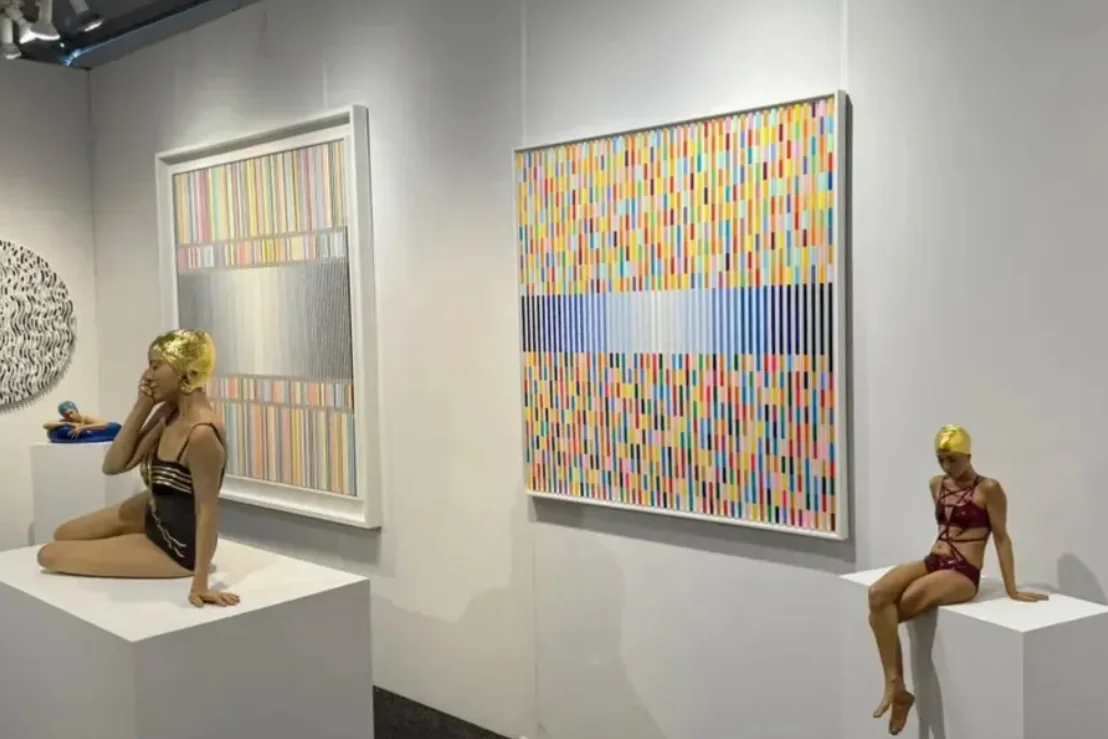
Every year, thousands of galleries and independent artists invest millions of dollars into a single week of booth lights, VIP previews, and frantic networking. Yet as booth costs soar and collector fatigue sets in, the global art fair model is facing its toughest reckoning yet.
For the past two decades, international art fairs—from Art Basel Miami Beach and Art Miami to Frieze and regional boutique fairs—have served as the beating heart of the contemporary art market. According to recent industry data, fairs still account for roughly 35% of total gallery sales, making them one of the most concentrated sales channels in the art world.
At the same time, nearly 30% of dealers have scaled back their fair calendars. Why? Because exhibiting at a major fair has increasingly begun to resemble high-stakes gambling rather than predictable business building.
Whether you are a gallery evaluating its annual calendar, an artist weighing solo fair booths, or a collector curious about what happens behind the booth walls, here is an honest look at the pros, cons, and real economics of art fairs.
The Pros: Why Art Fairs Remain a Powerful Engine
Despite their rising costs, art fairs continue to offer advantages that neither a permanent gallery space nor an Instagram feed can easily replicate in a single week.
1. Unmatched Concentration of Active Buyers
In a traditional brick-and-mortar gallery, foot traffic fluctuates week by week. An art fair compresses months of client outreach into four or five days, placing artwork directly in front of thousands of high-net-worth collectors, interior designers, and corporate buyers who arrived explicitly ready to acquire.
2. Institutional Visibility and Curatorial Discovery
Museum curators, art advisors, and art critics rely on major fairs to take the temperature of the market and scout emerging talent. For an artist, having work placed in a respected fair booth can lead to museum acquisitions, press coverage, and long-term career validation that online algorithms rarely deliver.
3. Rapid Market Feedback and Lead Generation
Even when an artwork does not sell on the spot, fairs serve as powerful relationship accelerators. A brief conversation in front of a sculpture often turns into a studio visit, a private commission, or a major acquisition months later.
The Cons: The Hidden Costs and Pressures of the Fair Circuit
Behind the glamour of champagne previews lies a financial and creative reality that is squeezing mid-sized galleries and independent artists alike.
1. Punishing Upfront Costs and Thin Margins
For galleries, art fairs represent the single largest line item in their annual budget—consuming an average of 32% of total yearly operating costs. Between booth rental ($15,000 to over $100,000), custom wall build-outs, fine art crating, international shipping, tariffs, insurance, and team travel, all-in expenses for a single flagship fair frequently exceed $100,000 to $250,000. If collector sentiment hesitates, a single slow fair can erase months of profit.
2. The “Safe Art” Trap (Creative Standardization)
Because the financial stakes are so high, exhibitors naturally gravitate toward proven, immediately recognizable works that sell quickly under harsh convention-center lighting. As a result, bold, experimental, or large-scale installations are increasingly rare—leading many collectors to complain of “fair fatigue” and visual sameness across booths.
3. The Solo Artist Trap: Paying to Play Without Representation
Encouraged by direct-to-consumer fairs, many independent artists take on debt to rent solo booths ($5,000 to $15,000+ all-in) hoping to bypass galleries. While a few succeed, many discover that standing in a booth for 10 hours a day without an established collector base—or the long-term price protection a gallery provides—results in exhausting weeks with uncertain returns.
4. Transactional Speed Over Deep Connection
With hundreds of booths competing for attention, collectors spend an average of just a few seconds glancing into each stand. Nuanced artworks that require quiet contemplation—and collectors who value unhurried advisory—often get lost in the sensory overload of a crowded convention hall.
Galleries vs. Art Fairs: Why a Balanced Strategy Wins
| Factor | International Art Fairs | Permanent & Agile Galleries |
|---|---|---|
| Pace & Atmosphere | High-energy, fast-paced, crowded | Calm, intimate, curated for contemplation |
| Financial Risk | High upfront fixed cost for 5 days | Spread across year-round collector relationships |
| Collector Experience | Quick visual browsing, sensory overload | Private viewings, in-situ mockups, white-glove advisory |
| Best Role in Career | Global visibility & rapid lead generation | Sustained price growth, trust & long-term placement |
The most resilient galleries and artists no longer treat art fairs as their sole lifeline. As we explored in our analysis on why traditional art galleries are closing and how modern galleries thrive, forward-thinking galleries are rebalancing their approach: participating selectively in strategic, high-impact fairs while investing heavily in permanent cultural hubs, flexible pop-up spaces, and year-round client hospitality.
Experience Our Curated Approach at Art Miami 2026
Returning for our 11th year, Markowicz Fine Art is bringing a focused, museum-caliber sculptural presentation to Art Miami 2026 (December 1–6, 2026, Booth AM423 at One Herald Plaza). Rather than overcrowding a booth, our 2026 presentation spotlights two distinctive sculptural voices—KAI (presenting the tabletop edition of Perfect Hug in bronze, carbon fiber, and stainless steel) and Carole A. Feuerman (debuting The Diver (Museum-Scale), 2026, in a new gold-toned matte and polished bronze finish)—alongside works by Beau Simmons, Hunt Rettig, and Eva Armisén.
Planning to attend Miami Art Week? Discover the full exhibition details and request your VIP preview invitation on our Art Miami 2026 Exhibition Page.
Frequently Asked Questions About Art Fairs
Are art fairs profitable for galleries and artists?
They can be highly profitable when a gallery already has a strong collector base and clear sales goals, as fairs generate roughly 35% of global dealer sales. However, because all-in booth, shipping, and travel costs are paid upfront, profitability is never guaranteed—especially for first-time exhibitors.
Should collectors buy art at an art fair or directly from a gallery?
Both offer access to vetted works, though buying through a permanent gallery space typically allows for a quieter viewing experience, natural lighting, customized framing, and digital in-home visualizations before making a final decision.
Conclusion: Quality Over Quantity in a Changing Market
Art fairs are not disappearing, but the era of blind fair expansion is over. Both collectors and galleries are shifting away from exhausting, purely transactional spectacles toward deeper, more meaningful ways of experiencing art.
At Markowicz Fine Art, we combine international visibility at flagship events like Art Miami with permanent, welcoming gallery spaces in Miami and Laguna Niguel—giving collectors the time, transparency, and personalized advisory needed to acquire contemporary art with confidence.
Experience Contemporary Art Without the Rush
Visit our gallery locations, meet us at Art Miami Booth AM423, or browse our curated roster of international painters and sculptors online at MarkowiczFineArt.com.