
Secondary Market
Diego Masi
Uruguayan, born 1965
Uruguayan artist Diego Masi connects geometric painting with kinetic installation and sound. Repeated stripes, circles and organic forms turn pattern into an exploration of rhythm, perception and movement.
Biography
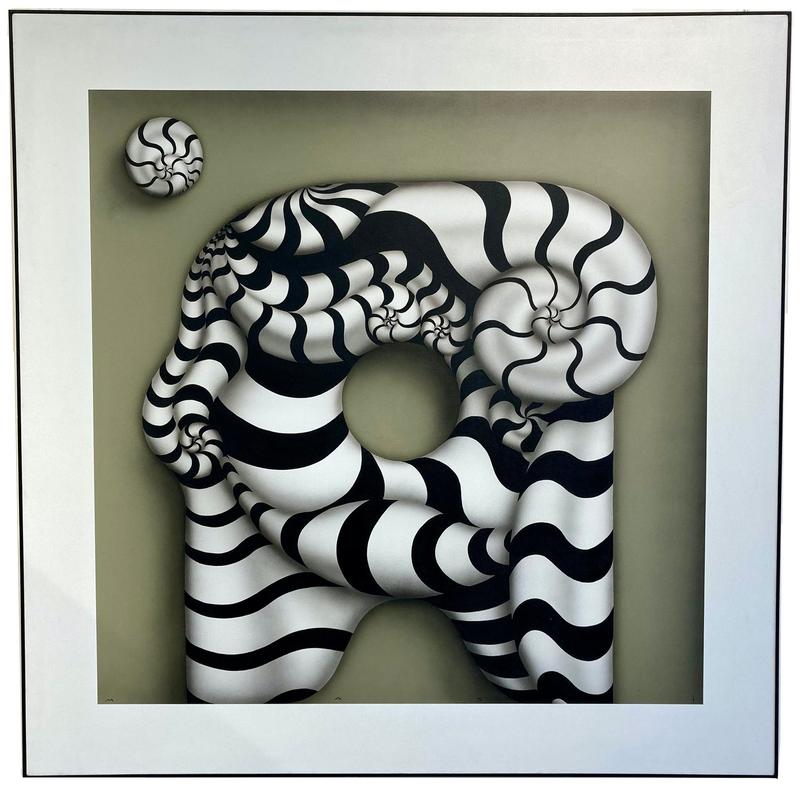
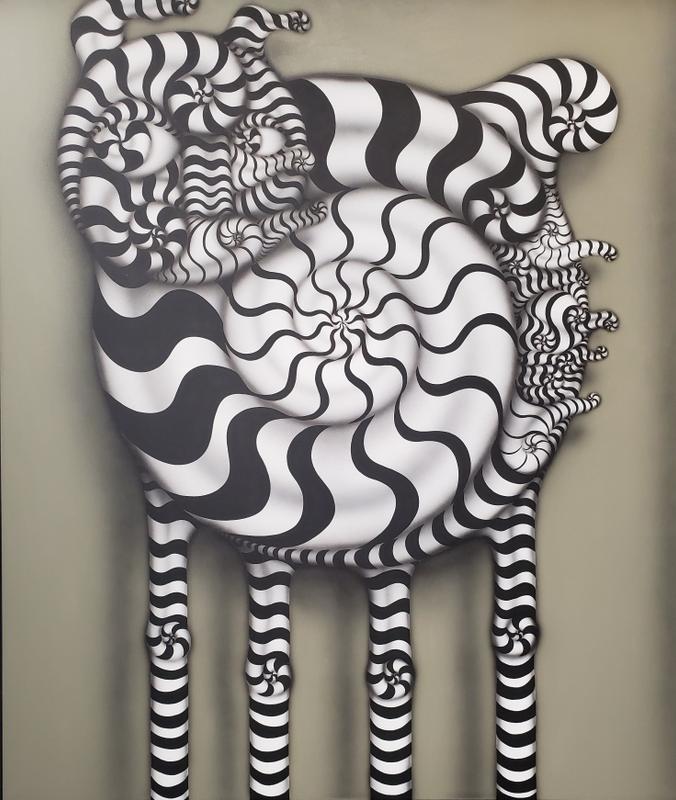
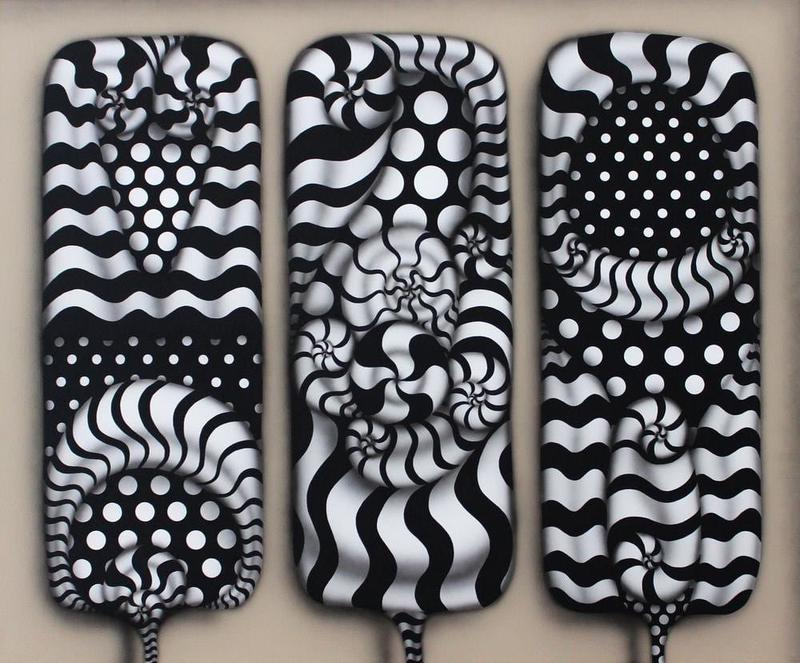
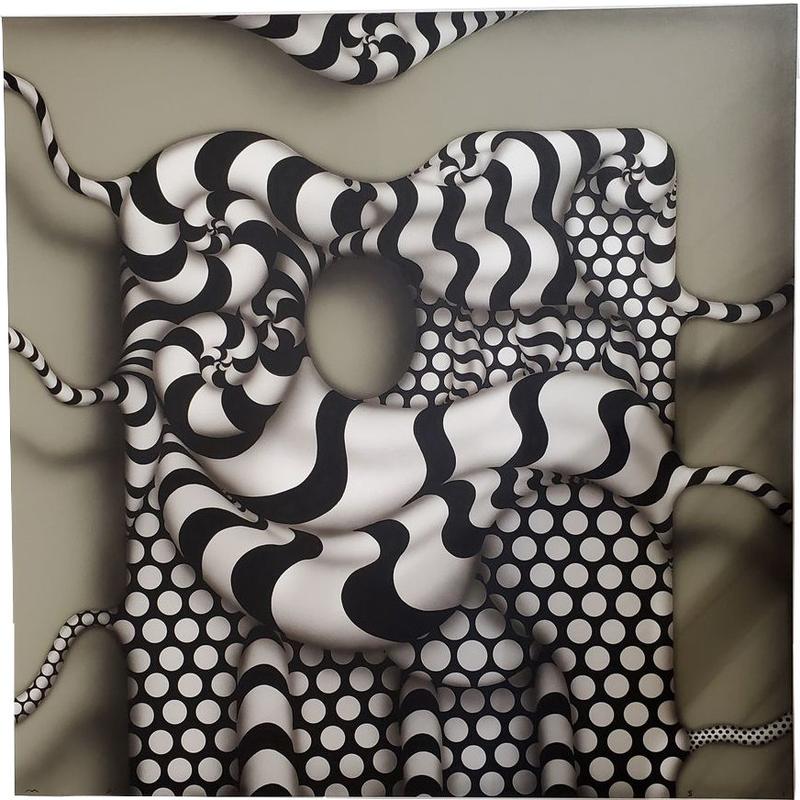
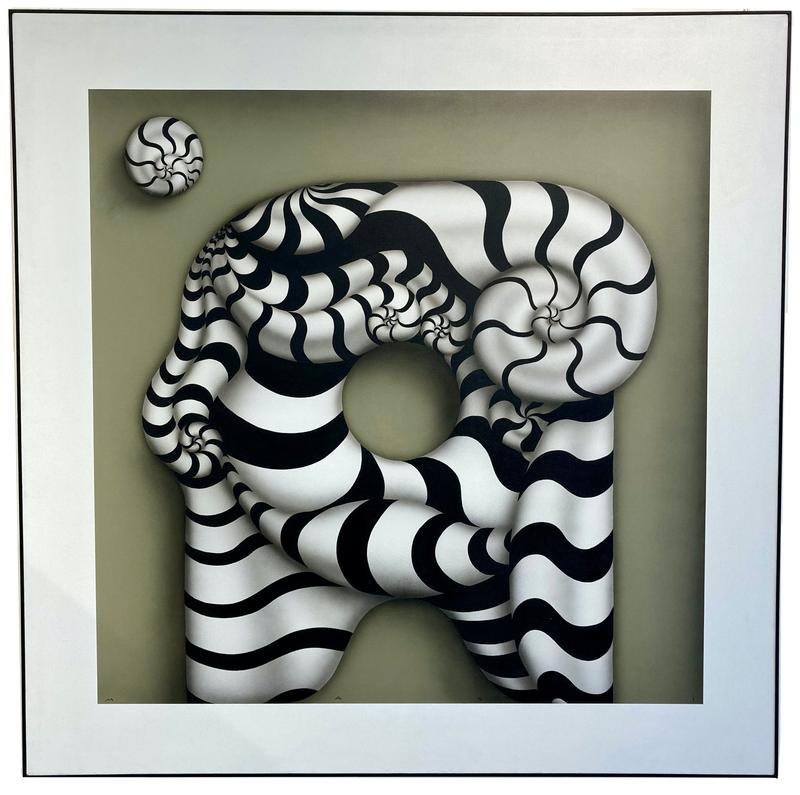
A repeated stripe can describe a surface and unsettle it at the same time. In Diego Masi’s paintings, geometric patterns follow rounded, branching forms, creating the impression of volume, growth and movement. The image remains physically still, but its proportions keep the eye in motion. Circles, alternating bands and changes of scale become a visual vocabulary through which order meets variation.
Born in Montevideo in 1965, Masi trained in Luis Ernesto Aroztegui’s workshop at Uruguay’s National School of Fine Arts between 1987 and 1993. His practice extends across painting, public interventions, electromechanical installations and sound. These are related areas of inquiry rather than interchangeable techniques: a painted rhythm may be perceived through the eye, while an installation unfolds through time, physical movement or listening.
His installation Emisor received the Third MEC Acquisition Prize at Uruguay’s 55th National Visual Arts Prize in 2012 and entered the collection of the Museo Nacional de Artes Visuales. Autónomos, presented at Museo Figari in 2013, brought responsive forms into dialogue with the museum’s historical context. In 2022, Transhemisférico paired Masi with Richard Garet at Museo Gurvich under the curatorship of Cecilia Fajardo-Hill.
Later presentations include Outside of the Frame at Edge Zones in Miami in 2025 and Somos jugando at the Museo Nacional de Artes Visuales in 2026–2027. His project TERRITORIUM, curated by Lukas Kühne, was selected for Uruguay’s pavilion at the 16th Gwangju Biennale in 2026.
Markowicz Fine Art presents selected paintings by Masi. Their optical presence offers an entry into his wider practice without reducing it to a decorative pattern. Looking closely means following the relationships between a motif, its repetition and the space that appears to open around it.
Exhibitions & art fairs
Museums
- TERRITORIUM — Uruguay Pavilion, 16th Gwangju BiennaleYangnim Art Center, Uruguay Pavilion, Gwangju, South Korea · 2026
- Somos jugandoMuseo Nacional de Artes Visuales, Montevideo, Uruguay · Aug 2026 – Feb 2027
- Transhemisférico — Richard Garet and Diego MasiMuseo Gurvich, Montevideo, Uruguay · Sep 2022 – Nov 2022
- AutónomosMuseo Figari, Montevideo, Uruguay · September 2013
- 55º Premio Nacional de Artes Visuales — Wifredo Díaz ValdézMuseo Nacional de Artes Visuales, Montevideo, Uruguay · Nov 2012 – Feb 2013
Galleries
- Outside of the FrameEdge Zones, Miami, United States · Apr 2025 – May 2025