
March 1, 2019 – May 26, 2019
Hockney – Van Gogh: The Joy of Nature
Two Artists, Color and the Repeated Observation of Landscape
Van Gogh Museum, Amsterdam, Netherlands
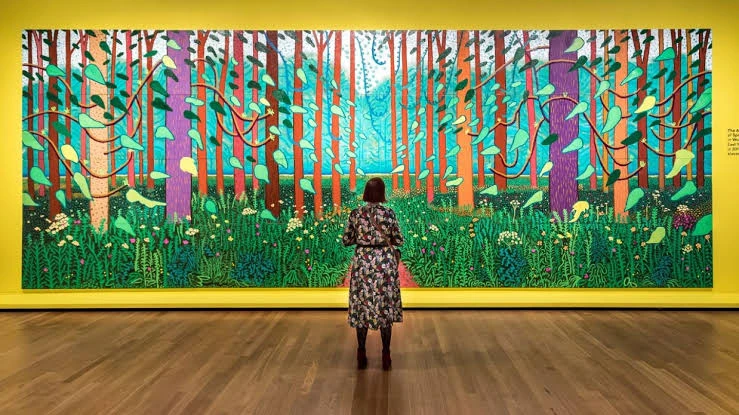
Hockney – Van Gogh: The Joy of Nature placed David Hockney’s landscapes in direct conversation with paintings and drawings by Vincent van Gogh. Presented at the Van Gogh Museum in Amsterdam, the exhibition focused less on stylistic imitation than on a shared intensity of observation.
Both artists returned repeatedly to trees, fields, paths and seasonal change. Strong color and rhythmic mark-making transformed familiar environments into images shaped as much by attention and memory as by physical description.
Color as a Way of Seeing
For Hockney and Van Gogh, heightened color does not simply depart from reality. It becomes a means of describing the emotional and sensory force of looking.
Van Gogh’s marks give fields and trees a visible internal energy. Hockney’s Yorkshire landscapes use broad areas of color, repeated lines and shifting scale to make the viewer conscious of movement through a place.
Placed together, the works demonstrated that expressive color can sharpen observation rather than replace it. A landscape can remain recognizable while becoming more vivid than ordinary perception.
Returning to the Same Place
Repetition was another important connection. Both artists worked from places they knew closely and returned to motifs under changing conditions.
Hockney’s studies of Woldgate Woods and the arrival of spring record the same landscape through different seasons, media and viewpoints. Painting, iPad drawing and multi-screen video each offered another way to follow change.
The exhibition avoided presenting Van Gogh merely as a historical influence. Instead, it created an active dialogue between artists separated by more than a century but united by the belief that sustained looking can continually renew an apparently familiar subject.
Related artists