

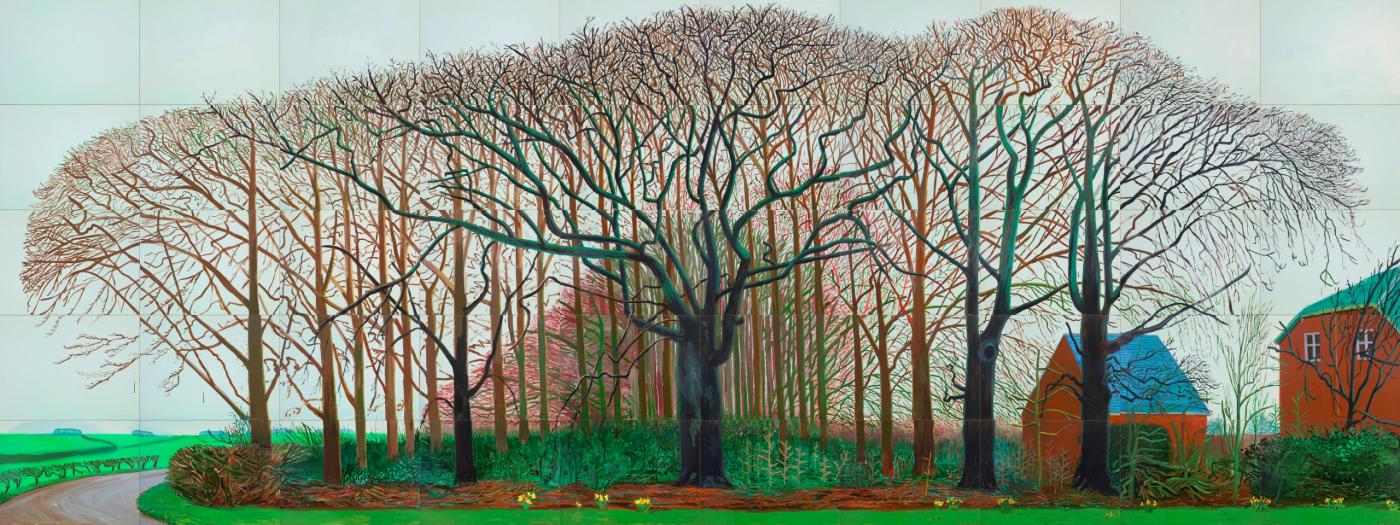
Museum
David Hockney 25
Fondation Louis Vuitton, Paris, France
April 9, 2025 – September 1, 2025
Seventy Years of Work at Fondation Louis Vuitton
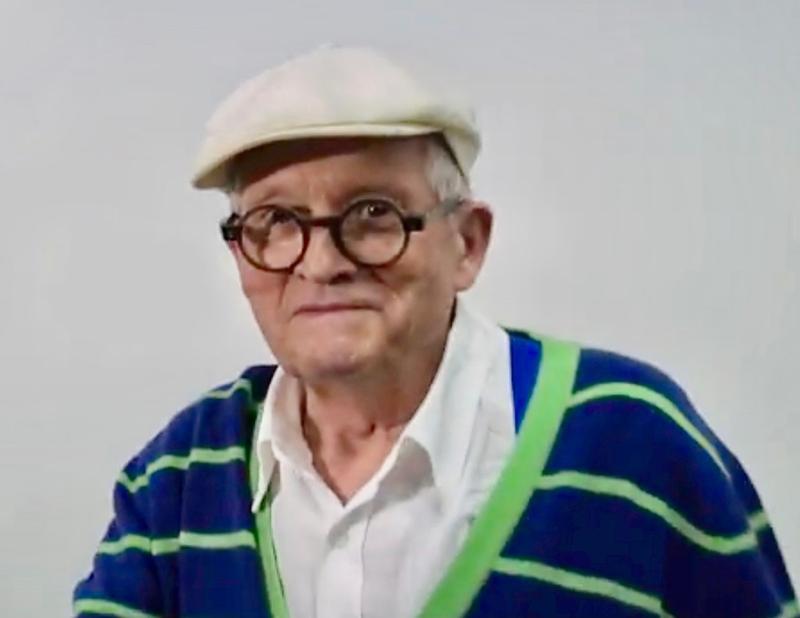
Secondary Market
1937–2026
British artist whose paintings, drawings, prints, photographs and digital works repeatedly reimagined portraiture, landscape, perspective and the act of looking.
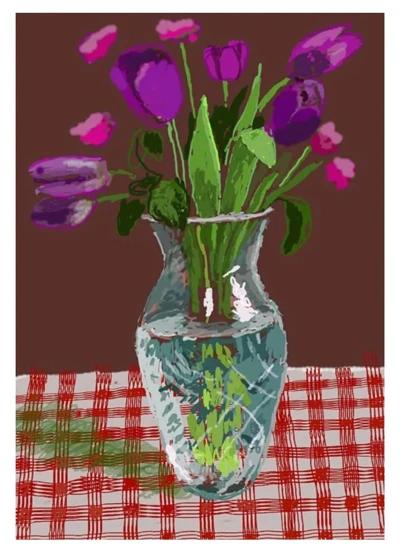
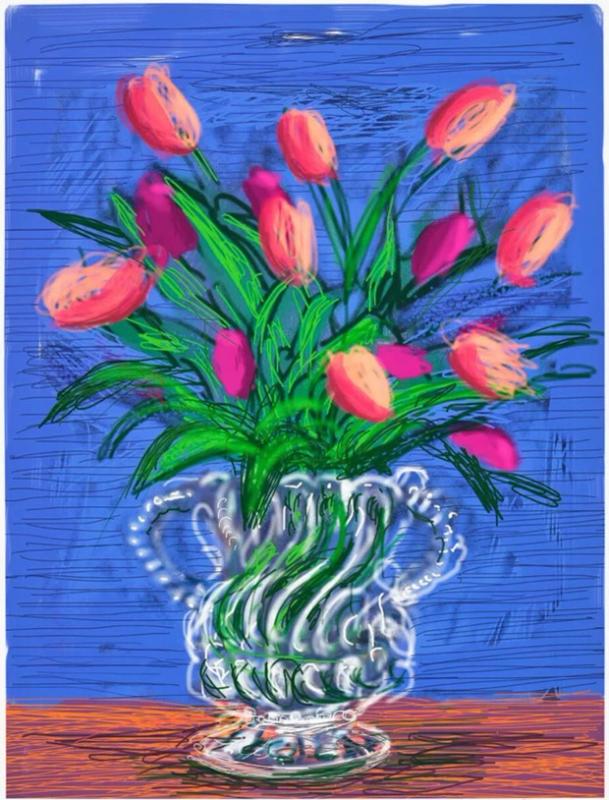
In focus
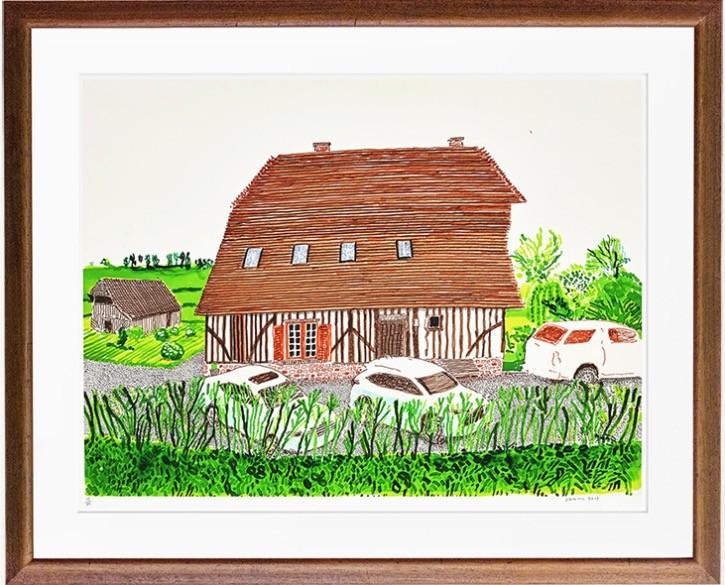
Normandy became a new focus for David Hockney’s exploration of landscape in 2019. Working around La Grande Cour, he studied the house and its surroundings through drawings that developed into a body of prints. These early views offer a distinct entry point into his Normandy years, bringing together architecture, gardens and the everyday details of an inhabited landscape.
In Front of House Looking South belongs to this early chapter, before the spring observations of 2020 expanded the Normandy project in new directions.
Fondation Louis Vuitton, Paris, France
April 9, 2025 – September 1, 2025
Seventy Years of Work at Fondation Louis Vuitton
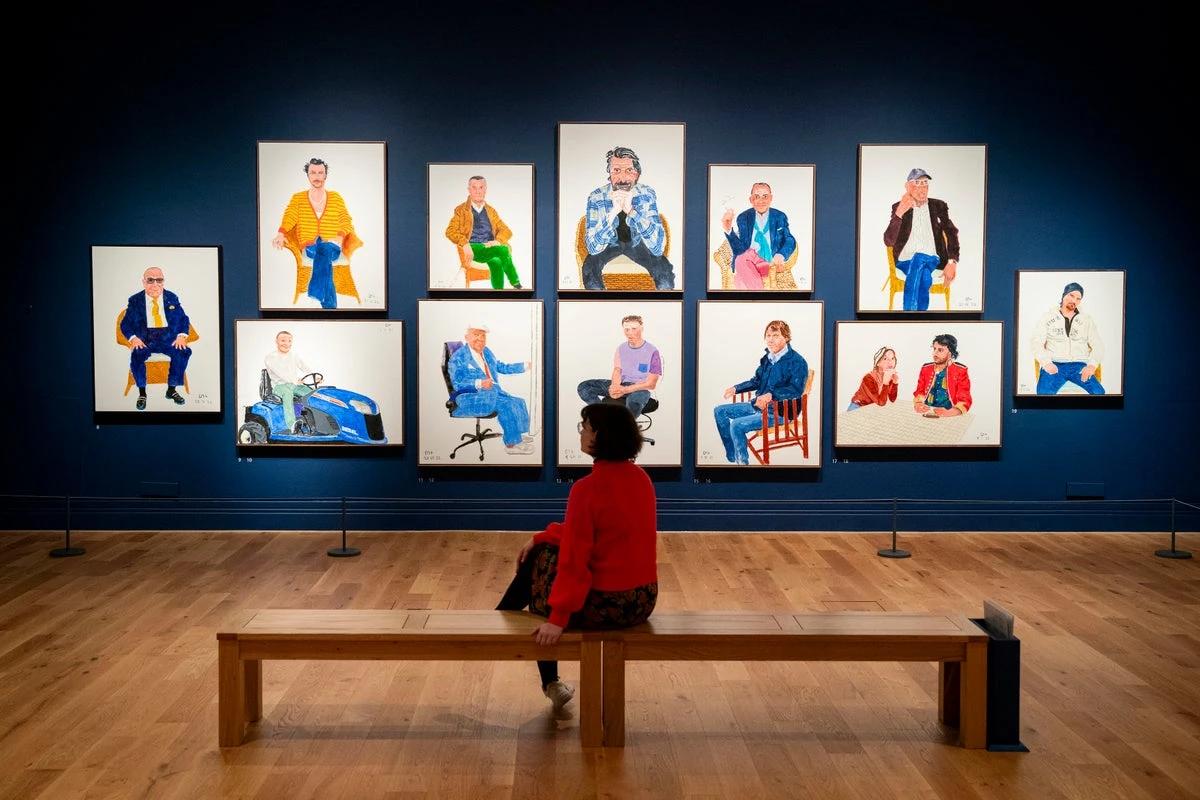
National Portrait Gallery, London, United Kingdom
November 2, 2023 – January 21, 2024
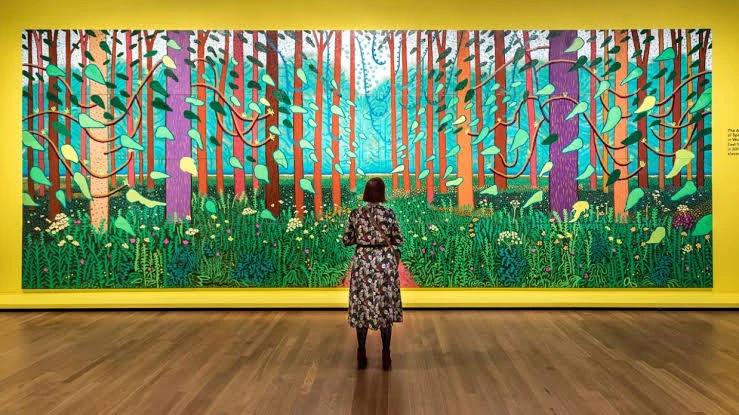
Van Gogh Museum, Amsterdam, Netherlands
March 1, 2019 – May 26, 2019
David Hockney (1937–2026) was one of the most inventive and widely recognized British artists of the twentieth and twenty-first centuries. His work moved freely across painting, drawing, printmaking, photography, stage design and digital media, yet its central concern remained remarkably consistent: how does a picture organize what the eye experiences?
Born in Bradford, Yorkshire, Hockney studied at Bradford School of Art before attending the Royal College of Art in London from 1959 to 1962. He became associated with the emergence of British Pop, although his early work already combined several interests that would distinguish him from the movement. Personal identity, same-sex desire, literary references and the conventions of picture-making appeared together in paintings that were direct, intelligent and often playful.
A first visit to Los Angeles in 1963 transformed his visual environment. Southern California offered intense light, modern architecture, open domestic spaces and the swimming pools that became among his best-known subjects. Hockney used recently developed acrylic paint to construct clear areas of color and sharply controlled surfaces, but the apparent ease of these paintings often concealed more complex questions about desire, distance and human absence.
Portraiture provided another continuous thread. Hockney repeatedly depicted his parents, friends, partners, assistants and fellow artists, often returning to the same sitters over several decades. The portraits register physical change, but they also preserve evolving relationships. Interiors, clothing, furniture and the space between figures become active elements through which intimacy, separation and personality are communicated.
Hockney’s interest in perspective gradually moved beyond the single photographic viewpoint. During the 1980s, he assembled Polaroids and photographic prints into composite images commonly known as “joiners.” These works required the viewer to reconstruct a subject from multiple moments and positions, challenging the assumption that one photograph could offer a complete or neutral account of seeing.
This investigation continued through painting, stage design and moving image. Multipanel landscapes widened the field of vision, while synchronized multi-camera videos allowed roads, woods and performers to be seen from several viewpoints at once. Hockney treated technology not as a replacement for drawing or painting, but as another means of examining how space and time might be represented.
After returning to Yorkshire in the 2000s, he worked intensively from the changing landscape around Bridlington. Roads, trees, tunnels and hedgerows were observed repeatedly through the seasons and translated into watercolors, oils, charcoal drawings, iPad images and video installations. The scale of the work expanded, but its starting point remained close observation of familiar places.
Hockney adopted the iPhone and iPad with the same curiosity he had previously brought to cameras, photocopiers and fax machines. The illuminated screen allowed him to draw rapidly, record the sequence of every mark and distribute images almost immediately. Flowers, windows, portraits and landscapes demonstrated that a digital tool could remain connected to the intimacy and directness of drawing by hand.
In Normandy, where he lived and worked from 2019, Hockney observed the arrival of spring, the passage of weather and the daily life surrounding his home. The resulting paintings and digital drawings continued his lifelong interest in repetition: returning to the same people or landscape not to produce the same image, but to make change visible.
Across more than six decades, Hockney resisted the idea that new media should displace older ones. Oil paint, pencil, etching, photography, video and digital drawing coexist throughout his work. His legacy lies not in one recognizable subject or style alone, but in a sustained belief that looking is an active process and that every picture can propose another way of seeing.
Enquire about a work, an artist, or a visit — a member of our team will respond shortly.