
Before the Swimmers
The Fragmented Body: Carole A. Feuerman’s Sculpture of the 1970s
Before the swimmers, Carole A. Feuerman cast fragments: a hip, a breast, a torso held by unseen hands. Censored in 1978 and shown again in New York and Rome in 2025, these early sculptures, now gathered in the book I Am Mine: The Seventies, change how her later work can be read.
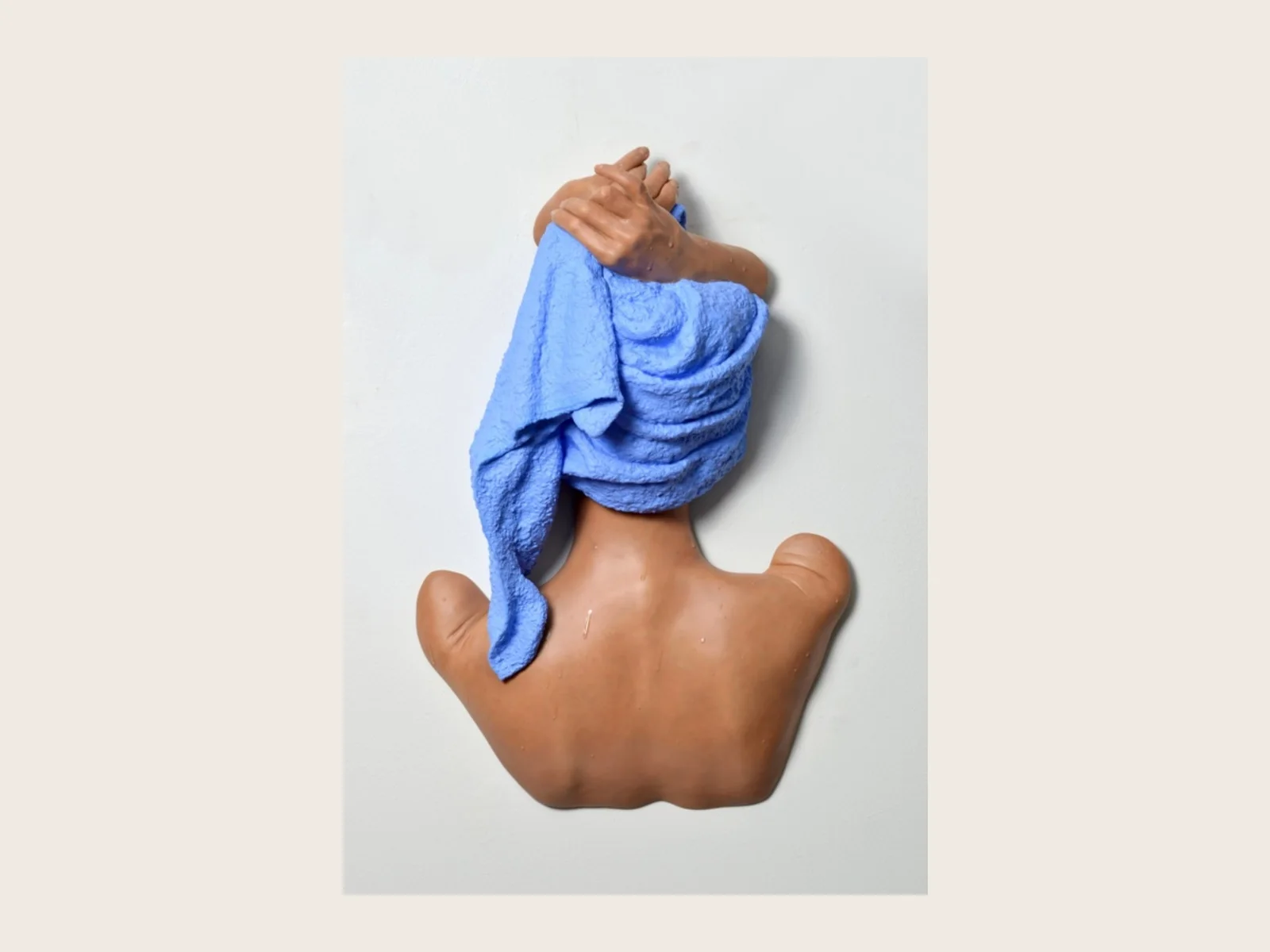
Long before the bathing caps and the drops of water, Carole A. Feuerman’s sculpture began in pieces. Through the late 1970s she cast parts of the body from life: a hip, a breast, a torso held by hands that belong to no one we can see. These works were shown, censored, then set aside for decades. In 2025 and 2026 they came back into view, in New York, in Rome and in a new book, and they change how her swimmers can be read.
A Cover on Androgyny
In her essay for I Am Mine: The Seventies (Moebius), the curator Leanne Sacramone traces Feuerman’s first sculpture to 1977, when New Times magazine asked her for a cover on androgyny. She cast a male and a female bust in wax, cut each in half and joined opposite halves into a single figure. Androgyny was then a live subject, in feminist theory as in the art press.
An earlier piece, made while she was still a student, was a wax cast of her own hip, painted so that it seemed veiled by translucent green underwear. Sacramone reads it alongside René Magritte’s The Treachery of Images: a realistic object that invites the viewer to doubt what it shows. Feuerman meant it, she says, as a visual puzzle with a sense of humor.
Hands, Touch and the Viewer
Feuerman then moved to resin and to other fragments: breasts, buttocks, hands. Each began with a mould taken directly on the skin, followed by a plaster positive refined by hand, a silicone mould and a final cast in resin, painted with care. The process is described on our page Inside Carole A. Feuerman’s Sculpture Process.
In Breast, a single breast in a rumpled bra, Sacramone sees a tender answer to Marcel Duchamp’s Prière de toucher. In Kiss, Red Tie and Three Hands, hands grip a torso, pull a tie, press on a waistband, and the scenes stay ambiguous between desire and constraint. The torn, unframed edges of these wall pieces refuse the containment the tradition of the nude imposes, and leave the viewer to complete the body, and to notice their own looking.
“I kind of identified with tears.” Carole A. Feuerman, on the raw edges of her fragments
Censored, Then Revisited
The fragments met resistance almost at once. An exhibition in Fort Worth in 1978 was censored by its organizers, and Feuerman turned toward complete bodies and the swimmers that would define the following decades. Nearly fifty years later, Long Island Girl: The Superrealism of Carole Feuerman at the Museum of Sex in New York (January 31 to September 14, 2025) brought works begun in 1976 back before the public.
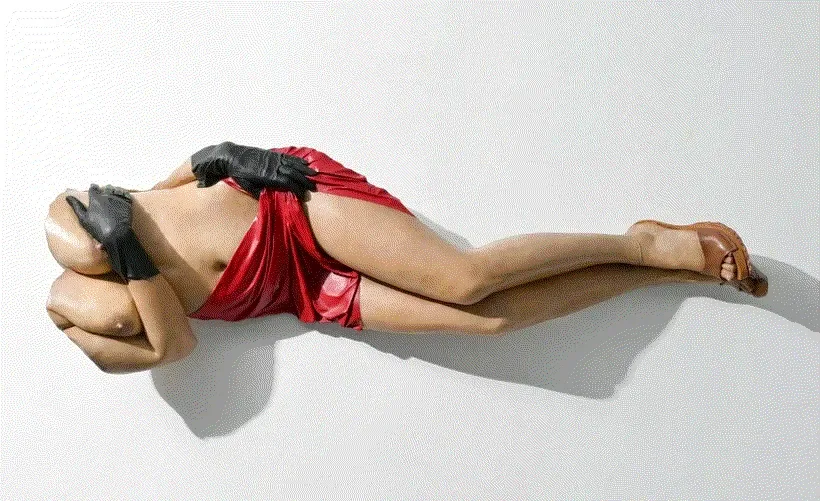
The same year, The Voice of the Body at Palazzo Bonaparte in Rome opened with the fragments of the 1970s, and in 2026 From Line to Life at the QCC Art Gallery in New York showed her drawings of 1971 and 1976 beside her sculpture. I Am Mine: The Seventies, published by Moebius, gathers essays by Gloria Moure, Leanne Sacramone, Victoria Noel-Johnson, Helga Marsala, Barbara Buhler Lynes and Tone Lyngstad Nyaas.
The Fragment in Her Later Work
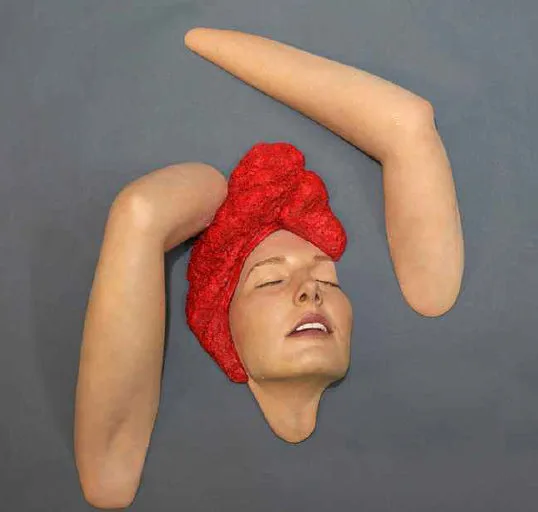
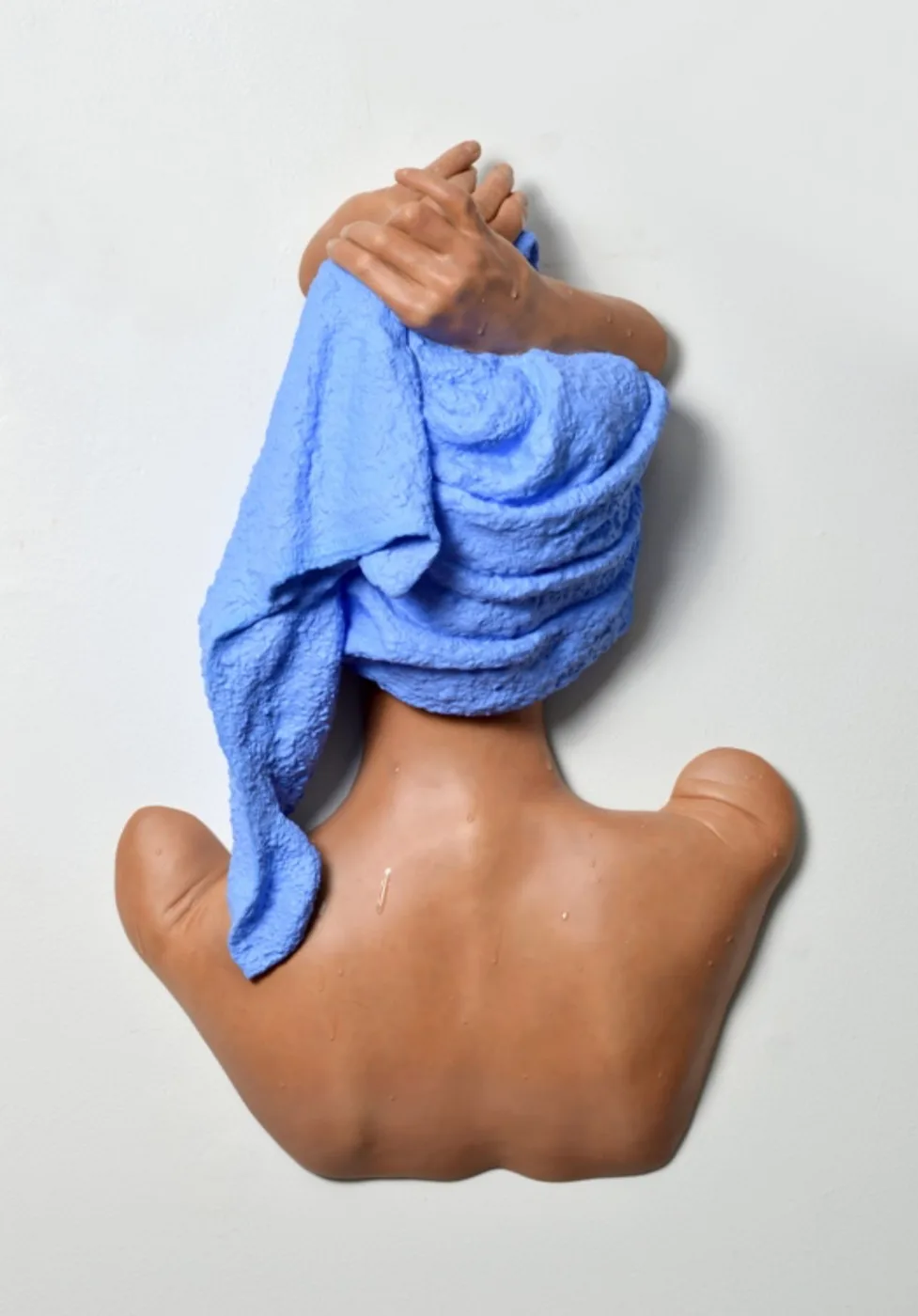
The fragment never left. Many swimmers are cut at the hips or the shoulders, as in Capri, and some later works return to the wall. In Splash II (2010), a face wrapped in a red towel and two separate arms are hung apart, so that the empty wall between them completes the figure. In Hands on Towel (2014), only a back, two raised arms and the hands gathering a blue towel remain; the face is hidden. We showed Splash II at Palm Beach Modern + Contemporary 2020 and both works at the Hamptons Art Fair 2023.
Her studio describes her recent series Tattooed Mythologies as a return to the fragment, the body treated as a surface for drawing and for stories from classical mythology. Read with the works of the 1970s in mind, even her calmest swimmers keep something of that first unease: a body offered to the eye, and a mind that stays out of reach. Our article on her swimmers, from Catalina to today follows the other half of that story.
To see the works with our team in Miami or Laguna Niguel, write to info@markowiczfineart.com or contact the gallery.
Further Reading
- Carole A. Feuerman: biography, exhibitions and works.
- Carole A. Feuerman’s Swimmers, from Catalina to Today.
- Collecting Carole A. Feuerman.
Sources
- Leanne Sacramone, “Carole Feuerman’s fragmented bodies,” in I Am Mine: The Seventies (Moebius), with essays by Gloria Moure, Victoria Noel-Johnson, Helga Marsala, Barbara Buhler Lynes and Tone Lyngstad Nyaas: the early works, their making, the comparisons with Magritte and Duchamp, and the artist’s words.
- Markowicz Fine Art, Long Island Girl at the Museum of Sex: dates, works begun in 1976, Fort Worth 1978.
- Carole A. Feuerman’s studio, artist presentation, 2026: Tattooed Mythologies.
Related artists