
Art, Architecture & Interior Design
Choosing Contemporary Art for Hotel Lobbies and Wellness Spaces
How color, geometry, texture and sculptural form can shape the experience of an interior. A fine art guide for interior designers and hospitality professionals, exploring sculptural abstraction, geometric art and expressive painting through seven artists presented by Markowicz Fine Art.
A hotel lobby is often the first place where a guest forms an impression of a property. A spa reception invites a different kind of attention: a slower pace, a moment of transition, a sense of distance from the outside world. In both settings, contemporary art can give architecture a character of its own.
Selecting art for hospitality interiors begins with the experience the design team wants to create. Scale, light, materials and the way people move through the building all matter. But the artwork should also have a life beyond the interior: an artistic language that rewards a closer look.
Three approaches are particularly relevant to this conversation: contemplative wall sculpture, geometric and optical abstraction, and expressive abstract painting. Through works by Lyès-Olivier Sidhoum, L’Atlas, Diego Masi, Harry Moody, Tom Lieber, Sylvain Tremblay and Paul Ecke, this guide explores how different artistic languages can respond to the architecture and atmosphere of a place.
Art for spaces of arrival and repose
A lobby serves several purposes at once. It must welcome guests, guide movement and provide a setting in which people can sit or meet. A large-scale artwork can establish a focal point without competing with the architecture or the reception desk.
In a spa lounge or a wellness reception, a different visual balance may be appropriate. Restrained color, gradual transitions and recurring forms can invite a more contemplative encounter. The aim is not to prescribe what a guest should feel, but to give the eye something worth returning to.
Lyès: color, reflection and sculptural presence
French artist Lyès-Olivier Sidhoum, known as Lyès, works with crystal acrylic, pigments and aluminum. The circular wall sculptures he gathers under the name Source bring color and reflected light into the same composition. Their appearance varies with the position of the viewer and the lighting of the room.
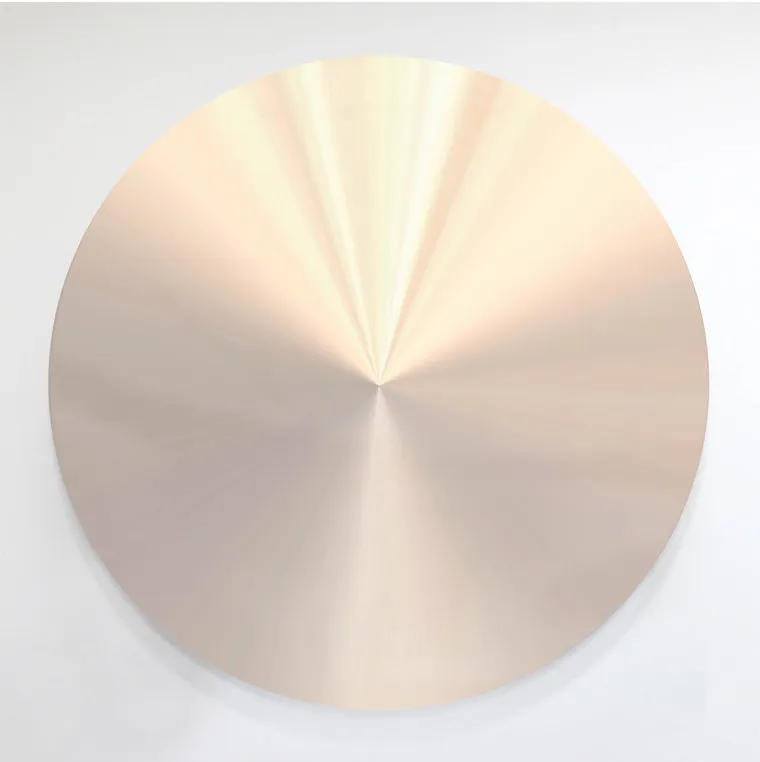
Celestial Dome, approximately two meters in diameter, combines delicate cream and blush tones with a radiating composition. Its generous scale could anchor a hotel lounge or a spacious wellness reception while retaining a relatively restrained palette. Its reflective surface deserves particular attention when planning the lighting.
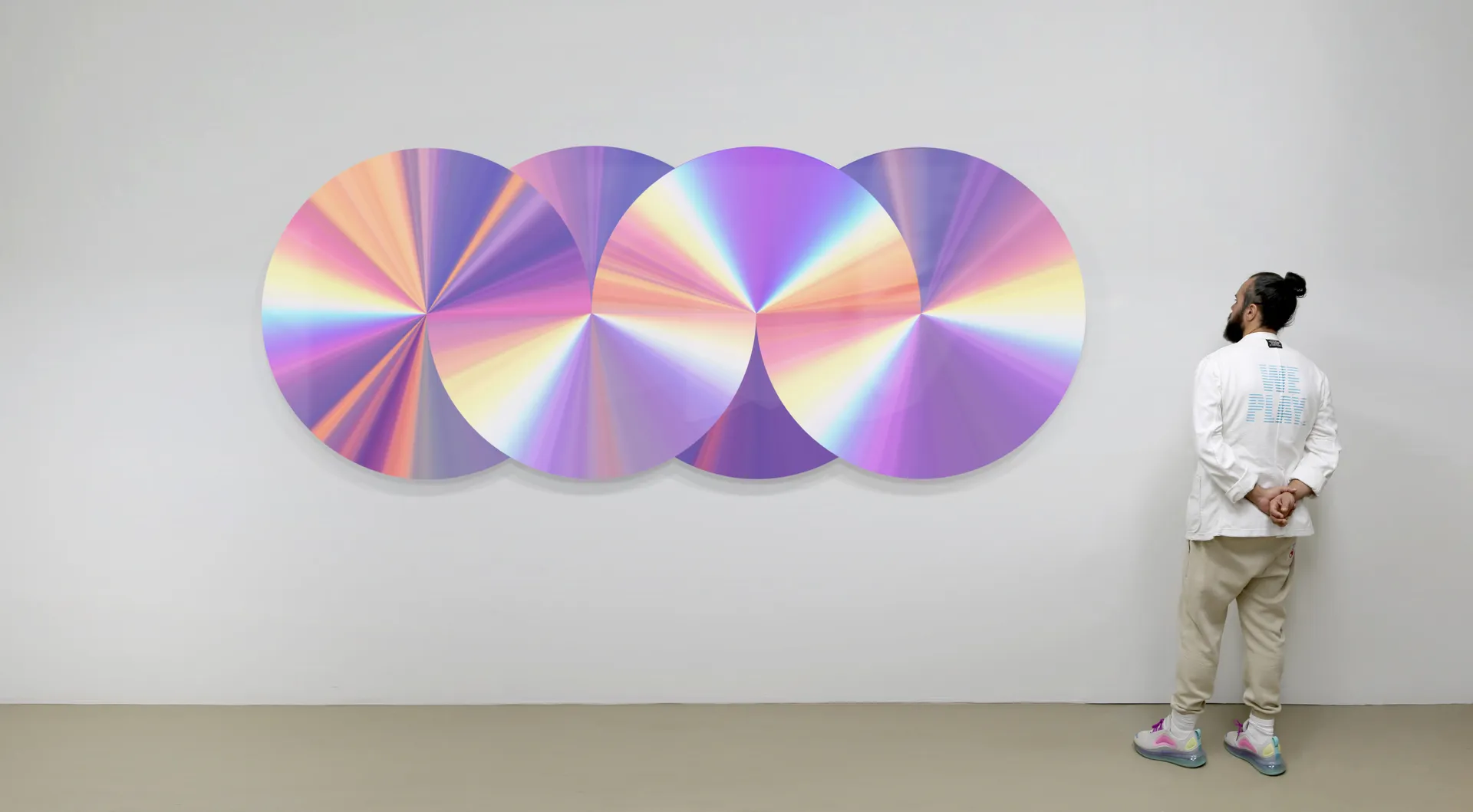
Celestial DNA (2022), a composition of four overlapping discs spanning three meters, offers a different possibility. The violet, coral and warm yellow tones bring more intensity to the wall. Markowicz Fine Art presented the sculpture at the LA Art Show in February 2024. The gallery’s photographs show the work at human scale as well as the way its surface responds to different viewing angles. That makes it a useful reference when considering a long reception wall or an expansive interior.
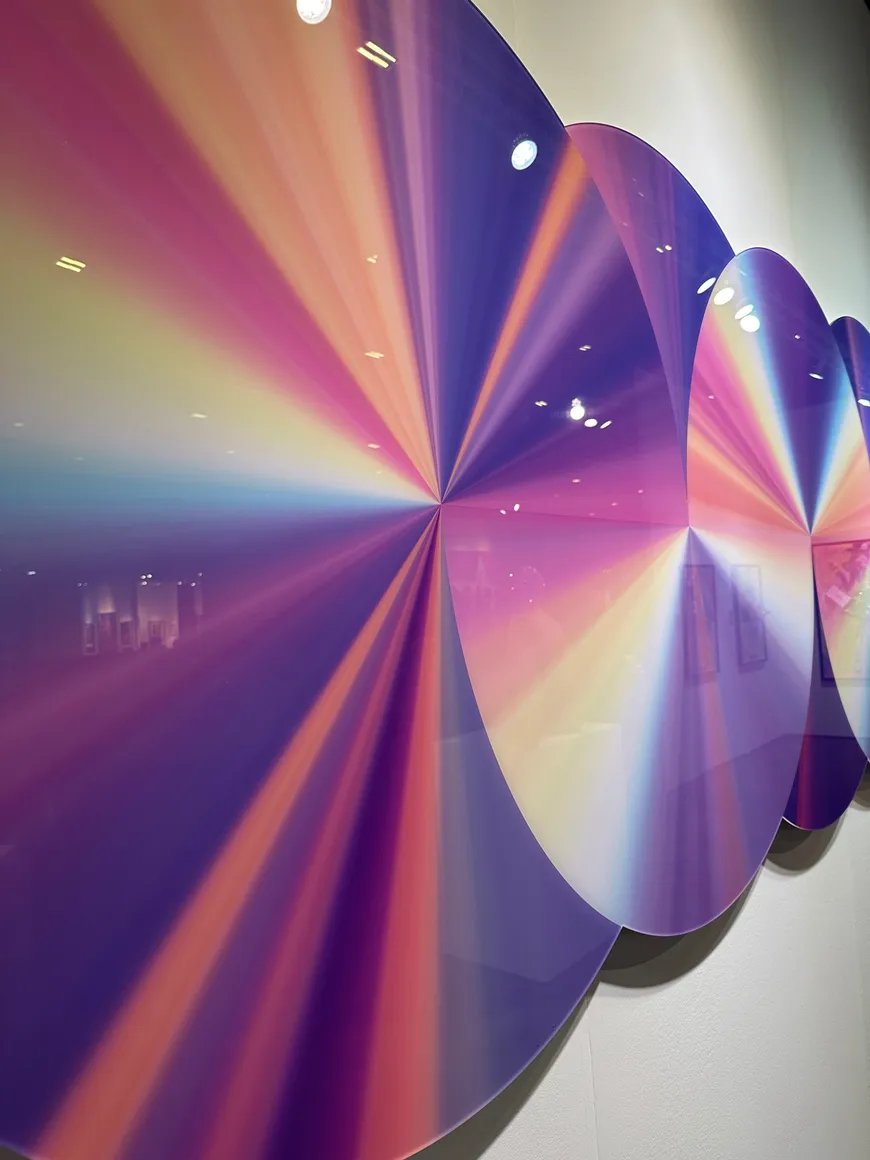
These works are not simply flat images on a wall. Their depth and changing reflections give the room a role in the experience of the sculpture.
L’Atlas: geometric art in dialogue with architecture
The practice of L’Atlas developed from graffiti and calligraphy into a distinctive form of geometric abstraction. His paintings bring together repeated signs, measured lines and the less predictable qualities of spray paint.
In Calm Before The Storm (2020), a white network of lines sits over a dark ground that opens into blue. At approximately one meter square, the painting can be considered for a seating area, a reception alcove or a quieter passage where guests encounter it at closer range.
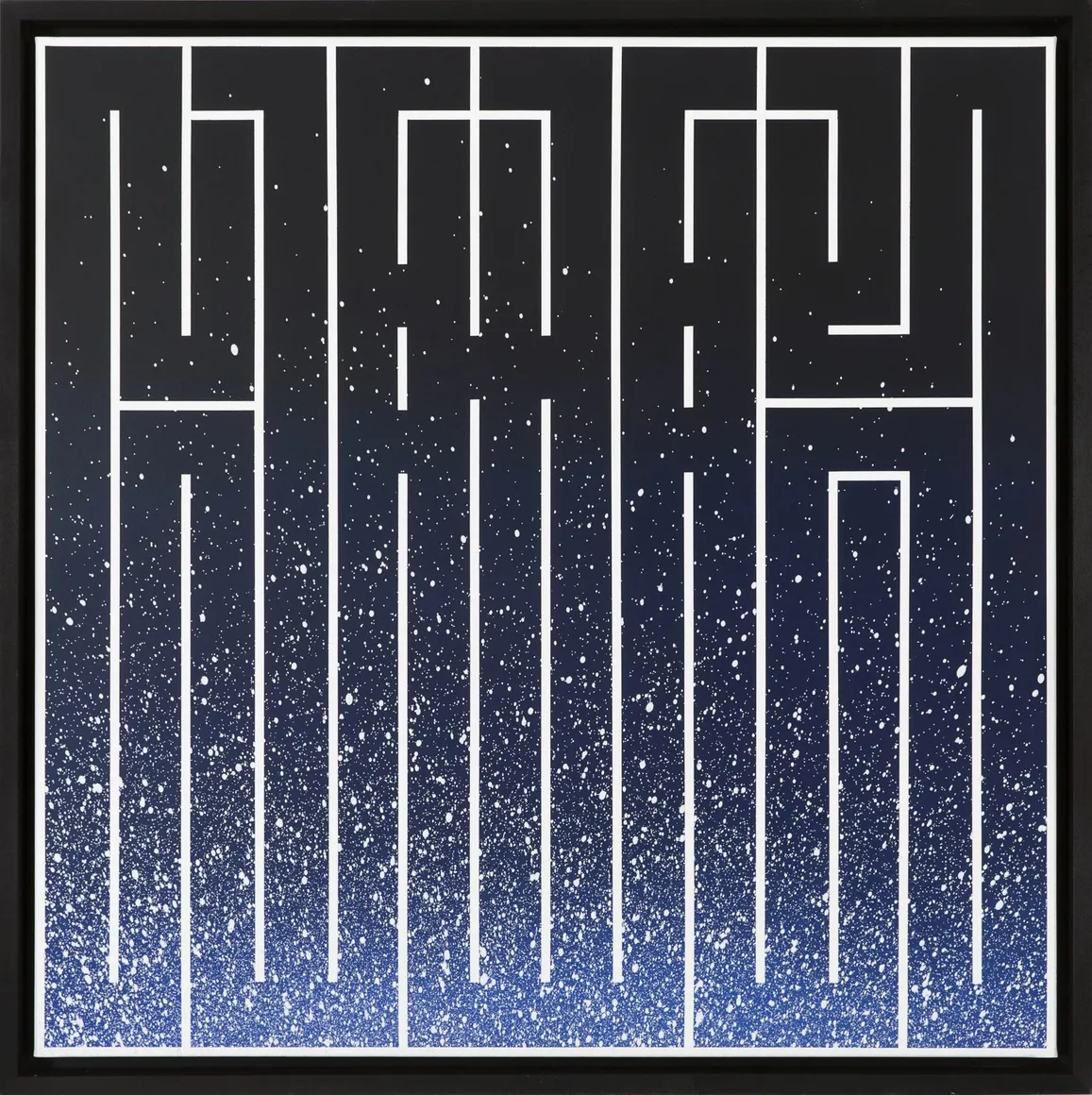
Unlike a decorative pattern, the structure comes from the artist’s investigation of writing and abstraction. It introduces a graphic rhythm that can either correspond with the lines of an interior or stand in deliberate contrast to them. The artist’s work in public space also provides context for understanding how his visual language changes across scales.
Diego Masi: movement within a still image
Uruguayan artist Diego Masi explores perception through painting, installation and sound. In his paintings, bands and curved forms suggest volumes and movement within a static surface.
Invierno (2006), an acrylic on canvas measuring 169 × 139 cm, brings black and white stripes into an organic configuration against a subdued background. The eye follows the contours, turns and variations in scale. This painting could introduce an element of discovery in a hotel reception or lounge, especially where the architecture calls for a more animated focal point.
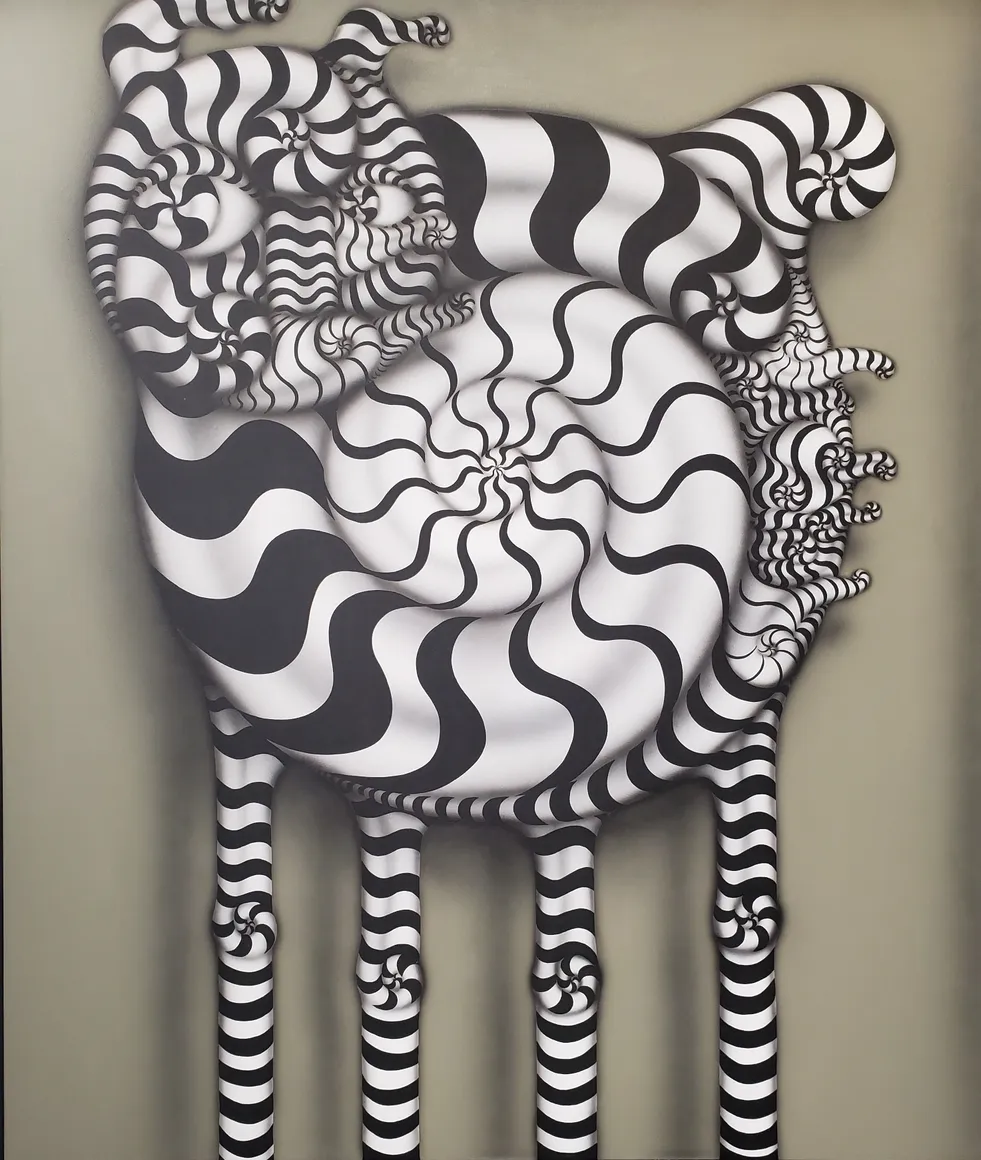
Masi’s optical energy offers a useful contrast to the quieter color fields of Celestial Dome. A well-considered collection for a property need not create the same atmosphere in every room.
Expressive abstraction: color, texture and atmosphere
Original abstract paintings can help establish the character of an interior through gesture, color and surface, without prescribing a literal narrative. They offer a useful complement to sculptural and geometric works, particularly when a project calls for a large canvas or a more tactile approach to painting.
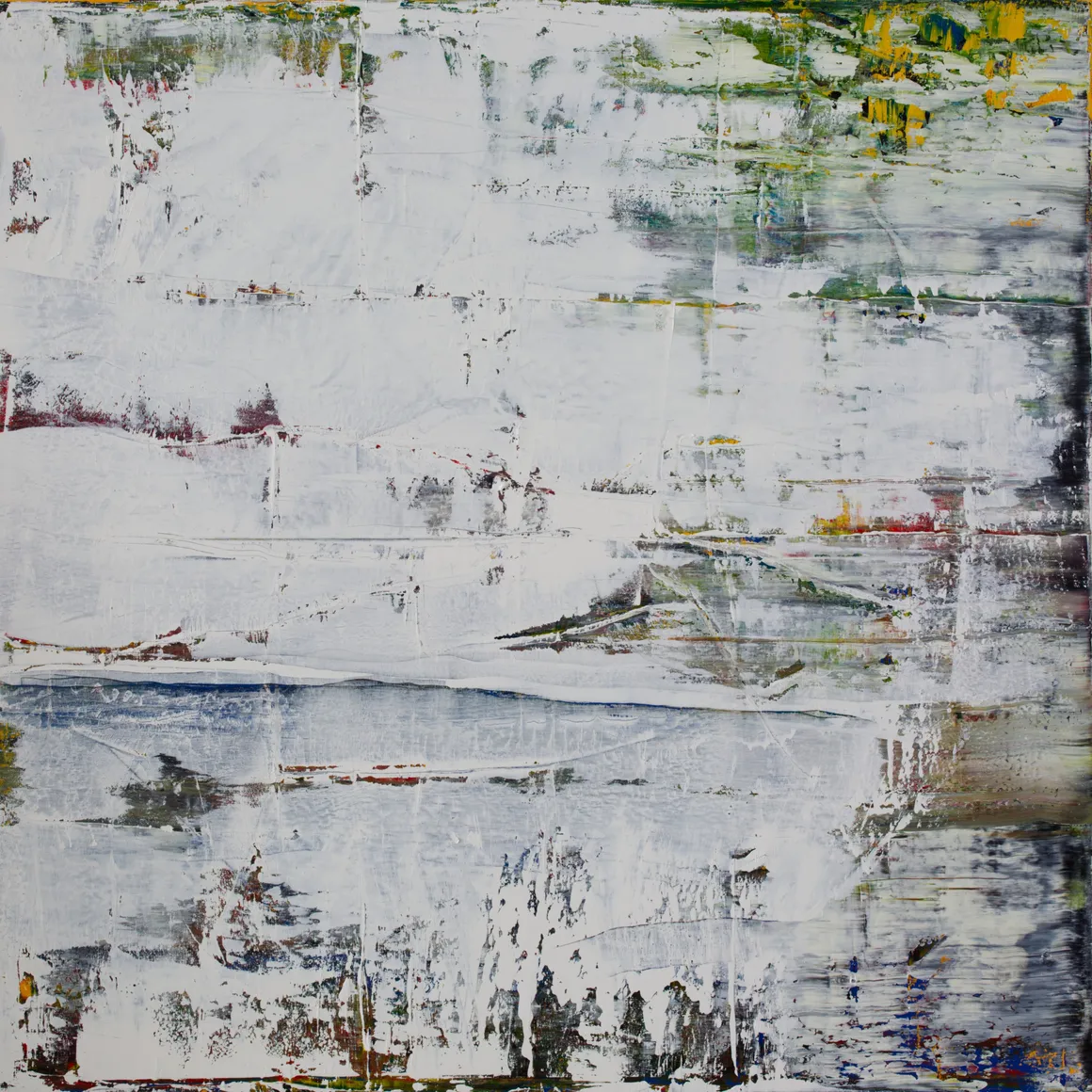
Harry Moody is a German-born painter based in Los Angeles. His layered abstractions explore the balance between spontaneity and intention. The marks, accumulations and textures of his paintings encourage viewers to move between a first impression from a distance and a closer examination of the surface. In Zen Now - 754 (2026), an oil on canvas of 72 × 72 inches (approximately 183 × 183 cm), broad pulls of white and pale grey cover most of the surface, while green, ochre, red and blue show through where the paint has been scraped back. This approach is especially worth considering for a lounge or a seating area, where guests have time to look.
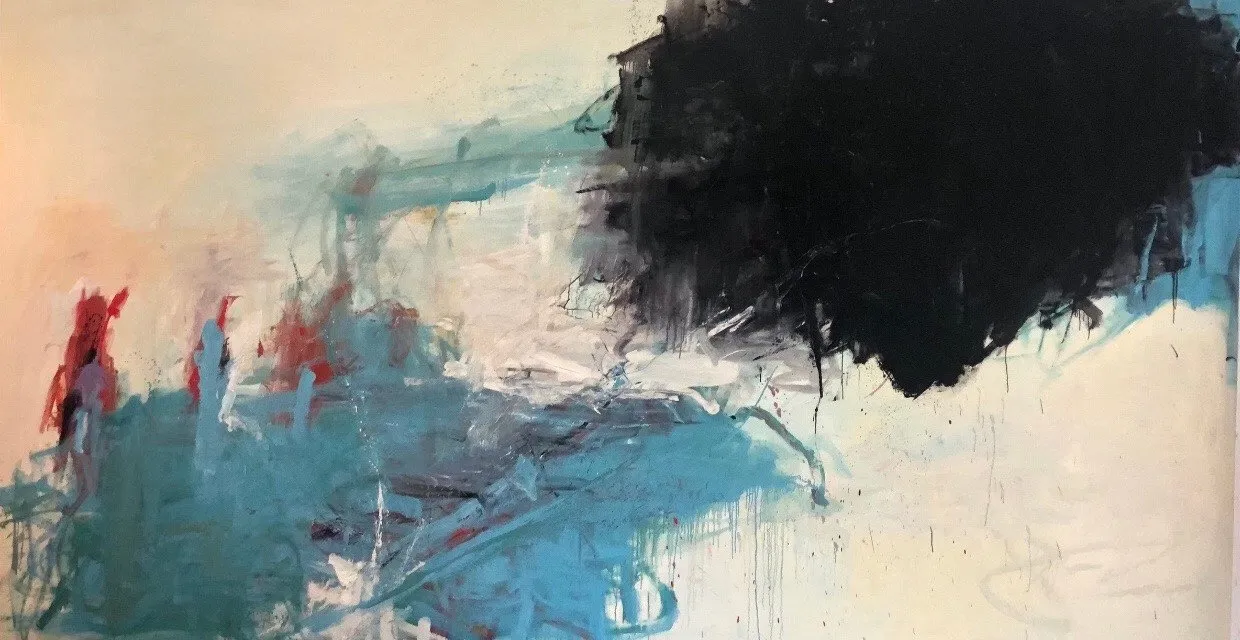
Tom Lieber develops a dialogue between gestural marks and the spaces around them. His oil painting Approach (2022), measuring 76 × 142 inches (approximately 193 × 361 cm), illustrates the scale at which a single painting can shape a room: across its pale ground, turquoise and blue passages move toward a dense black mass in the upper right. The work was included in Markowicz Fine Art’s June 2023 Art After Hours presentation in Laguna Niguel. For a broad lobby wall, the relationship between the painting’s dimensions, viewing distance and surrounding architecture is as important as its palette. Lieber’s work is also documented in the collections of the Metropolitan Museum of Art, SFMOMA and MOCA Los Angeles.
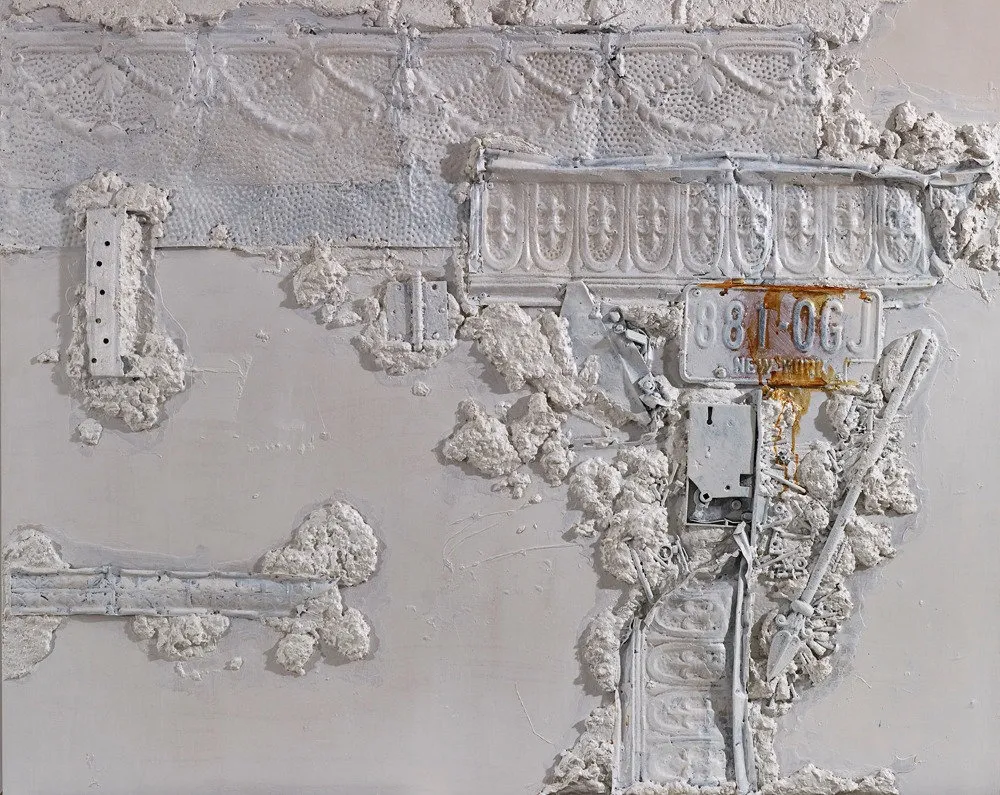
The practice of Canadian artist Sylvain Tremblay ranges well beyond abstraction, encompassing figurative and nature-related subjects. Fossiles De New York, a relief in modeling paste and acrylic measuring 48 × 60 × 3 inches (approximately 122 × 152 × 8 cm), shows a more sculptural side of his work. Pressed-tin ornament, hinges, a lock and a New York license plate are set into the paste and painted white, with a single rust-orange streak. In a pale interior, a work of this kind depends less on color than on the light that rakes across its surface. The selection should be made from individual works rather than assigning a single style to the artist’s entire practice.
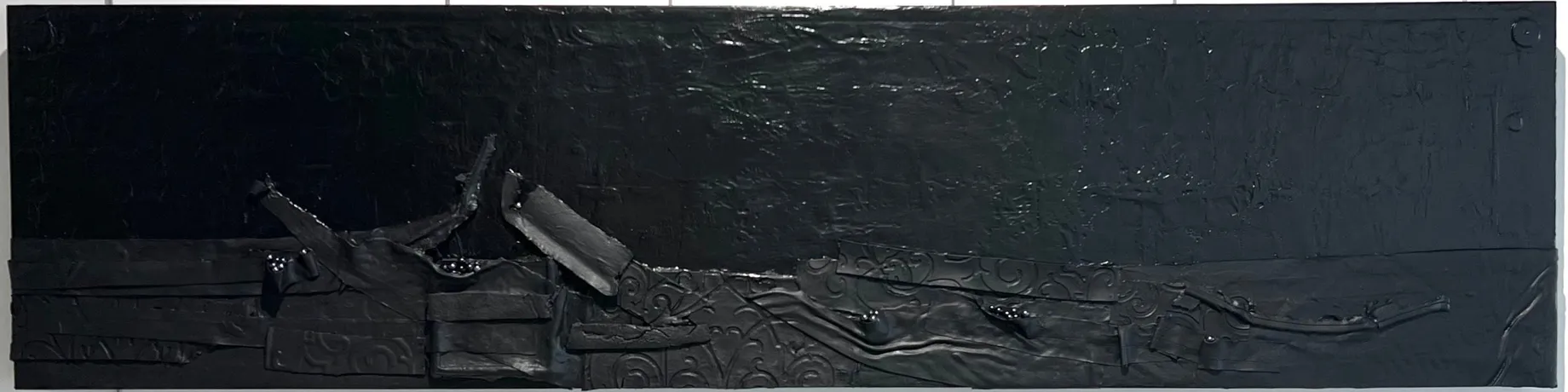
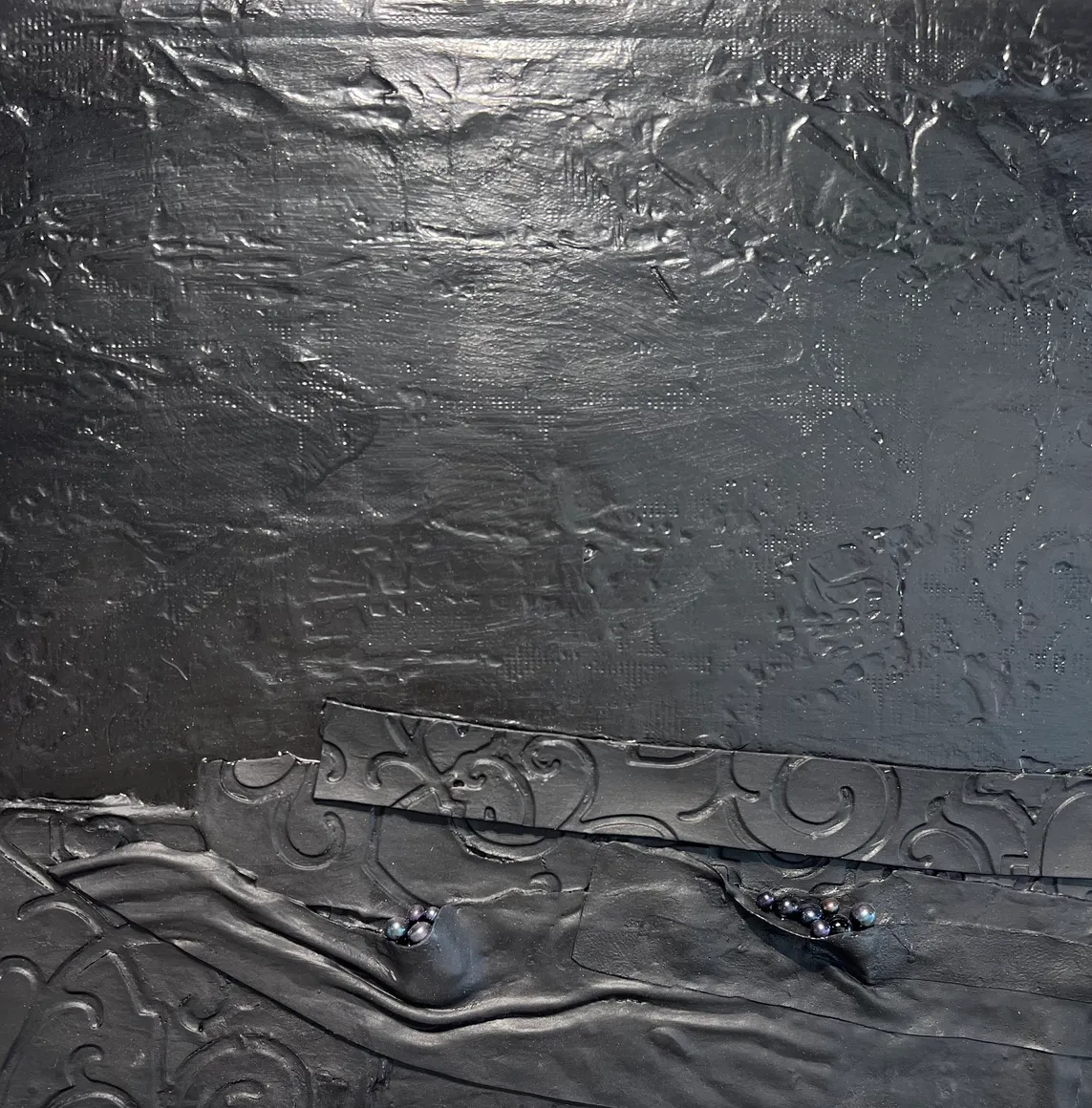
Paul Ecke brings an understanding of ceramics and three-dimensional form to his paintings. His first solo exhibition at the gallery, White Water Meets Night Water, presented at Markowicz Fine Art in Laguna Niguel from October 21 to November 20, 2023, featured mixed-media paintings incorporating pearls. Night Water IV (2023), measuring 18 × 72 × 4 inches (approximately 46 × 183 × 10 cm), is a particularly useful example of an elongated work whose material surface and depth need to be considered alongside the lighting and mounting conditions of the space. Its black surface is built up in folds and embossed strips, with small clusters of pearls set into the lower band.
These approaches to abstract painting can be considered for hotel suites, lounges, private clubs and residential lobbies as well as hospitality reception areas. A collection can move from quieter compositions to more expressive works across the different rooms. The starting point remains the individual artwork, not simply the color of the upholstery or the finish of the wall.
Choosing the right artwork for a hospitality project
The selection process is most productive when art is considered early in the design. Before proposing a work, we would look at five aspects of the brief:
- Scale and sightlines. How much wall is available, where will the work first be seen, and how close can guests approach it?
- Light and materials. Consider daylight, artificial lighting, surface reflections and the relationship with surrounding finishes.
- Use of the space. A busy arrival area, a lounge and a spa relaxation room need not have the same visual intensity.
- Installation and conservation. Review weight, mounting, wall construction, clearance, access, maintenance and environmental conditions with the relevant specialists. For wellness facilities, a dry reception or lounge is different from a steam room, poolside or another humid area. Suitability must be confirmed for each artwork and location.
- Budget and timing. Consider acquisition, transport, insurance, installation and the project’s opening schedule together.
Fine art as part of the identity of a place
A collection of original contemporary works can give a hospitality project an identity that is not dependent on a single decorative scheme. One significant sculpture may establish the character of a lobby, while paintings in other areas create a different pace of looking.
Markowicz Fine Art’s online exhibition The Art of Abstraction, presented from June 12 to August 14, 2026, brought together different approaches to abstraction, including Celestial Dome and Celestial DNA by Lyès, Calm Before The Storm by L’Atlas, Approach by Tom Lieber and paintings from Paul Ecke’s Night Water series. The exhibition offers a concrete reference for the gallery’s interest in the relationship between geometry, gesture and material.
In December 2019, Markowicz Fine Art collaborated with the Sagamore Hotel in Miami Beach to present Arno Elias’s exhibition I’m Not a Trophy, which opened during Miami Art Week and remained on view until February 2020. The project is one example of a hotel functioning as a place of cultural encounter rather than simply a setting for decoration.
Working with interior designers and hospitality professionals
At Markowicz Fine Art, we approach art selection as a collaboration with the design team. Our role is to bring knowledge of artists, individual artworks, materials and acquisition possibilities to the architectural conversation.
Whether you are developing a boutique hotel, planning a wellness reception or looking for a distinctive work for a luxury residential lobby, an initial conversation can begin with a floor plan, photographs, wall dimensions, a design direction and an indicative budget.
Our team in Miami and Laguna Niguel can explore a selection of original paintings and sculptures, discuss placement and coordinate practical requirements with the appropriate specialists. Availability, installation feasibility, timing and costs are confirmed for each project.
About this guide
Images: Markowicz Fine Art and/or the artists. The placements discussed here are curatorial suggestions, not completed installations.