Secondary Market
KAWS
American, born 1974
American artist extending a distinctive cast of cartoon-derived figures across painting, sculpture, design and editions to explore vulnerability and mass recognition.
Biography
KAWS is the professional name of Brian Donnelly, born in Jersey City, New Jersey, in 1974. He studied illustration at the School of Visual Arts in New York and worked briefly in animation after graduating. During the 1990s, he developed a graffiti practice and began opening bus-shelter and phone-booth advertising cases, altering commercial images with recurring skull-and-crossbones forms and eyes marked by Xs.
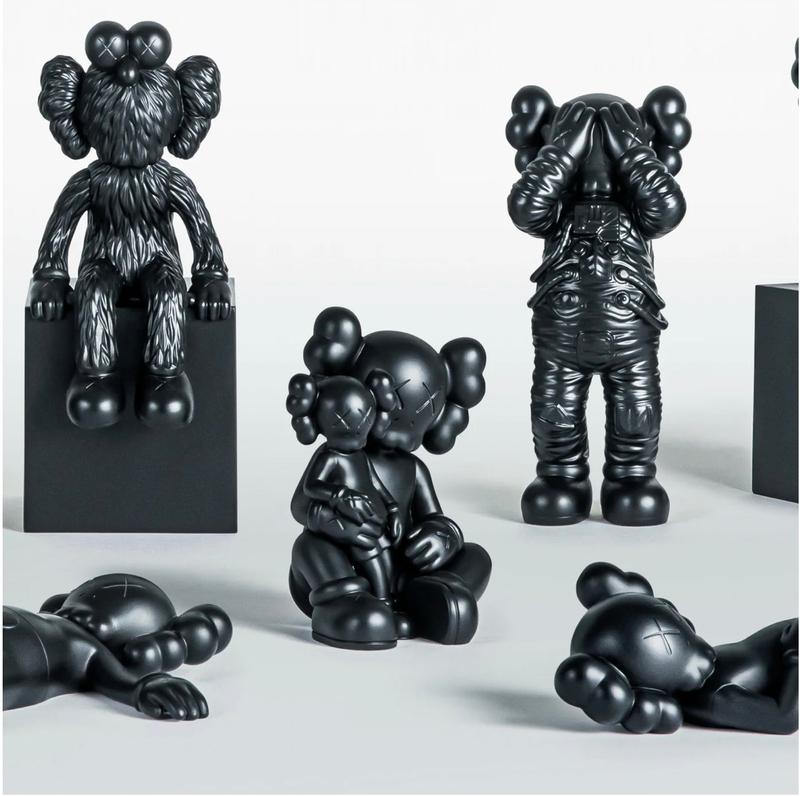
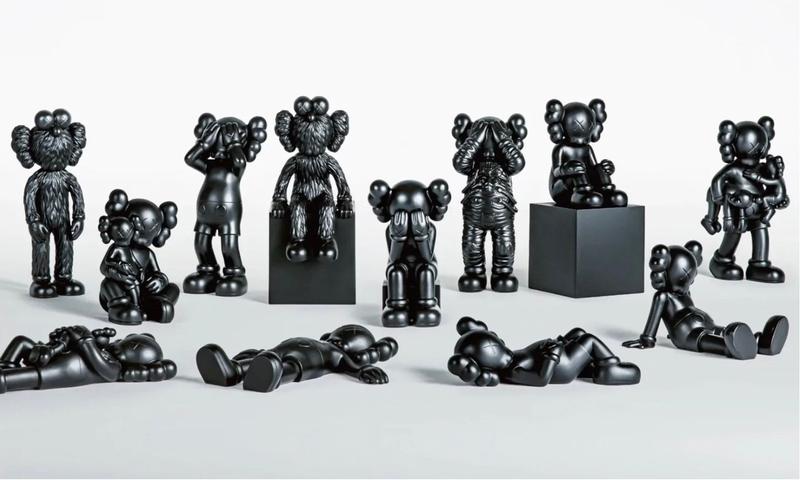
These interventions established a strategy that continues throughout his work: familiar visual languages are not rejected, but redirected. KAWS draws from animation, comics, product design and the global circulation of characters, yet he removes their original narratives. COMPANION, CHUM, BFF and other figures become actors in scenes of embrace, concealment, exhaustion and loss.
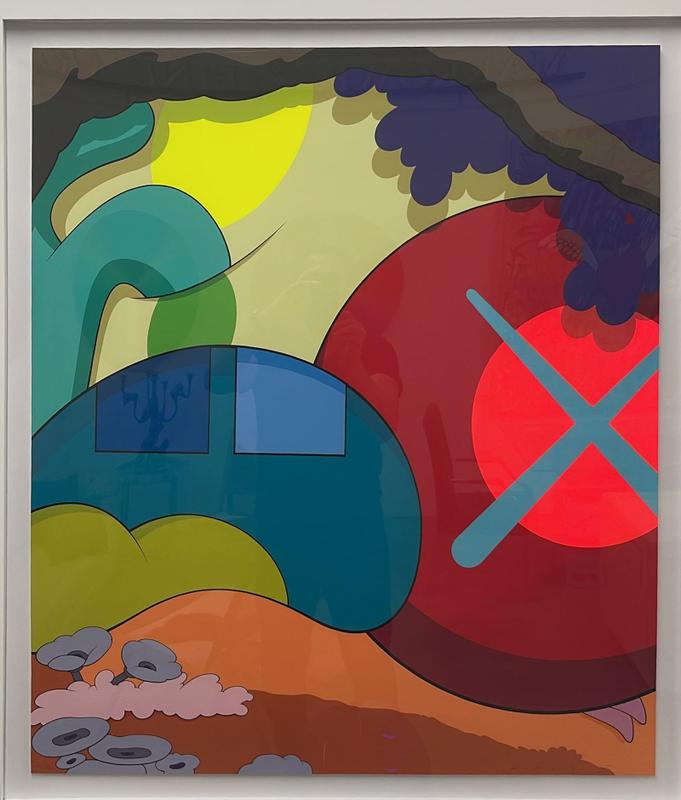
Painting is central to the practice. Cropped faces, hands and bodies are broken into clean fields of color whose graphic clarity can verge on abstraction. In sculpture, the same characters range from small editions to monumental public installations. Scale changes their emotional register: a figure that appears collectible in one form can become vulnerable, imposing or strangely human when enlarged within a city or landscape.
KAWS has also worked extensively with toys, fashion, music and commercial collaborations. These projects place his imagery within the systems of distribution that helped shape it, complicating conventional divisions between unique art, edition, product and popular culture. The broad accessibility of the characters has generated an unusually diverse audience, while their repeated gestures maintain a consistent emotional vocabulary.
The X in KAWS’s work functions as signature, eye and interruption. It makes recognition immediate but blocks ordinary expression, requiring posture and relation to carry the psychological weight. This balance between graphic control and emotional ambiguity explains the durability of the work. Beneath its polished surfaces, KAWS repeatedly returns to experiences of loneliness, companionship and the need for connection.