
June 13, 2009 – August 31, 2009
Banksy versus Bristol Museum
A Secret Museum Takeover in the Artist’s Home City
Bristol Museum & Art Gallery, Bristol, United Kingdom
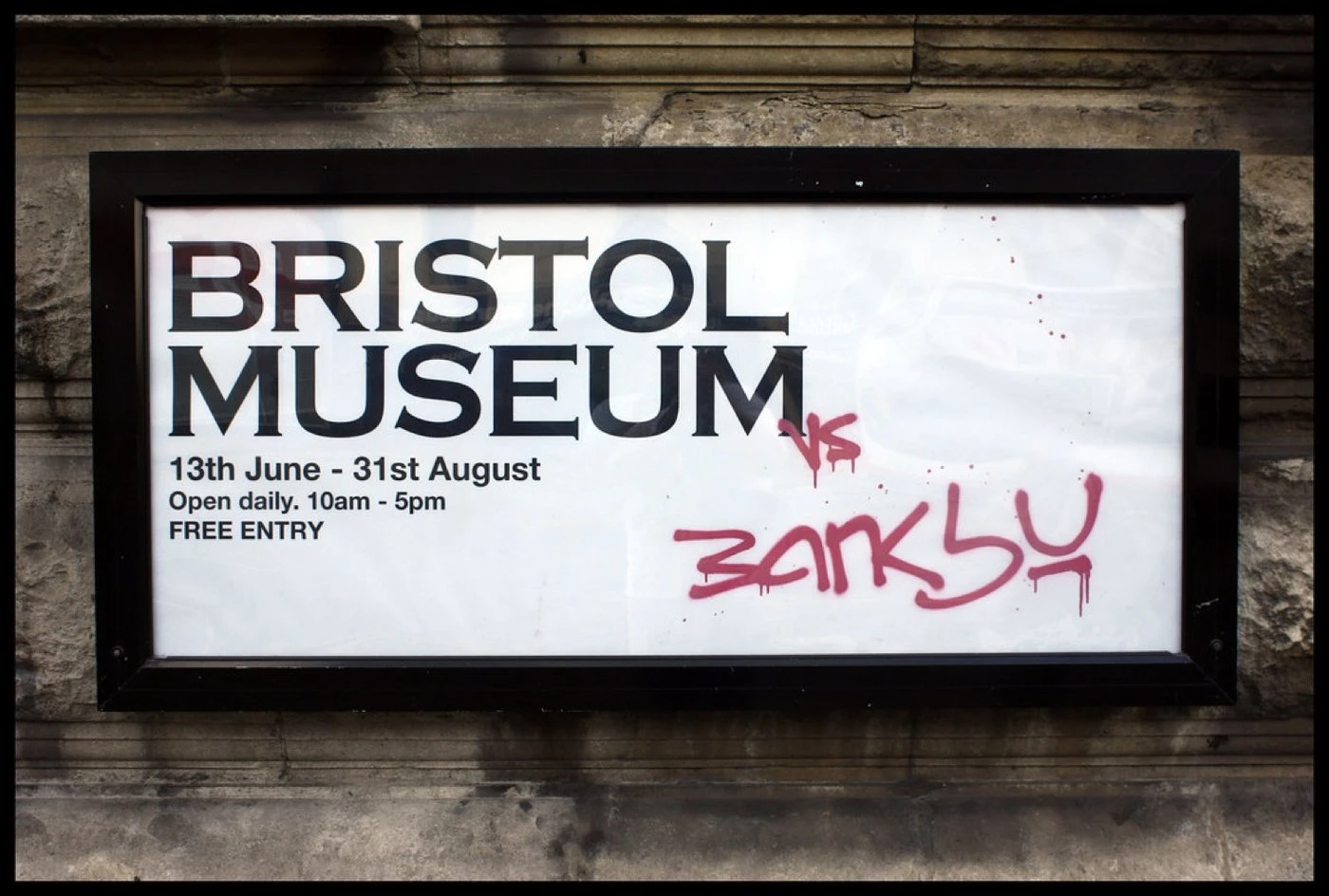
Banksy versus Bristol Museum was developed in secrecy between Banksy and Bristol Museum & Art Gallery and opened on June 13, 2009. More than one hundred paintings, sculptures, altered objects and animatronic installations occupied the building, often appearing directly among the museum’s established collections.
The project was both a homecoming and an institutional reversal. In the city where Banksy’s work had emerged through unsanctioned public interventions, the municipal museum allowed the artist to alter its displays from within, turning classification, authority and the conventions of museum viewing into part of the exhibition.
A Museum Rewritten from Within
Banksy did not treat the museum as a neutral container for a conventional retrospective. Existing galleries, historic objects and architectural spaces became material for a series of interruptions. Modified paintings appeared near older works, invented specimens entered natural-history displays and sculptural figures disrupted the apparent order of the collection.
The exhibition required visitors to look twice. Objects that initially seemed to belong to the museum revealed anachronisms, political jokes or unexpected changes. The uncertainty between permanent collection and temporary intervention made institutional authority itself part of the experience.
A reconstructed studio offered another form of access. Stencils, working materials and the accumulated disorder of production suggested the practical environment behind images usually encountered as finished interventions on city walls. Elsewhere, a burnt-out ice-cream van and animated installations shifted the exhibition toward theater and mechanical spectacle.
Rather than abandoning the language of the street when entering the museum, Banksy transferred its methods of surprise, interruption and contextual dependence into the building.
From Temporary Takeover to Civic Memory
The exhibition attracted more than 300,000 visitors during its eleven-week run and became one of the most attended exhibitions internationally in 2009. Long queues surrounded the museum, transforming a project prepared without a conventional publicity campaign into a major public event.
Its significance extended beyond attendance. Banksy’s relationship with Bristol had often involved unofficial actions and the risk that works might be removed or painted over. At the museum, the same local history became the basis of a sanctioned collaboration without resolving the contradictions between civic recognition and artistic independence.
After the exhibition closed, Banksy left Paint Pot Angel with the museum. The sculpture remains part of the institution’s public display and gives the temporary takeover a permanent presence within Bristol’s collection.
The project demonstrated that institutional recognition did not necessarily require Banksy to abandon the questions that had shaped his public work. Instead, the museum itself became the object being examined.
Related artists