
July 15, 2024 – September 10, 2024
The Diver at Paris 2024
Carole A. Feuerman at the Eiffel Tower During the Olympic and Paralympic Games
Promenade d’Australie, Eiffel Tower, Paris, France
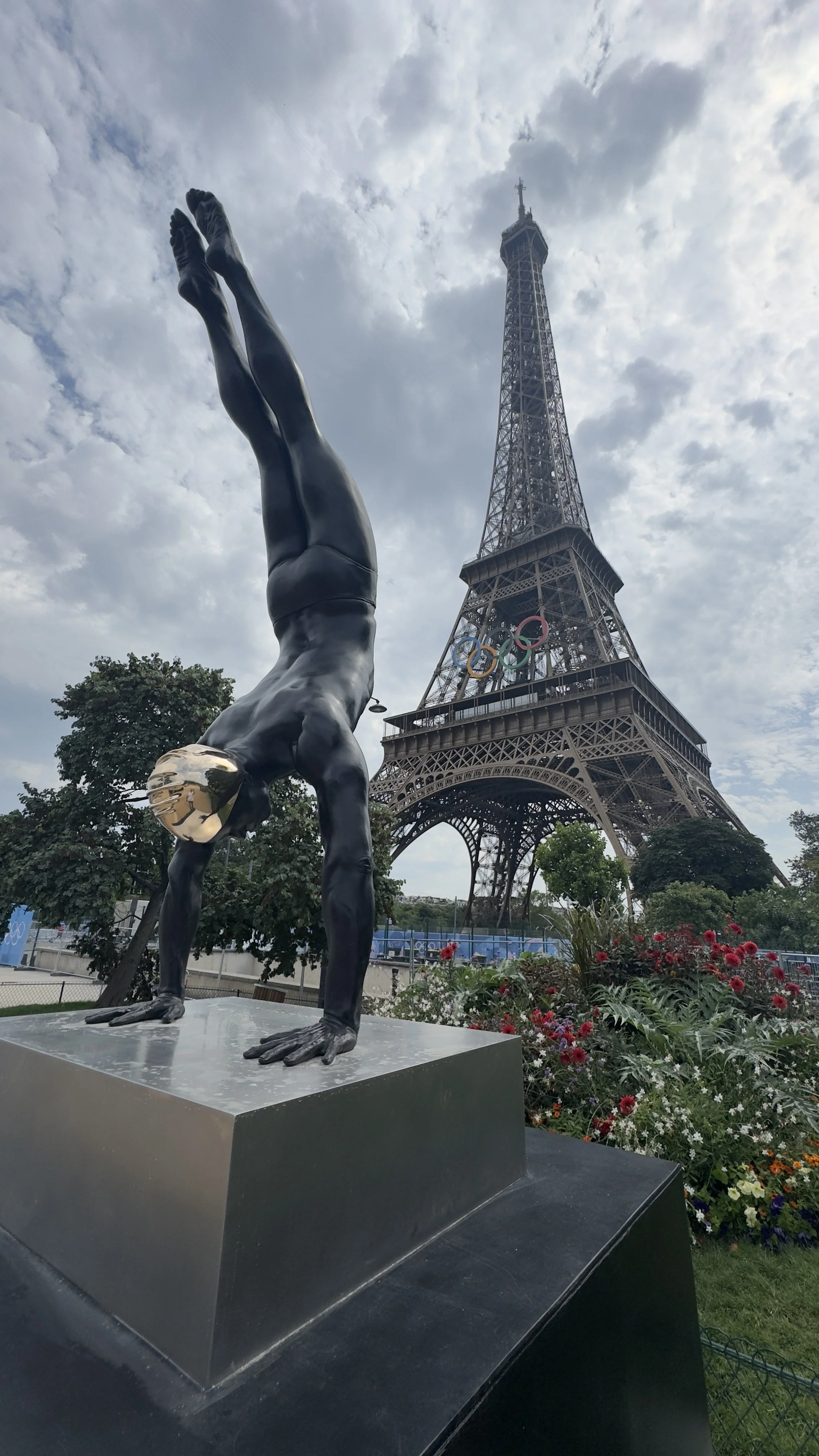
The Diver, Carole A. Feuerman’s monumental bronze sculpture, was installed beside the Eiffel Tower during the Paris 2024 Olympic and Paralympic Games. Created in 2011, the work presents the athletic body at a moment of extreme control, transforming the physical tension of a dive into a study of balance, concentration and suspended movement.
Seen against one of the most recognizable landmarks of Paris, the sculpture connected Feuerman’s long exploration of swimmers and athletes with an international event built around physical achievement, perseverance and human potential.
Between Motion and Balance
Although the figure appears frozen, The Diver is fundamentally about movement. The inverted body holds a position that can exist only through strength and precision, capturing the brief interval between preparation and release.
Feuerman developed the work after encountering Olympic diving champion Greg Louganis and observing the distinctive curve of the body during a dive. Rather than reproducing a specific competition moment, she translated that physical memory into a sculptural form in which anatomy, balance and psychological focus become inseparable.
The work’s realism makes the athletic body immediately recognizable, while its unusual orientation changes the viewer’s relationship to it. Seen from ground level, the sculpture turns an act normally completed in seconds into something that can be examined slowly.
A Sculpture in the Olympic City
The setting gave the sculpture another dimension. During Paris 2024, the Eiffel Tower became one of the principal visual symbols of the Games, carrying the Olympic rings and appearing throughout the event’s imagery. Against that backdrop, The Diver introduced a human figure into a landscape already charged with ideas of sport, performance and international gathering.
Selected from thousands of submissions, the work remained in Paris through the Olympic and Paralympic period. Its presence outside a museum or gallery allowed athletes, visitors and passersby to encounter contemporary sculpture as part of the temporary transformation of the city.
For Feuerman, whose practice has repeatedly returned to swimmers, divers and moments of physical stillness, the placement created a particularly direct relationship between subject and setting. The monumental athlete did not simply illustrate sport; it offered a pause within the intensity of the Games, turning perseverance and bodily discipline into a permanent sculptural gesture.
Related artists