
Artists & Techniques
Infinity Mirror Art: The Art of Creating Infinite Space
How two mirrors and a line of light open endless depth inside a shallow frame. A look at the infinity mirror, from Yayoi Kusama’s first mirror room to the Vortex works and vault doors of the French artist NOART.
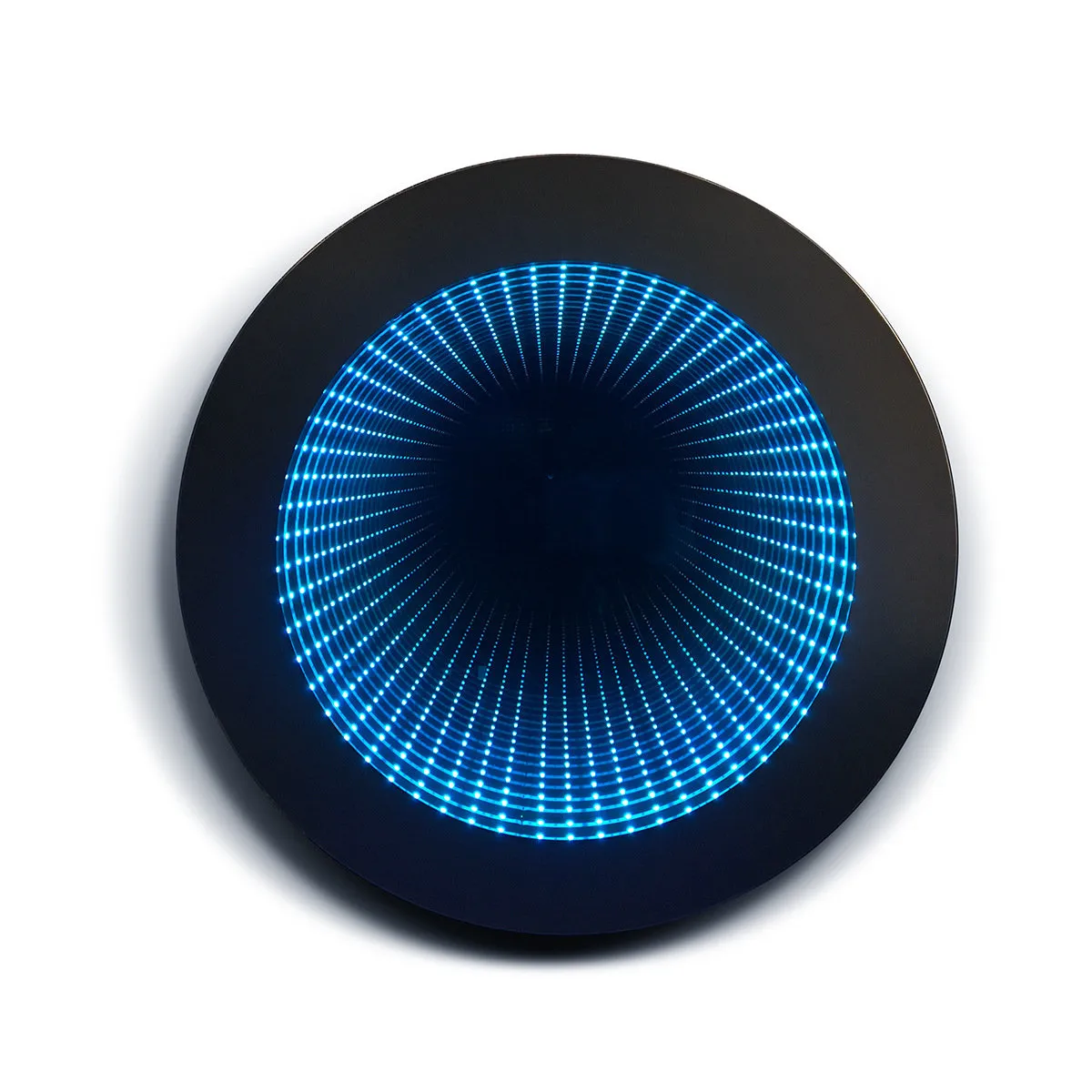
An infinity mirror is a simple device with a strong effect. Place a light source between two mirrors that face each other, make the front one partly transparent, and each point of light is reflected back and forth, a little smaller and dimmer each time. A box a few inches deep seems to open onto a corridor with no end.
Two mirrors and a source of light
The principle is old, but artists turned it into a medium in the 1960s. For her solo exhibition at the Castellane Gallery in New York in 1965, Yayoi Kusama made Infinity Mirror Room (Phalli’s Field), her first room-sized mirror installation: mirrored walls around a floor covered with stuffed fabric forms, so that the visitor stood inside the repetition. Later artists folded the same effect back into objects that hang on a wall or stand on a table, where the depth is seen from outside, as through a window.
NOART’s doors to elsewhere
The French artist NOART, born in 1965, has built much of his recent work on this principle. According to his own account, light and kinetic effects took over his practice in the past decade, after a first career spent rebuilding steampunk worlds drawn from Jules Verne and J. M. Barrie. He describes his vortexes as doors to elsewhere.
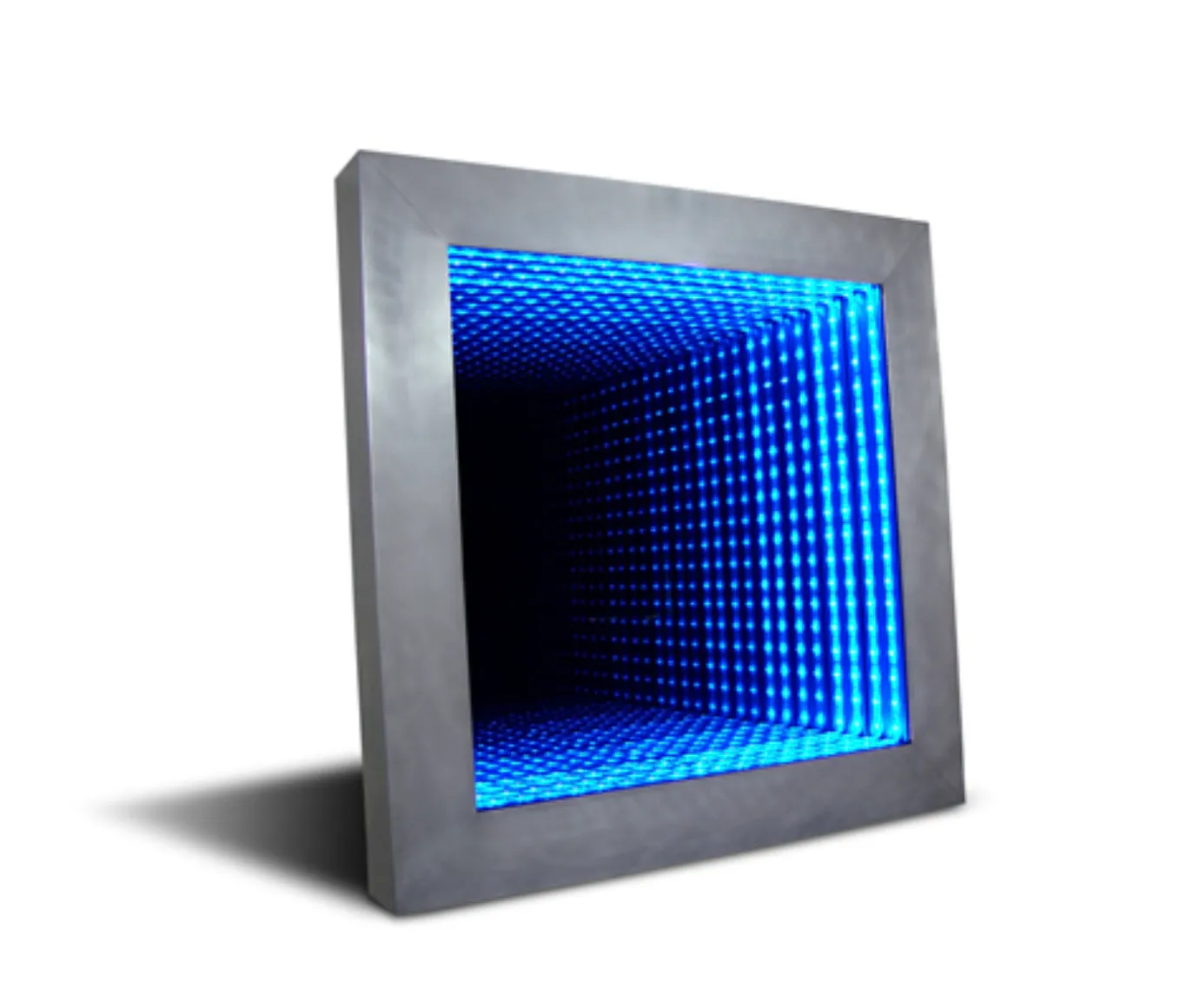
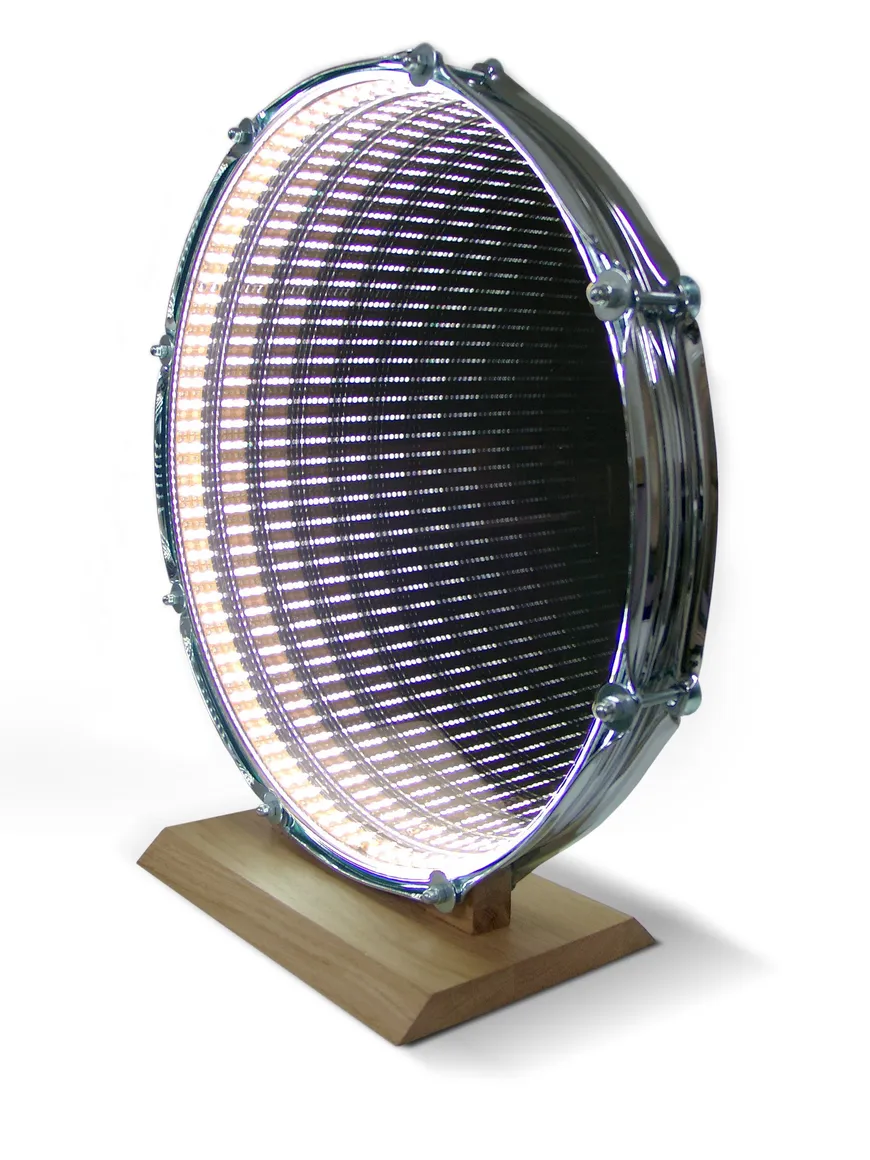
The works in the gallery’s Vortex collection show how much the frame changes the effect. In the Square Vortex Mirror, blue LEDs line the four sides of a corridor that narrows to a vanishing point. In Vortex Yin, the lights form radiating lines in a round black frame and converge on a dark core, so the disc reads as a whirlpool. The freestanding Mirror Vortex sets the circle upright in a chromed rim on a wooden stand, an object for a table rather than a wall.
When the illusion becomes a vault
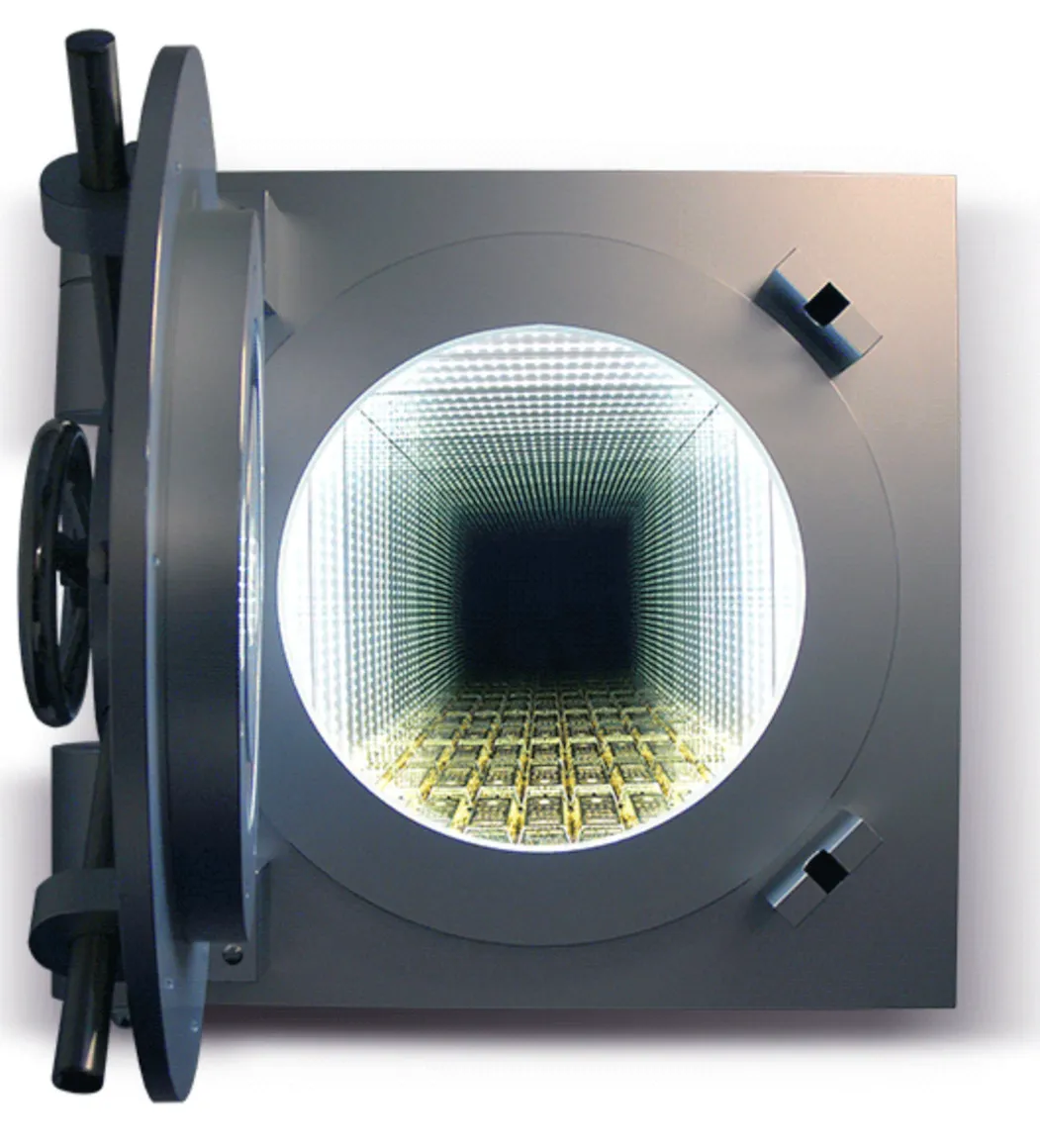
NOART also turns the device toward his other subject, money. Gold Escape is a bank-vault door; open it and a floor of gold bars, or of crystal diamonds, repeats into the distance. The infinite reserve is reflected light, and the joke lands because the illusion is convincing. The same form runs through his Safes, and the gallery keeps the work in its Escape collection.
Seeing them in person
A Mirror Vortex was on the gallery’s stand at the Affordable Art Fair Austin in May 2025, and Gold Escape has been installed at our Laguna Niguel gallery. Both were part of the online exhibition The Art of Abstraction, presented from June 12 to August 14, 2026.
Infinity mirrors lose a great deal in photographs, which flatten the depth they are made to create. Markowicz Fine Art offers NOART’s works on the secondary market; to see one lit, contact our galleries in Miami and Laguna Niguel.
Related artists