
September 16, 2026
Hervé Lewis & Johnny Hallyday: The Work Behind the Stage
Physical preparation and a different way of looking at performance
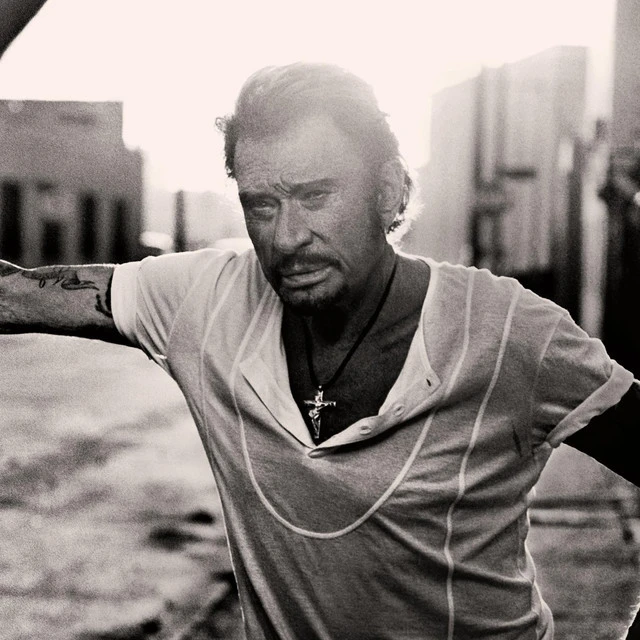
An audience encounters the performance. Much of the work that makes it possible remains out of sight. Hervé Lewis’s relationship with Johnny Hallyday belongs to that less visible world: the physical preparation of a performer. It provides a different introduction to Lewis, beginning not with celebrity portraiture but with an understanding of the body at work.
A long professional relationship
Normal Magazine describes Lewis as having trained Hallyday for nearly two decades. An archive published by INA independently identifies him as the singer’s physical trainer. Together, these sources establish a sustained professional connection, rather than a passing encounter at a photographic session.
The distinction matters when considering his wider practice. Physical preparation and photography ask different things of a person, but both make gesture worth noticing. Where is the weight placed? How is a movement held? What changes when tension gives way to ease? These are useful questions for looking at a photograph as well as thinking about performance.
The body as an individual presence
Lewis’s own account of photography is grounded in close observation. In Normal Magazine, he describes a search for what distinguishes one person from another through the lines and movement of the body. The subject is not an interchangeable figure; its particular presence is what gives the photograph a reason to exist.
Seen in this light, the Hallyday relationship offers a way to look beyond the familiar image of a performer. Recognition can be immediate; observation takes longer. A shoulder, an angle or the space around a figure may become more interesting than the name attached to it. Physical preparation and photography remain distinct activities, yet they invite a shared attention to presence.
A different way into the photographs
The connection with Johnny Hallyday can be understood as more than a famous name in Lewis’s biography. It places the photographer close to the physical demands behind public performance. That experience offers a perspective on his images: even a motionless figure can suggest action, resistance or release. The body carries a story before any caption is read.
For a collector, the photograph remains the starting point. Consider how the figure occupies the frame, how light describes its form and whether the image holds attention beyond recognition. The story behind an artist’s career can deepen that encounter. The work itself must sustain it.
Related artists