
Secondary Market
Pablo Picasso
Spanish, 1881–1973
Spanish artist whose restless experimentation across painting, sculpture, printmaking and ceramics repeatedly redefined the possibilities of twentieth-century art.
Biography
Pablo Picasso was born in Málaga, Spain, in 1881 and received early training from his father, a painter and art teacher. He studied in Barcelona and Madrid before spending increasing time in Paris, where he settled in the early twentieth century. The Blue and Rose periods established his ability to connect formal control with distinct emotional worlds, moving from somber figures of poverty and isolation to performers, acrobats and warmer color.
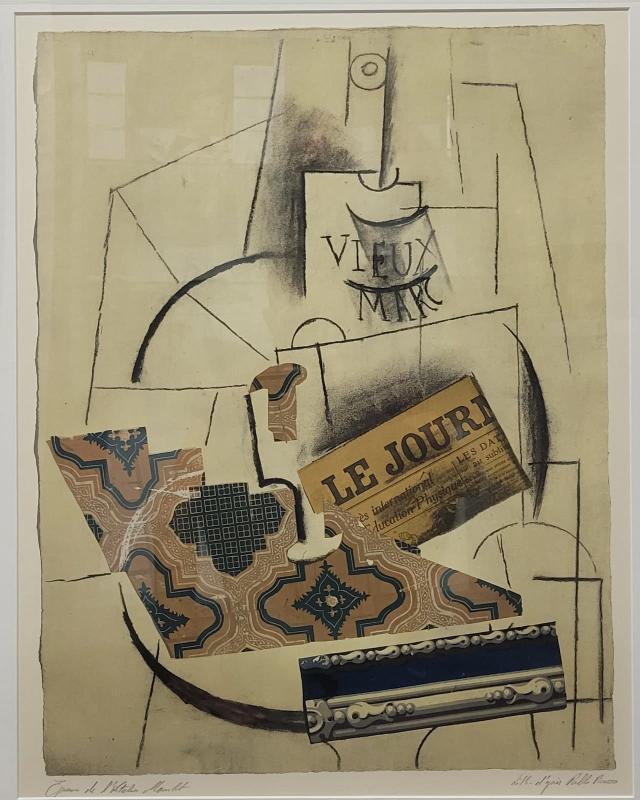
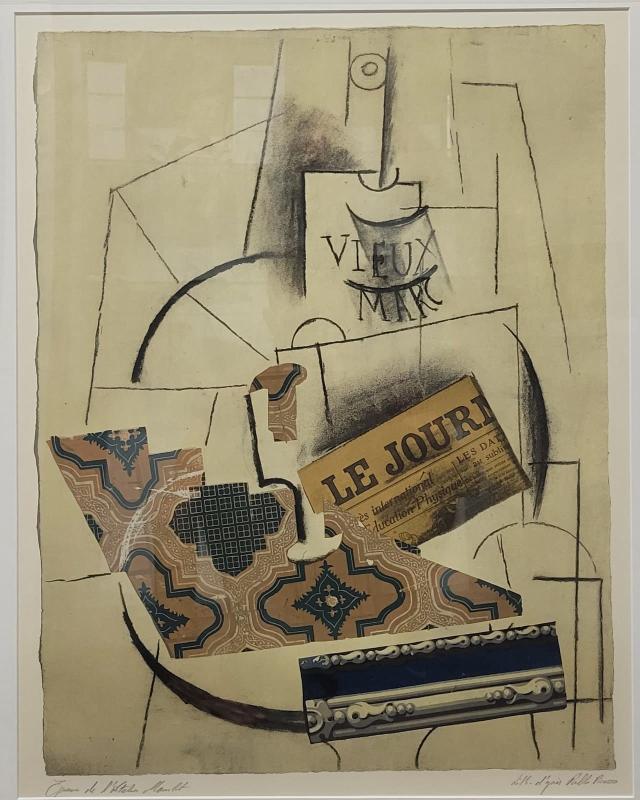
Around 1907, Picasso’s encounter with Iberian sculpture, African art and the legacy of Cézanne contributed to Les Demoiselles d’Avignon. Working closely with Georges Braque, he then developed Cubism, breaking objects and figures into shifting planes and multiple viewpoints. Analytical Cubism challenged the illusion of stable space, while later collage introduced newspaper, wallpaper and other materials directly into the artwork.
Picasso did not remain within Cubism. After the First World War, he returned to monumental classical figures while continuing to use fragmentation and distortion. During the 1920s and 1930s, his work entered into dialogue with Surrealism, sexuality and myth, particularly through figures such as the Minotaur. Portraits of people close to him became sites of constant transformation rather than stable likeness.
Political violence entered the work with extraordinary force in Guernica, painted in 1937 in response to the bombing of the Basque town during the Spanish Civil War. The mural’s fractured bodies and compressed space turned a specific event into an enduring image of civilian suffering. Picasso later joined the French Communist Party and continued to address war and peace in paintings, prints and public imagery.
His practice extended far beyond painting. Picasso produced major bodies of sculpture, ceramics, drawing, printmaking, stage design and illustrated books. Materials were approached with unusual freedom: cardboard, sheet metal, found objects and clay could all become vehicles for rapid invention. He often revisited earlier masters, reworking Velázquez, Delacroix and Manet through series that treated art history as active material.
Picasso died in Mougins, France, in 1973. His influence rests not on one signature style but on a refusal to treat any solution as final. Across more than seven decades, he repeatedly altered the relationship between object, image and viewer, making experimentation itself a central model for modern artistic practice.