
Secondary Market
Mel Bochner
1940–2025
American Conceptual artist who made measurement, language and color into subjects, exposing how words and systems shape what viewers believe they see.
Biography
Mel Bochner was born in Pittsburgh in 1940 and studied at the Carnegie Institute of Technology before moving to New York in 1964. He emerged at a moment when a younger generation of artists was challenging the idea that art had to exist primarily as a unique object. Photography, diagrams, numbers and written propositions became legitimate artistic material.
In 1966, Bochner organized Working Drawings and Other Visible Things on Paper Not Necessarily Meant to Be Viewed as Art, an exhibition presented in binders of photocopied plans and notes. The project is frequently cited as an early landmark of Conceptual art because it shifted attention from finished object to information, process and the conditions under which something is recognized as art.
Measurement became a central subject. Bochner marked walls, floors and architectural intervals with numerical notations, making the dimensions of a space physically visible. These works appear objective, yet they reveal that measurement is a language imposed on experience. A room is not changed materially, but the viewer begins to perceive it through a system of quantities.
Photography and seriality allowed Bochner to examine related questions of evidence and representation. He was interested in how a photograph, diagram or statement can seem transparent while always carrying assumptions about truth and context.
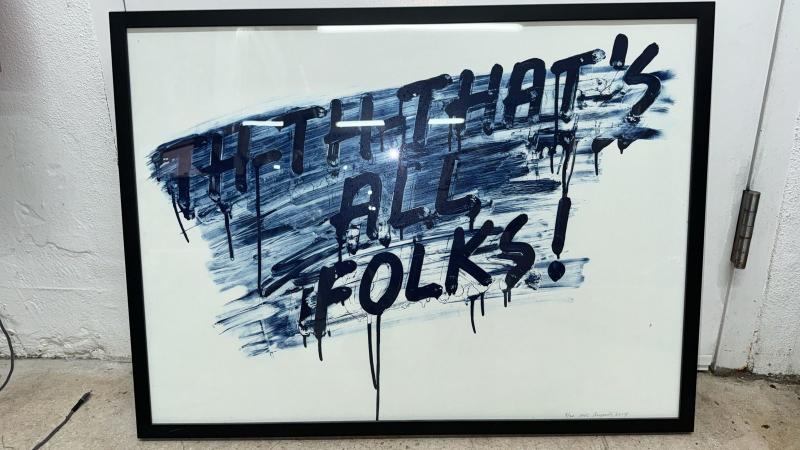
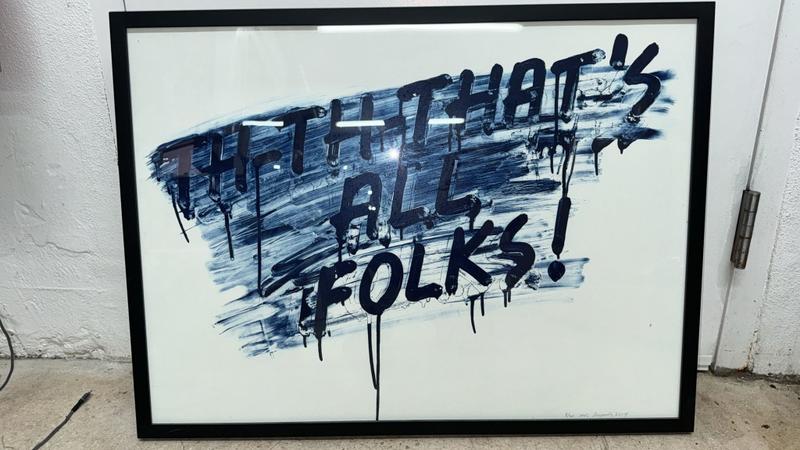
From the 1990s onward, language became increasingly colorful and material in his work. Thesaurus paintings and prints arrange chains of synonyms, insults, commands or colloquial phrases in hand-rendered blocks of pigment. Meaning shifts as one word follows another, and the physical pleasure of color complicates the apparent directness of the text.
Bochner’s career connected the analytical rigor of early Conceptualism with a later, more sensuous use of paint and language. He never treated words as neutral containers. Instead, his art shows how systems of description structure perception, and how quickly certainty can dissolve when the same idea is repeated, translated or placed under pressure.