
Secondary Market
Retna
American, born 1979
Los Angeles artist whose monumental calligraphic script draws from graffiti, sacred writing and global alphabets to turn language into architecture.
Biography
RETNA is the professional name of Marquis Lewis, born in Los Angeles in 1979. He became active in the city’s graffiti culture during the 1990s, working within crews and developing an understanding of lettering as both identity and territorial presence. Over time, he moved from conventional graffiti forms toward the constructed script that now defines his practice.
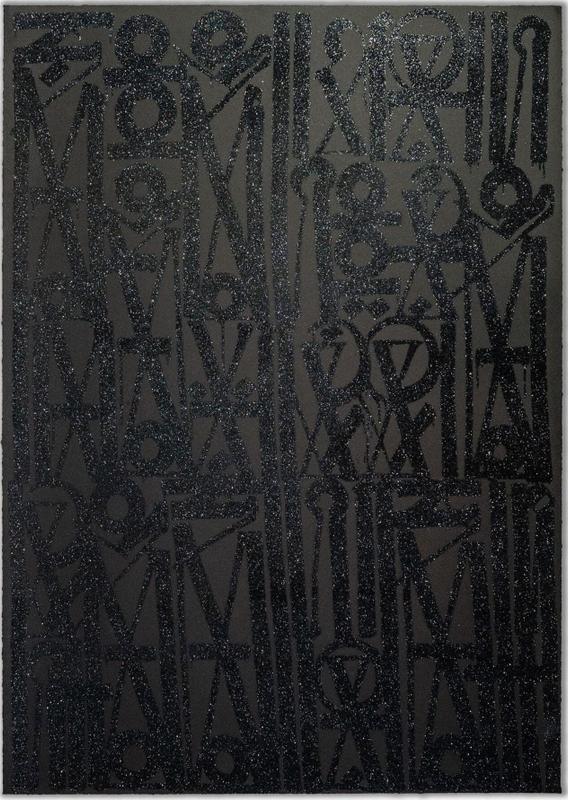
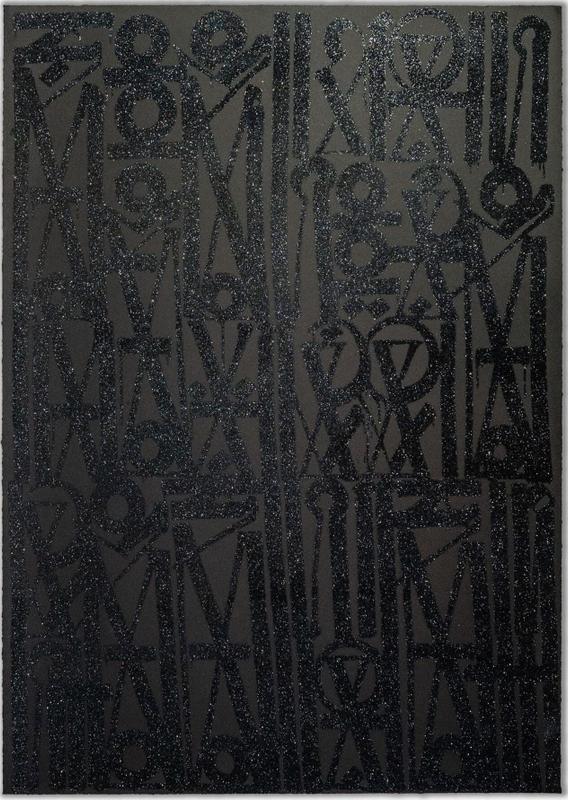
The script draws from multiple sources, including Old English and Blackletter typography, Chicano gang writing, Egyptian hieroglyphs and the visual structures of Arabic and Hebrew calligraphy. RETNA does not simply reproduce one historical alphabet. He combines, abstracts and reorganizes these influences into a personal system whose meaning can remain partly inaccessible to the viewer.
That partial illegibility is central. Some works encode phrases, names or dedications, while others allow the marks to function primarily as visual rhythm. Tall vertical strokes create a sense of architecture; repeated symbols resemble columns, gates or woven patterns. Language becomes something encountered physically before it is understood semantically.
RETNA works with brush, spray paint, ink and other media across murals, canvas and editions. The scale of public walls allows his script to envelop buildings and reshape urban space, while studio works concentrate the tension between disciplined repetition and individual gesture. Limited palettes often intensify the formal authority of the marks.
His practice has also included collaborations in fashion, music, performance and design. These projects extend the script into different cultural contexts without dissolving its identity. The same marks can appear on a museum wall, stage set, album-related project or public façade, demonstrating their adaptability as a visual system.
RETNA’s work connects the historical authority of sacred and ceremonial writing with the immediacy of graffiti. It asks viewers to consider language as form, heritage and power. Even when a text cannot be read conventionally, it can still communicate through scale, repetition, density and the bodily movement required to make it.