
Secondary Market
Daniel Arsham
American, born 1980
American artist creating speculative ruins and altered architectures that collapse distinctions between archaeology, design and contemporary culture.

Biography
Daniel Arsham was born in Cleveland in 1980 and grew up in Miami. The destruction caused by Hurricane Andrew in 1992 had a lasting effect on his understanding of architecture as something apparently stable yet vulnerable to sudden change. He studied at Cooper Union in New York, graduating in 2003, and soon began developing work that treated buildings, objects and bodies as sites where past and future could overlap.
Arsham’s architectural interventions initially established his visual language. Walls appear to sag, ripple, split or reveal forms that should not exist within them. These works retain the neutral surfaces of modern architecture while quietly undermining its authority. A room remains recognizable, but the physical rules that support it seem to have shifted.
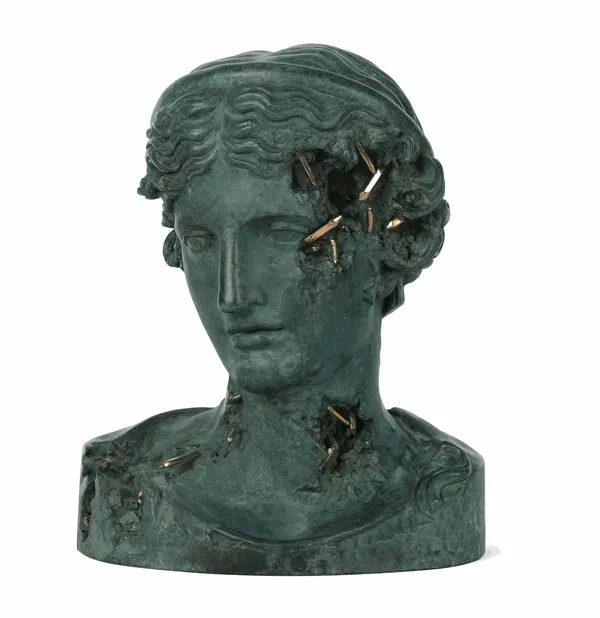
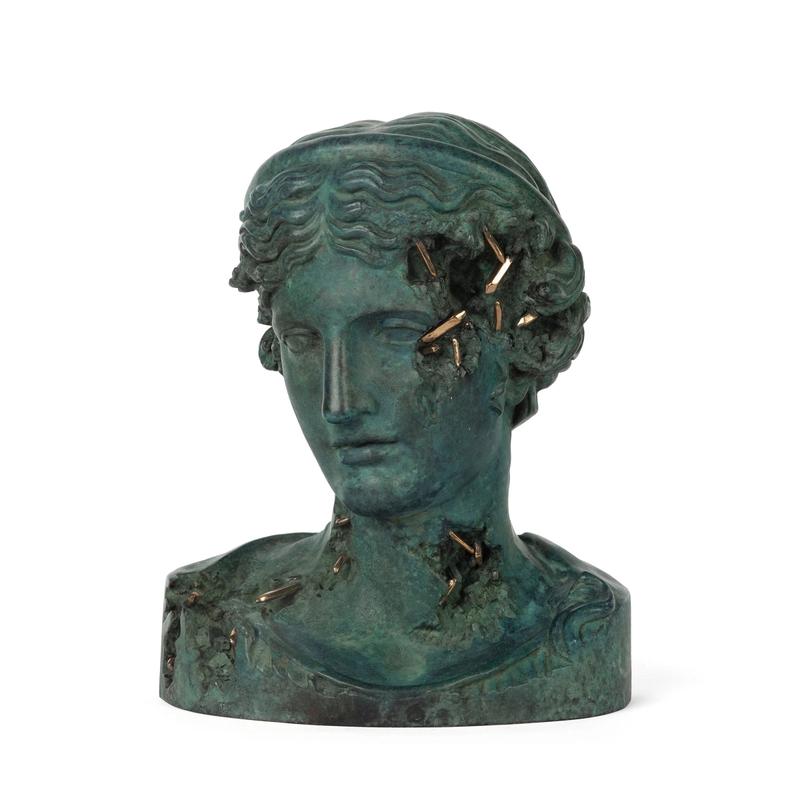
The series often described as Fictional Archaeology extends this idea to objects. Cameras, telephones, clocks, sneakers, cars and figures from popular culture are cast in materials such as plaster, volcanic ash, hydrostone and crystal. Carefully eroded surfaces suggest that items from the immediate present have been excavated in a distant future. The object becomes both relic and prediction, asking which parts of contemporary culture will remain legible after their function has disappeared.
Arsham works across sculpture, drawing, film, stage design and collaborative projects. In 2008 he co-founded the architecture and design practice Snarkitecture with Alex Mustonen, creating environments and functional objects that similarly question ordinary expectations of space. Collaborations with fashion, sport, music and entertainment have allowed his archaeological language to move through the same cultural systems that his future ruins examine.
Time in Arsham’s work is rarely linear. Ancient materials can surround recent technology, while familiar objects appear older than the viewer. This compression gives the work its accessibility and its unease. Rather than illustrating a specific apocalypse, Arsham creates artifacts from an uncertain future and asks viewers to see the present as temporary, already on its way toward becoming history.