
Secondary Market
Jeff Koons
American, born 1955
American artist transforming familiar consumer objects and popular imagery into technically exact works about desire, taste, reflection and public spectacle.

Biography
Jeff Koons was born in York, Pennsylvania, in 1955. He studied at the Maryland Institute College of Art and the School of the Art Institute of Chicago before moving to New York in 1977. His earliest mature works involved ordinary manufactured objects displayed with minimal alteration, establishing an interest in how presentation can change the psychological and economic status of a familiar thing.
During the 1980s, Koons developed distinct bodies of work that tested different forms of desire and aspiration. Vacuum cleaners appeared in illuminated vitrines; basketballs were suspended in tanks; luxury advertising and consumer products were reframed as cultural symbols. In the Banality series, highly finished sculptures in porcelain and wood drew on souvenirs, religious imagery and popular entertainment, collapsing distinctions between kitsch, craft and museum art.
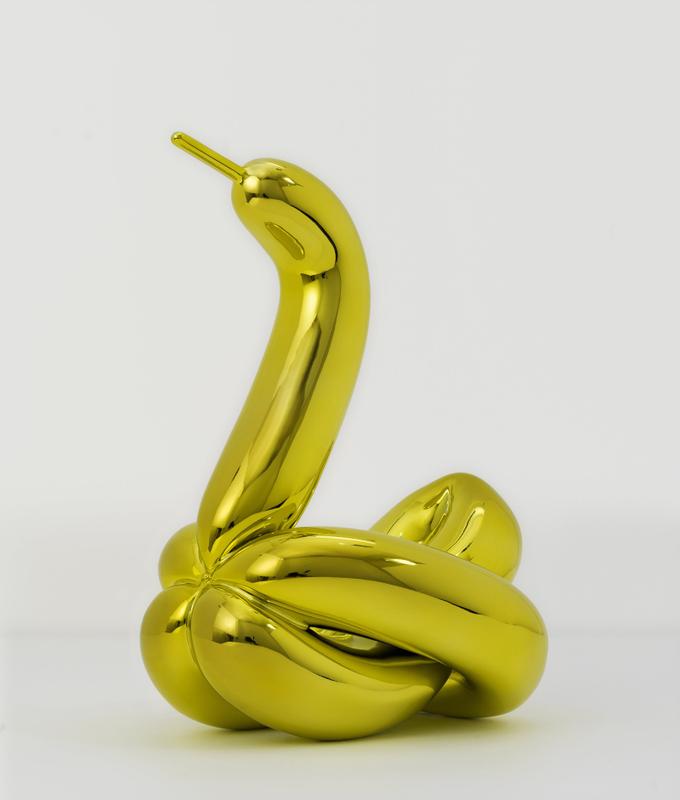
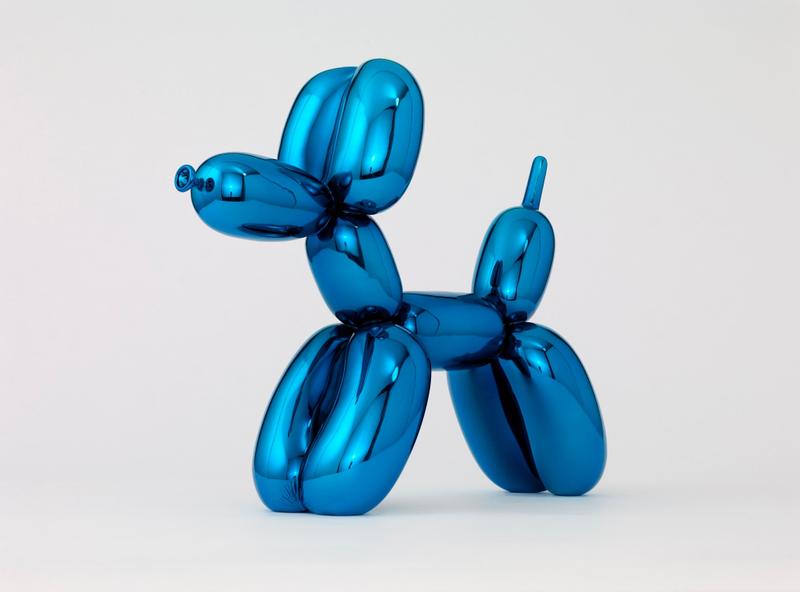
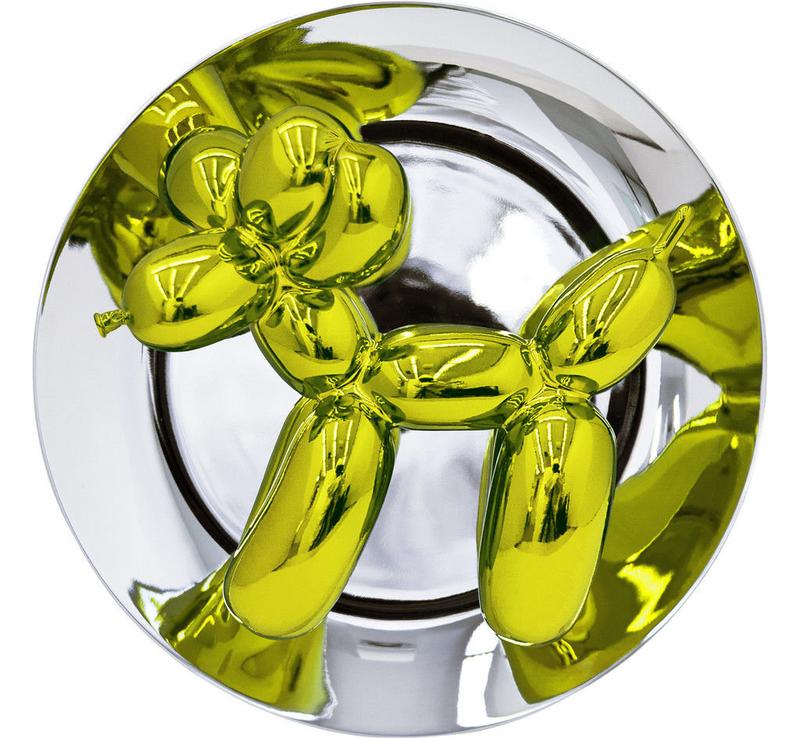
The Celebration works, begun in the 1990s, transformed balloons, party favors and childhood objects into paintings and monumental sculptures. Polished stainless steel became one of Koons’s signature materials because it combines durability with a mirror-like surface. The viewer is literally reflected in works such as Balloon Dog, making looking, self-image and public participation part of the object.
Koons’s practice depends on extensive collaboration with fabricators, engineers and studio assistants. This collective production has generated debate about authorship, but it is also central to the work’s meaning: the smooth result hides an unusually complex process, just as commercial products conceal the labor and systems behind their appearance. Precision is used not only to impress but to remove visible hierarchy between supposedly elevated and ordinary subjects.
Large-scale public works such as Puppy and later projects have extended his language into architecture and civic space. Throughout his career, Koons has presented acceptance rather than irony as a key value, asking viewers to confront their own judgments about beauty, pleasure and taste. Whether admired or contested, his work has become a defining reference point for the relationship between contemporary art, technology and mass culture.