
Secondary Market
Aya Takano
Japanese, born 1976
Japanese artist building weightless speculative worlds where adolescent figures, ecology and science fiction meet within the expanded field of Superflat.
Biography
Aya Takano was born in Saitama, Japan, in 1976. She studied at Tama Art University, graduating in 2000, and became one of the early artists associated with Takashi Murakami’s Kaikai Kiki organization. Her work shares Superflat’s attention to manga, anime and the compressed space of Japanese visual culture, but it develops those sources through an unusually expansive interest in ecology, science and speculative fiction.
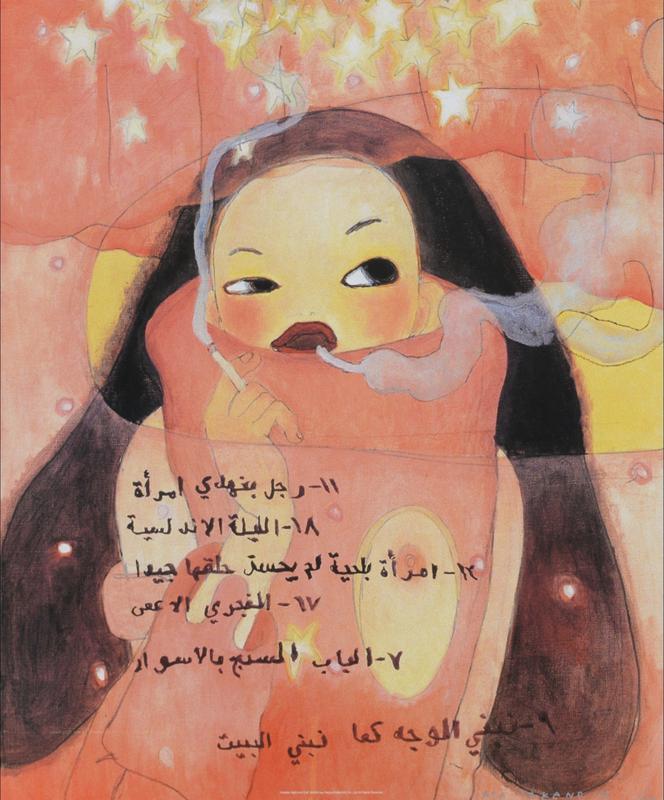
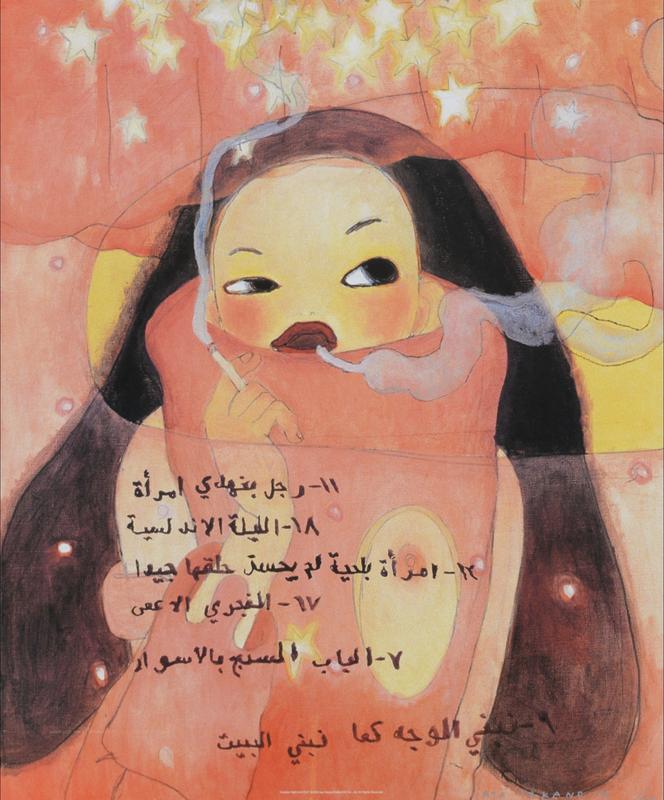
Takano’s figures are often adolescent, elongated and nearly weightless. They move through bedrooms, city streets, underwater environments and distant planets with little distinction between everyday life and fantasy. Bodies can change scale, float or coexist with animals and plants in relationships that seem more collaborative than hierarchical.
Manga is both a formal influence and a medium within her practice. Sequential thinking shapes the way paintings imply events beyond a single frame, while recurring characters create the sense of an open narrative universe. Takano has also cited science-fiction literature, natural science, Buddhist thought and older Japanese art as sources, bringing together cultural material that would normally be separated by period or category.
The apparent innocence of her images is balanced by questions about sexuality, vulnerability and social constraint. Her figures often inhabit spaces of experimentation in which identity is not fixed and conventional adult structures have loosened. Recent work has increasingly emphasized environmental interdependence, imagining communities that have moved beyond destructive models of consumption and control.
Takano works across painting, drawing, illustration and manga, building a coherent world rather than repeating a single icon. The delicacy of her line and pale color creates openness, but the underlying project is ambitious: to visualize forms of life that do not yet exist. Her work treats fantasy not as escape, but as a tool for reconsidering how bodies, ecosystems and societies might relate differently.