
Secondary Market
Mel Ramos
American, 1935–2018
American Pop artist who staged pin-up figures alongside branded goods and comic-book heroes to probe the visual language of advertising and desire.
Biography
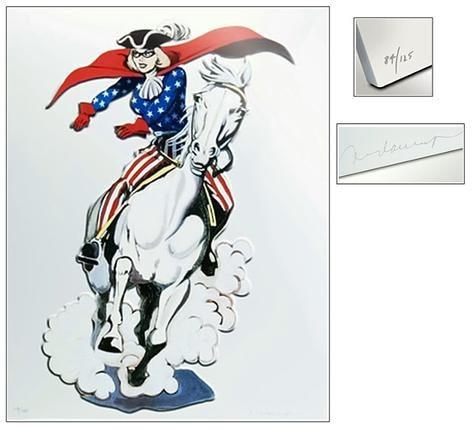
Mel Ramos was born in Sacramento, California, in 1935. He studied art at Sacramento State College, where Wayne Thiebaud was an important teacher and mentor. Ramos began exhibiting in the early 1960s, entering Pop art through paintings of superheroes taken from comic books. These early works used familiar mass-media figures to challenge the separation between popular illustration and fine art.
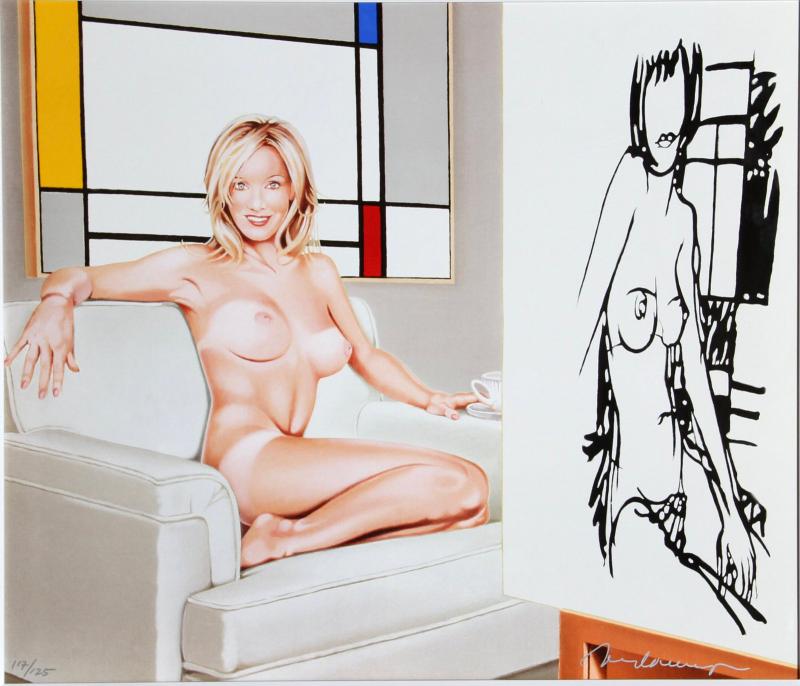
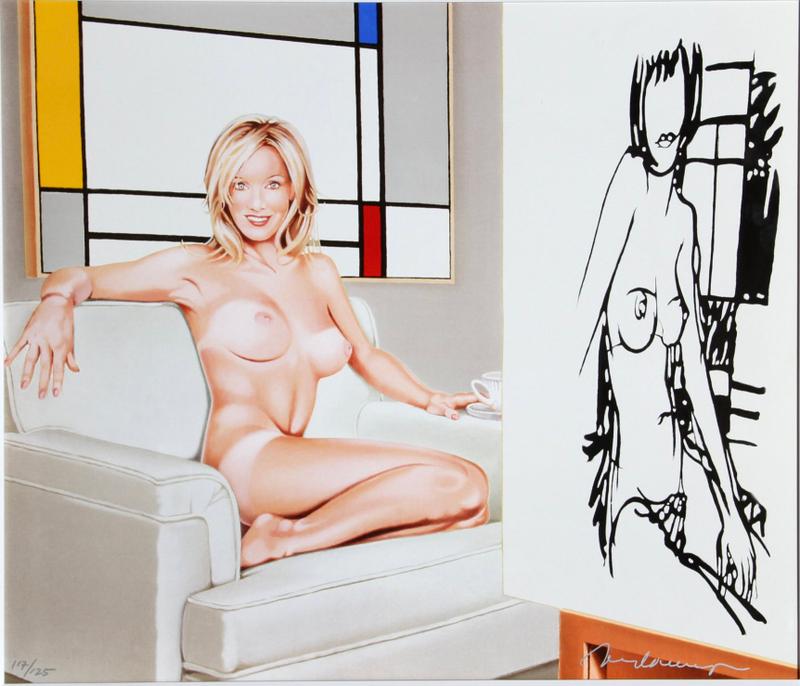
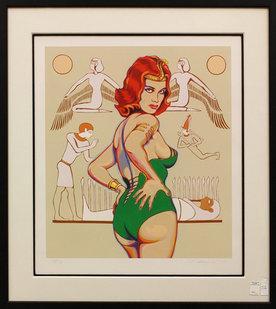
By the middle of the decade, Ramos turned increasingly to the pin-up and advertising image. Female nudes appeared with cigarettes, candy, soft drinks, cheese and other branded products, often posed on or emerging from packages at impossible scale. The compositions borrowed the clean contours and persuasive color of commercial art while making the underlying construction of desire unusually visible.
The relationship between parody and attraction in Ramos’s work remains intentionally unresolved. His paintings reproduce the glamour and objectification of advertising with technical conviction, yet their exaggerated combinations can also expose the absurdity of placing a body and a commodity within the same promise of consumption. That tension has made the work both influential and contested, particularly in changing discussions of gender and representation.
Ramos worked extensively in painting, drawing and printmaking, refining a style based on smooth modeling, strong contours and uncluttered backgrounds. He also revisited the history of the nude through series that placed contemporary pin-up figures in dialogue with classical and modern compositions. The result connected mass-market imagery with a much older tradition in which the female body had already been shaped by conventions of viewing.
Although associated with American Pop, Ramos developed a particularly strong following in Europe, where his work was widely exhibited and collected. Across five decades, he remained focused on the visual mechanics of attraction. His works continue to raise a central question of Pop art: whether reproducing the language of commerce confirms its power or makes that power easier to recognize.