
Secondary Market
Julian Opie
British, born 1958
British artist reducing figures, faces and landscapes to decisive lines and flat fields that move fluidly between painting, digital media and public space.
Biography
Julian Opie was born in London in 1958 and studied at Goldsmiths College under Michael Craig-Martin, graduating in 1982. His early work was associated with New British Sculpture and often transformed ordinary objects or architectural forms through painted metal. Over time, drawing became increasingly central, leading to the pared-down visual language for which he is now known.
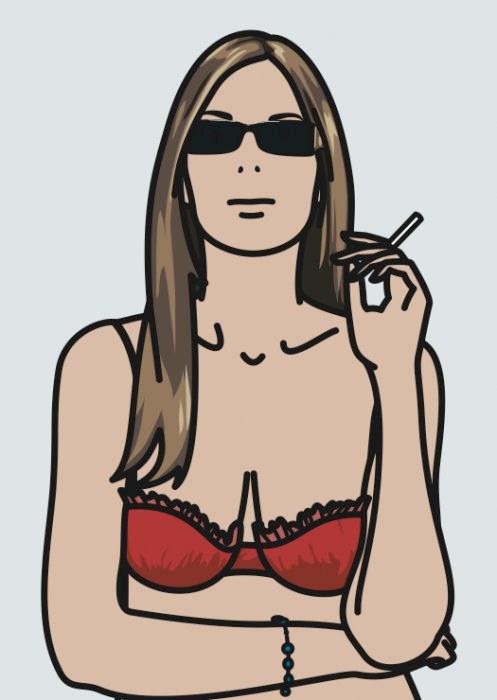
Opie reduces faces, bodies and landscapes to a limited set of lines, colors and shapes. A curve can define a jaw, a dot can establish an eye, and a few repeated movements can identify the gait of a particular person. The process resembles signage or digital icons, but it depends on close observation rather than generic design.
Portraiture is a major part of the practice. Sitters are photographed or filmed, and their features are translated through successive stages of simplification. The finished image can appear universal and individual at the same time. Clothing, posture, hairstyle and rhythm often carry as much identity as facial detail.
Movement has allowed Opie to extend this language beyond static images. LED panels and digital animations show figures walking, running or dancing in continuous loops. These works connect the oldest subjects of art—the human body and landscape—with contemporary systems of screens, wayfinding and public information.
Opie also draws extensively from art history, including Egyptian profiles, Japanese ukiyo-e, European portraiture and modern graphic design. His landscapes can refer to journeys made by car or train, compressing a changing view into clear bands of sky, road, trees and water.
Public commissions and architectural installations are particularly suited to Opie’s direct visual language. Seen at distance, the images communicate immediately; seen over time, subtle differences in pace, proportion and sequence emerge. His work tests the threshold between image and sign, demonstrating that simplification can increase rather than reduce the attention paid to how people and places are perceived.