
Secondary Market
Arno Elias
French, born 1977
French-American artist transforming original photography through hand painting and mixed media, with recurring subjects of endangered wildlife, cultural memory and human connection.
Biography
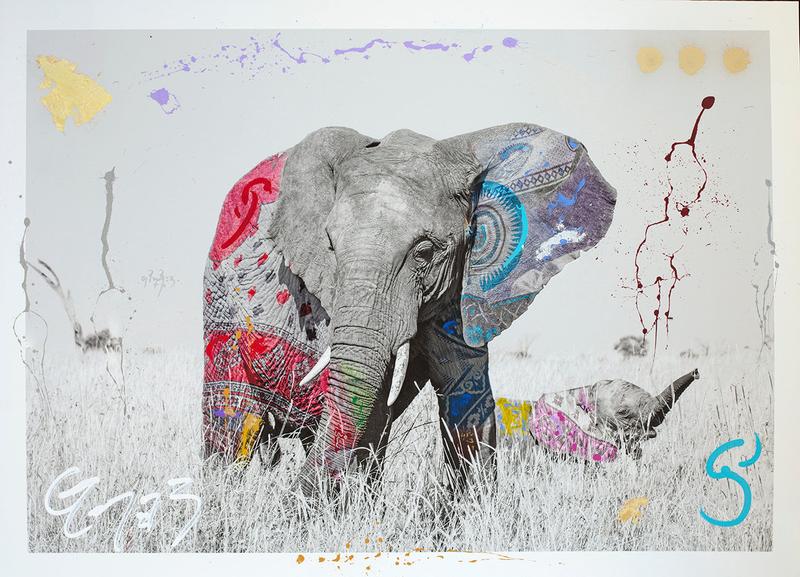
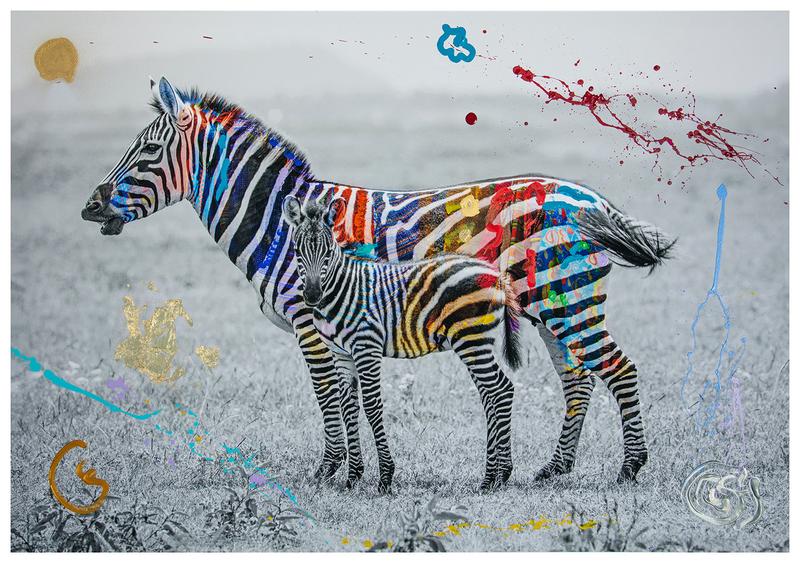
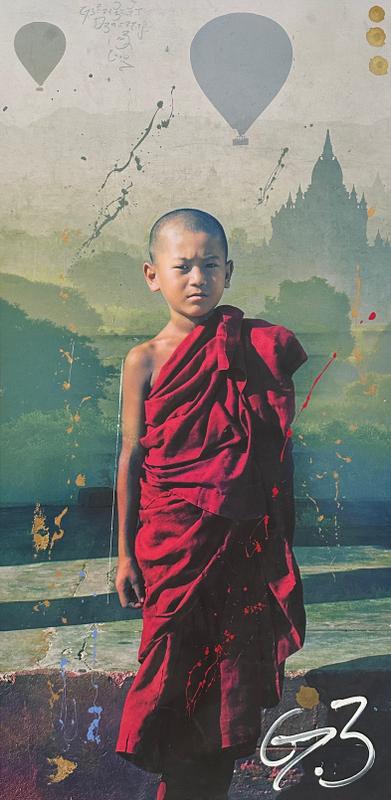
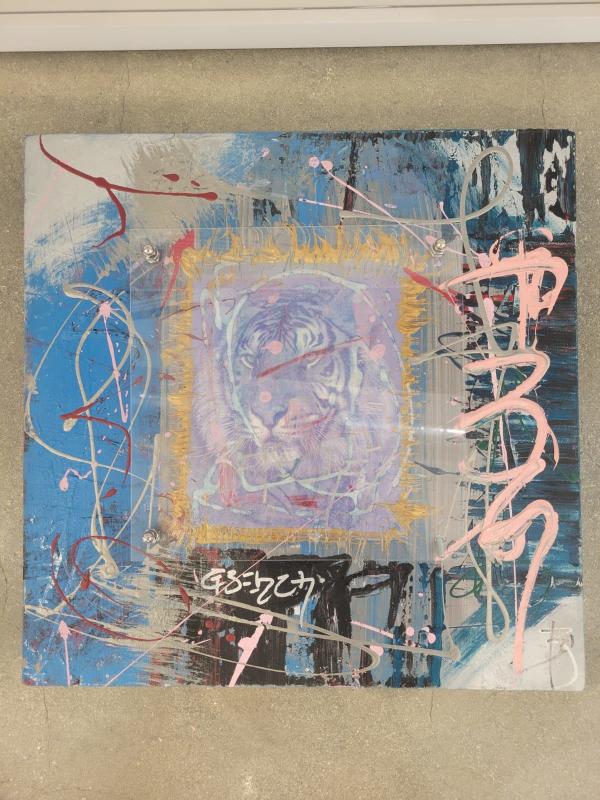
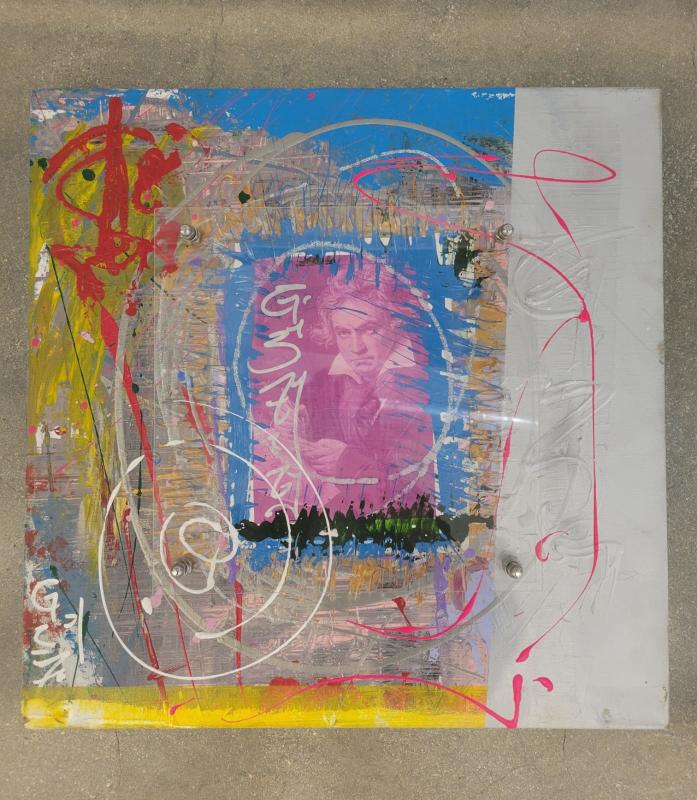
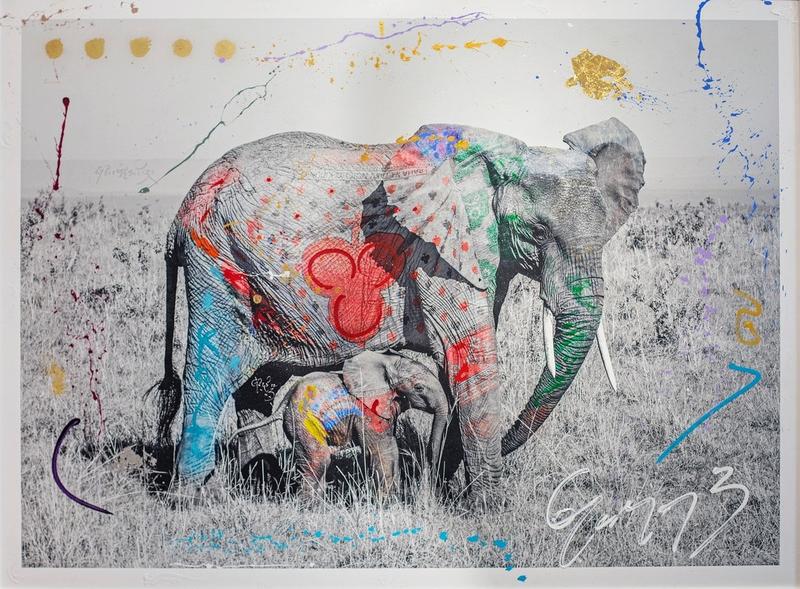
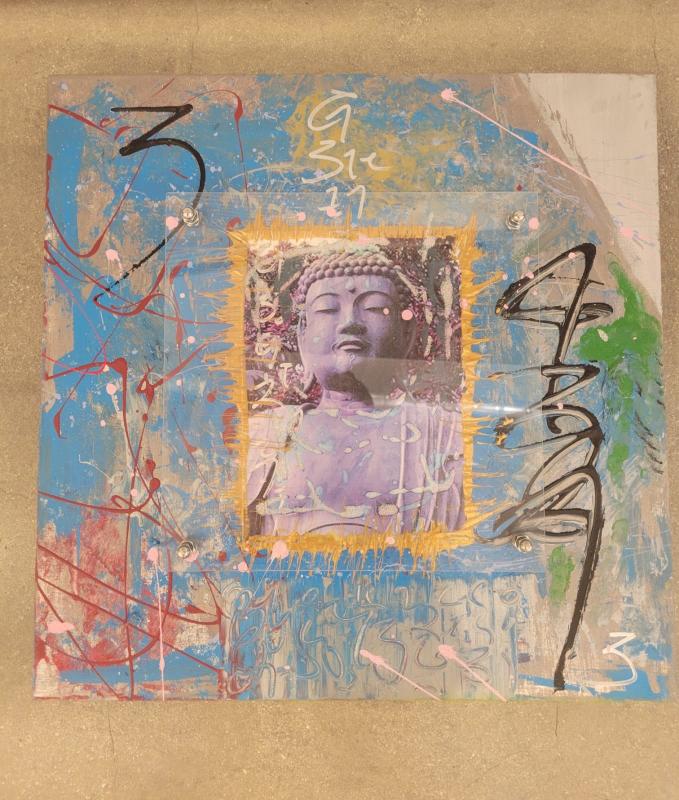
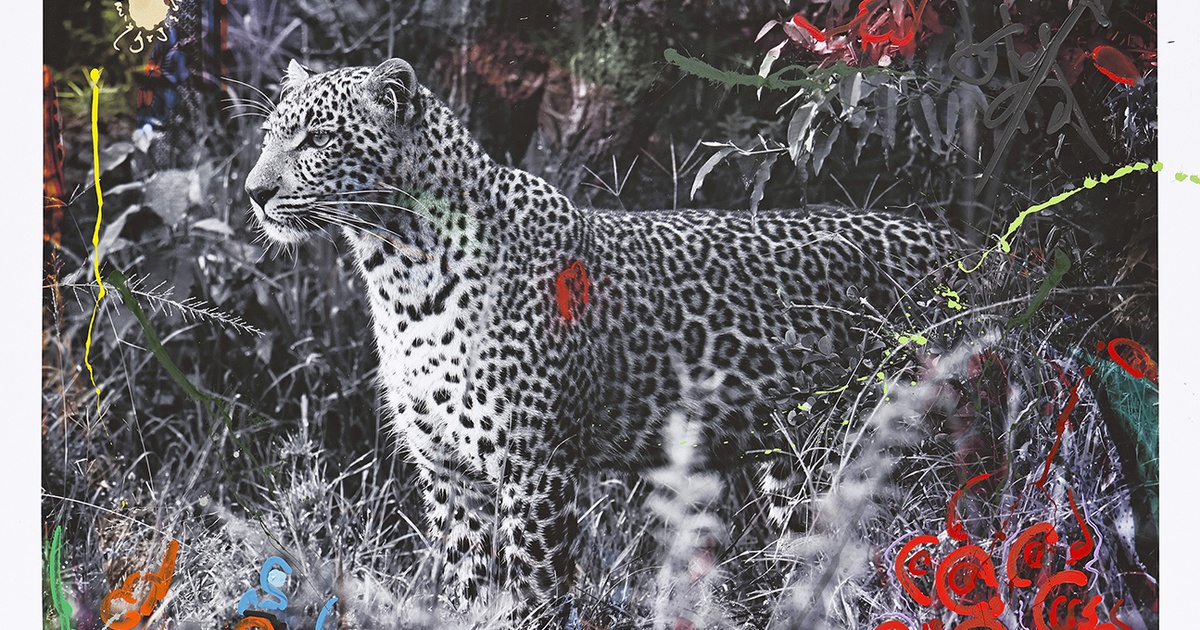
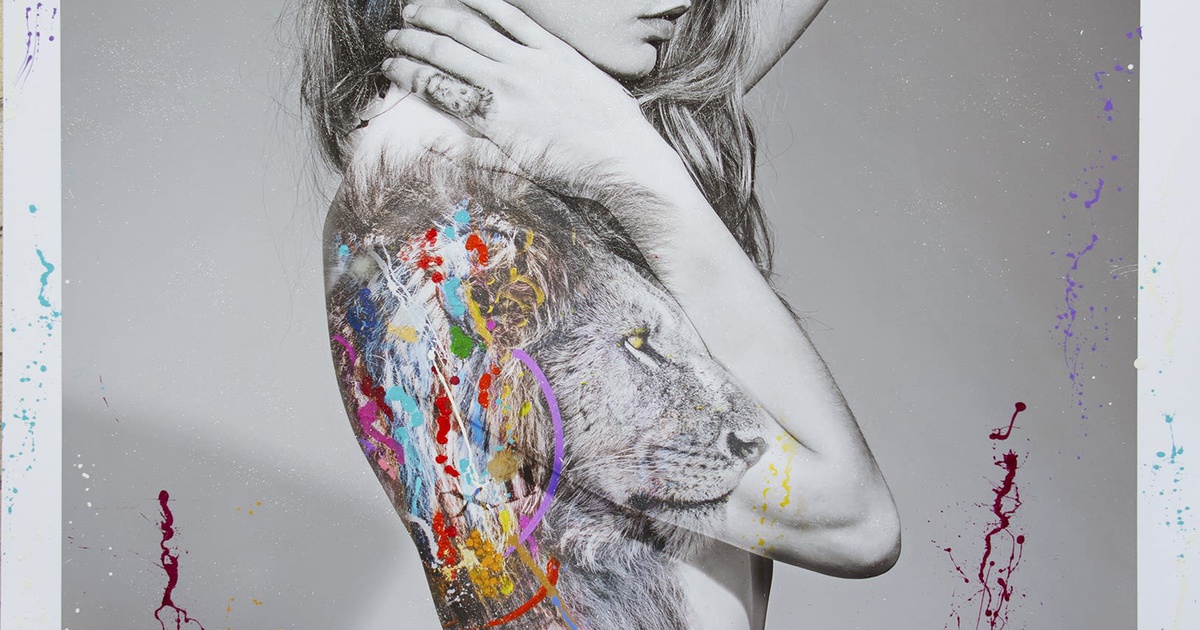
Arno Elias (b. 1977, Paris) is a French-American artist whose practice moves between photography, painting and mixed media. Photography provides the initial encounter, but rarely the finished object. Elias works back into his own images by hand, introducing acrylic paint, gold leaf, diamond dust and other materials that alter both their surfaces and their meanings. The resulting works occupy a space between photographic record and constructed image, preserving the immediacy of the camera while making the artist’s physical intervention unmistakably present.
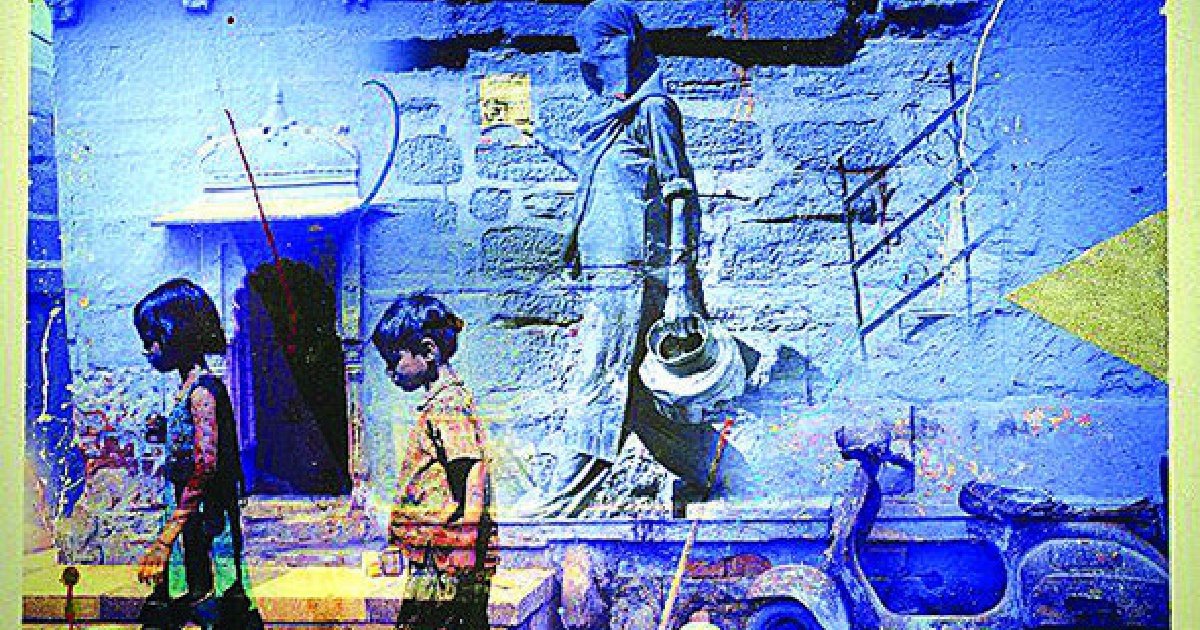
Wildlife, cultural memory and the relationship between people and their environments have become recurring subjects. Elias has photographed endangered animals as well as indigenous communities encountered during extensive periods of travel. Early photographic projects, including The Lost Series, grew from journeys through countries across Africa, Asia, Europe and the Americas. Rather than treating photography as a detached record of distant places, Elias uses subsequent layers of paint and material to emphasize individual presence and to question what may disappear when habitats, traditions and ways of life come under pressure.
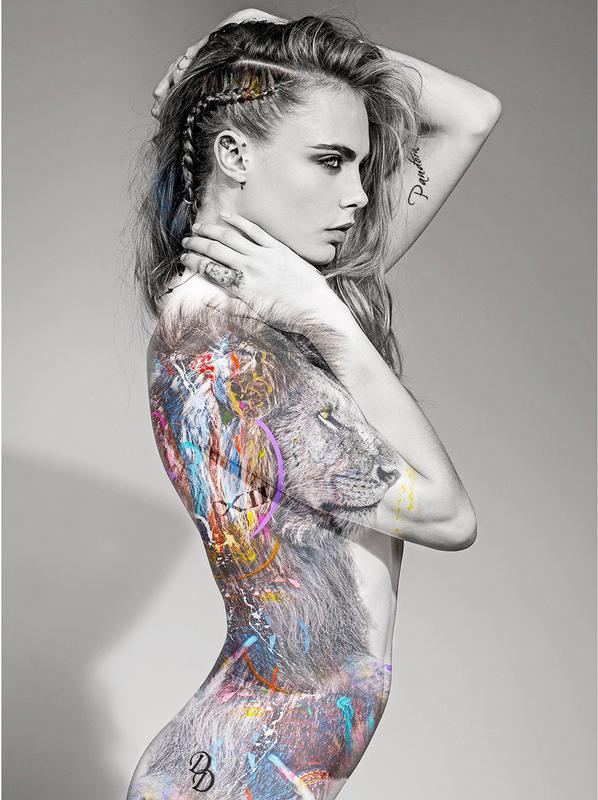
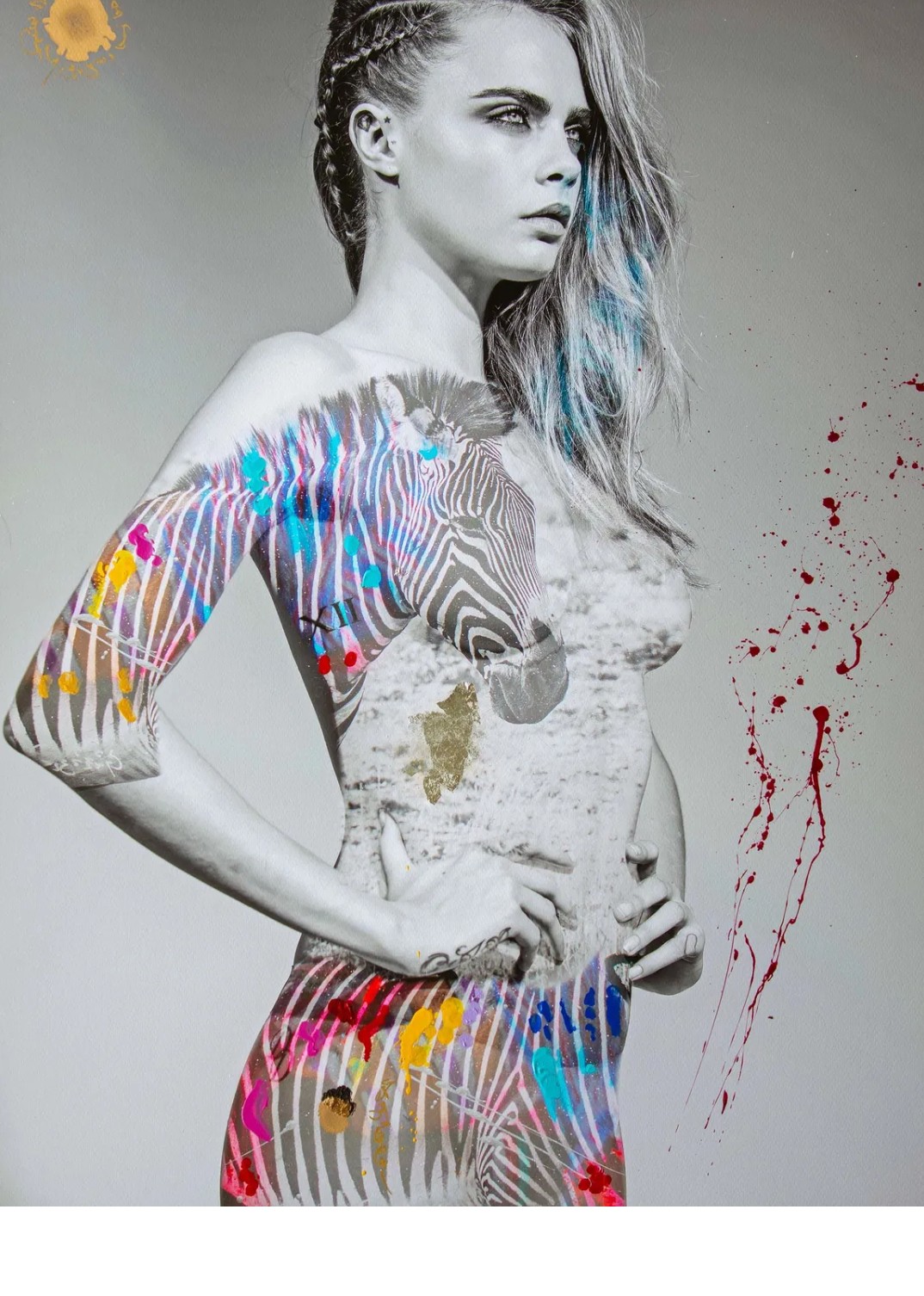
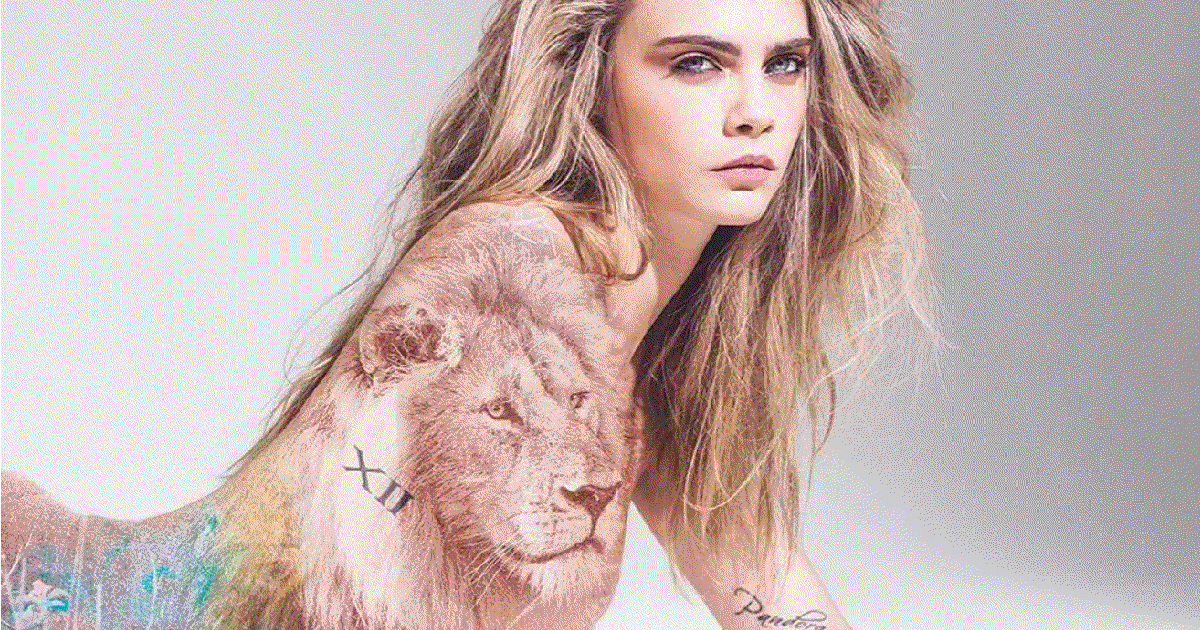
This concern with disappearance became particularly visible in I’M NOT A TROPHY, the international awareness campaign Elias launched in 2016 around endangered wildlife and the consequences of poaching, trophy hunting and habitat loss. The campaign combined his animal photography with high-profile portraiture, including a collaboration with Cara Delevingne, its inaugural ambassador. In 2019, Elias was invited to speak during the 74th Session of the United Nations General Assembly in New York on issues related to animal welfare and sustainable development.
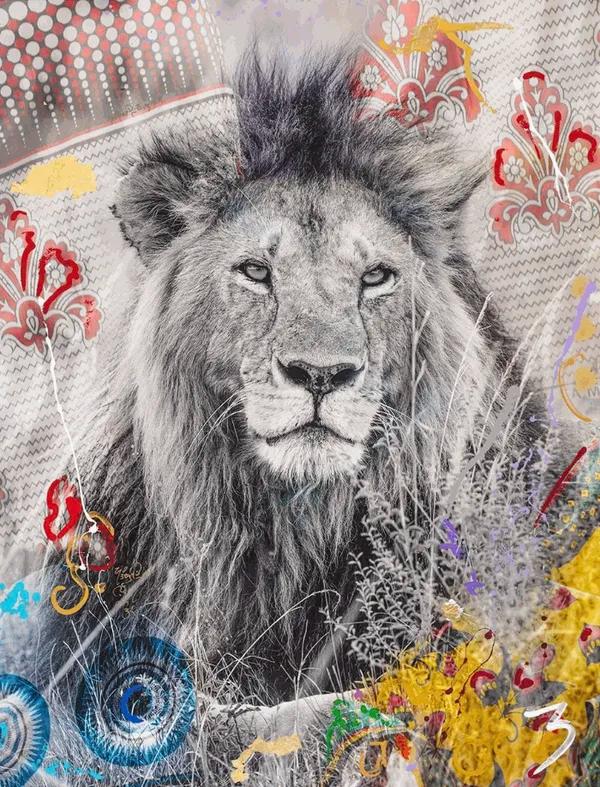
The campaign also extended naturally into Elias’s studio practice. Images of elephants, lions, rhinoceroses and other threatened species are frequently transformed through metallic leaf, pigment and reflective materials. These interventions do not simply decorate the photograph. They create a tension between visual seduction and vulnerability: the surface can appear precious or celebratory while the subject itself may belong to a species whose future is increasingly uncertain.
Elias’s work with human subjects develops a related tension. Portraits of indigenous communities emphasize gesture, expression, clothing and direct physical presence while acknowledging the changing conditions surrounding traditional cultures. By combining photography with hand-applied media, Elias deliberately disrupts the expectation that documentary images should remain visually neutral. The finished work instead reflects two moments: the original encounter between photographer and subject, and the later act of interpretation in the studio.
His visual work has been presented internationally in galleries and art fairs across North America, Europe and Asia. Solo projects have included presentations of The Lost Series in Paris, St Barth and New York, while I’M NOT A TROPHY has developed into immersive exhibition formats combining photography, painting, music and educational material.
Before visual art became his principal focus, music occupied a substantial part of Elias’s creative life. The son of a professional musician, he studied music from an early age and later worked as a composer, producer and recording artist. His compositions became closely associated with the Buddha-Bar repertoire, and in 2005 he composed and produced the music for Buddha Bar Nature. His musical work has also included a score connected with UNICEF’s For Every Child campaign featuring Shakira and music created for the Brigitte Bardot Foundation.
The transition from music to visual art did not eliminate Elias’s interest in layering, rhythm and atmosphere. Those qualities reappear in works that combine photographic clarity with painted surfaces and reflective materials. Across wildlife, portraiture and cultural subjects, his practice repeatedly returns to the same underlying question: how can an image preserve the presence of something whose environment, identity or future may be changing?
Exhibitions & art fairs
Galleries
- LAGUNA NIGUEL - JULY ART AFTER HOURSJul 2023 – Aug 2023
- ARNO ELIAS • "I'M NOT A TROPHY"Oct 2021 – Dec 2021
- I AM NOT A TROPHY EXHIBITDec 2019 – Jan 2020
- ARTIST ARNO ELIAS' WORLDWIDE SOLO PHOTOGRAPHIC JOURNEY ENCHANTS SOUTH FLORIDAMar 2013 – Apr 2013
- I'm Not a Trophy
Art fairs
- Scottsdale Art WeekMar 2026
- LA ART SHOW 2025Feb 2025
- ART PALM BEACH 2025Jan 2025
- LA Art Show 2024: Booths 501 & 600Feb 2024
- ART PALM BEACH 2024Jan 2024
- Art Miami 2023: Markowicz Fine ArtDec 2023
- Art Expo Dallas 2022Sep 2022
- Palm Beach Modern + Contemporary 2020Jan 2020
- Art New York 2019May 2019
- Art Wynwood 2019Feb 2019
- Palm Beach Modern + Contemporary 2019Jan 2019
Videos
Read about Arno Elias
Trust, Editions and Royalties: The Questions Raised by the Arno Elias–YellowKorner Dispute
A Libération investigation into a contested collaboration raises broader questions about pricing, limited editions, reporting and professional ethics in the art market.
Art and Technology: How Artists at Markowicz Fine Art Are Embracing the Digital Age
Meet the Artist: Arno Elias, Art and Nature
The Sagamore Hotel Miami Beach and Markowicz Fine Art Collaborate to Present “I’m Not a Trophy” by Arno Elias During Miami Art Week
Artist Arno Elias’ Worldwide Solo Photographic Journey Enchants South Florida
Markowicz Fine Art Unveils Immersive Exhibition ‘I’m Not Your Trophy’ in Dallas
Style Notes: Cara Delevingne’s Anti-Poaching Campaign