
Secondary Market
Andy Warhol
American, 1928–1987
American artist who recast commercial images, celebrity and repetition as a new visual language for mass media, desire and mortality.
Biography
Andy Warhol was born Andrew Warhola in Pittsburgh in 1928. He studied pictorial design at the Carnegie Institute of Technology and moved to New York in 1949, where he became a successful commercial illustrator. His experience with fashion, advertising and reproduction shaped the methods he brought into fine art during the early 1960s.
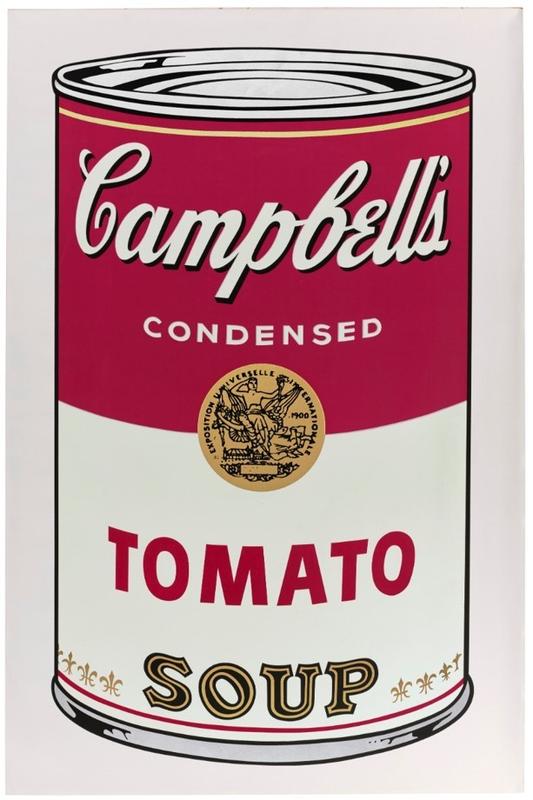
Warhol selected images already familiar through mass circulation: Campbell’s soup cans, Coca-Cola bottles, newspaper photographs and publicity portraits. Silkscreen allowed him to repeat those sources while preserving slips, uneven registration and changes in color. Repetition could make an image glamorous, mechanical or emotionally distant, but it could also expose the persistence with which media turns people and events into consumable symbols.
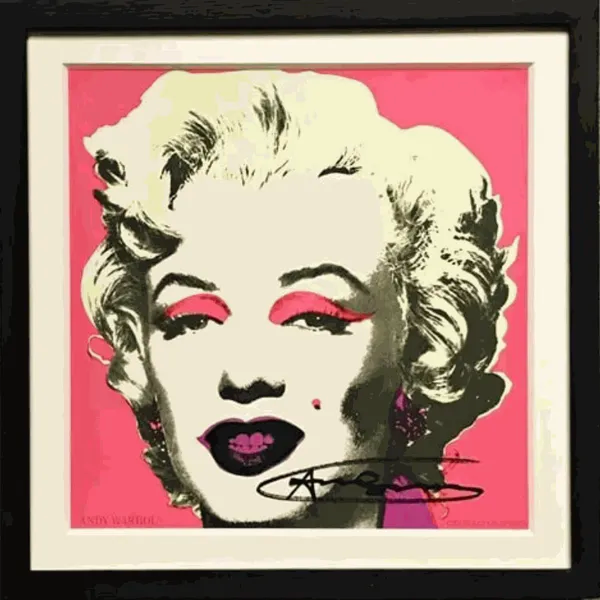
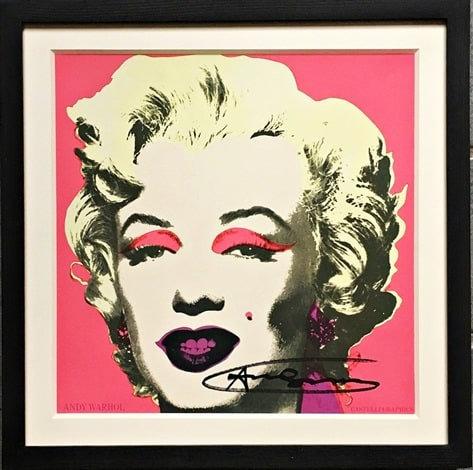
Celebrity and mortality remain inseparable in Warhol’s work. Portraits of Marilyn Monroe, Elvis Presley, Elizabeth Taylor and other public figures emerged alongside paintings of car crashes, electric chairs and racial violence. Both groups depend on repetition, suggesting that the same visual systems distribute desire and disaster. The apparently cool surface therefore contains a sustained awareness of vulnerability, disappearance and death.
Warhol’s Factory became a studio, social network and performance environment. He produced experimental films, screen tests, photographs, books and recordings while collaborating with actors, musicians, writers and designers. His support of the Velvet Underground and the publication of Interview magazine extended his influence into music and media. The distinction between making art and constructing a public scene became increasingly difficult to separate.
In later decades, Warhol continued portrait commissions, revisited religious subjects and created large bodies of work involving camouflage, shadows and collaborations with younger artists. He also assembled thousands of boxes of everyday material now known as the Time Capsules, preserving the ordinary documents surrounding an artistic life.
Warhol died in New York in 1987. His importance rests not simply on introducing popular products into art, but on understanding that images themselves had become products, identities and environments. The conditions he explored—reproduction, branding, celebrity, surveillance and endless circulation—have only become more central to contemporary culture.