
Secondary Market
Antonio Seguí
Argentino, 1934–2022
Argentine painter and printmaker whose crowded urban scenes use humor, repetition and the bowler-hatted everyman to expose the rituals of modern life.
Biography
Antonio Seguí was born in Córdoba, Argentina, in 1934. During the 1950s he studied and traveled through Spain, France, Africa and Latin America, experiences that broadened his approach to painting and introduced him to printmaking. He held his first solo exhibition in Córdoba in 1957 and later spent time in Mexico developing graphic techniques. In 1963 he moved permanently to France, establishing a studio in Arcueil near Paris while maintaining a lasting connection to Argentina.
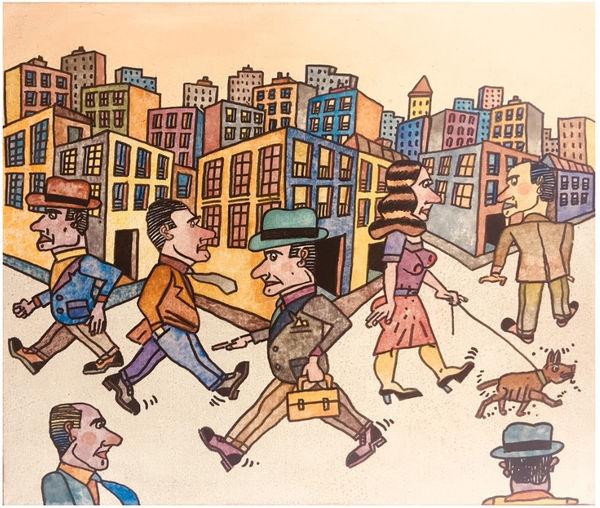
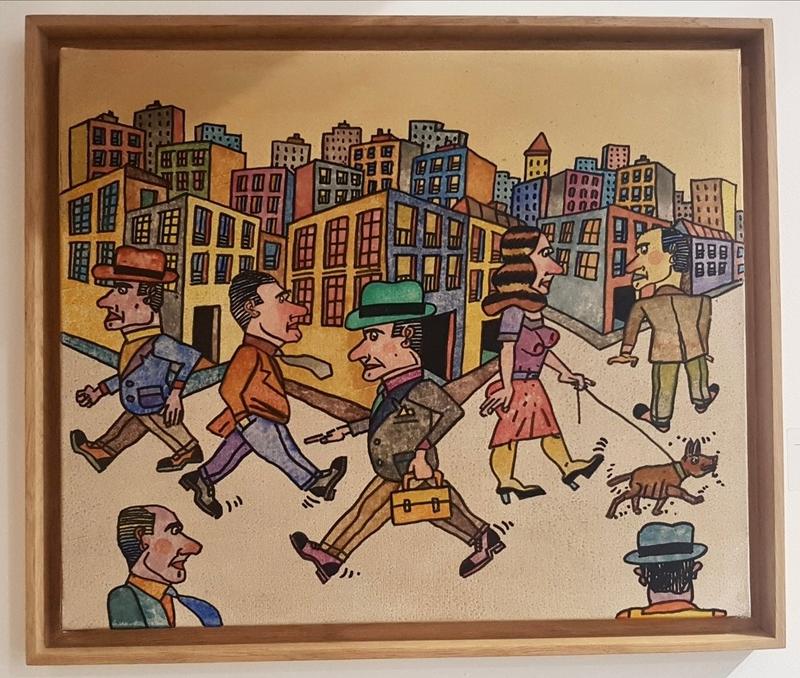
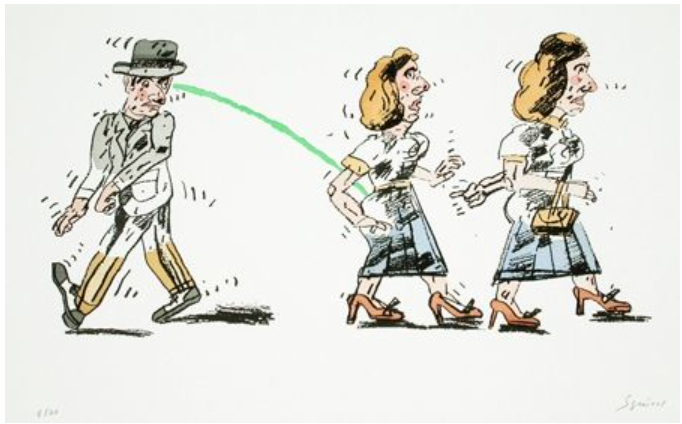
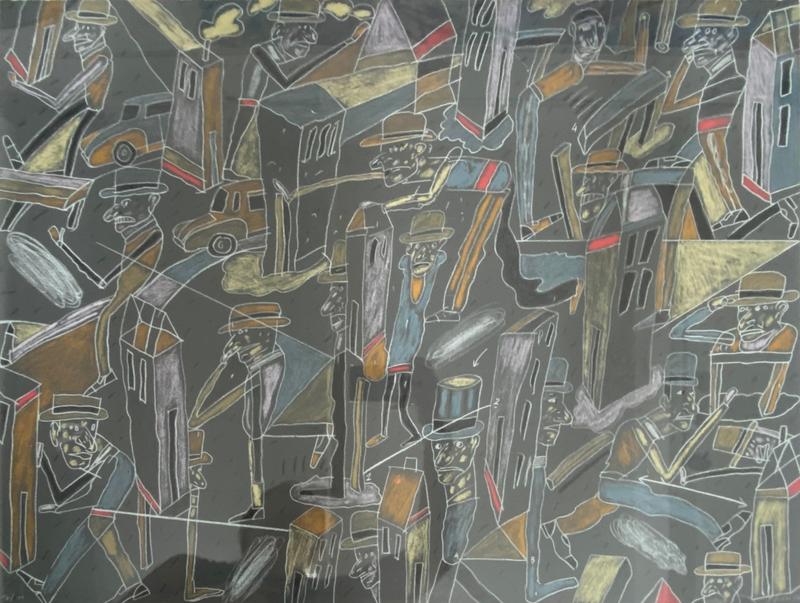
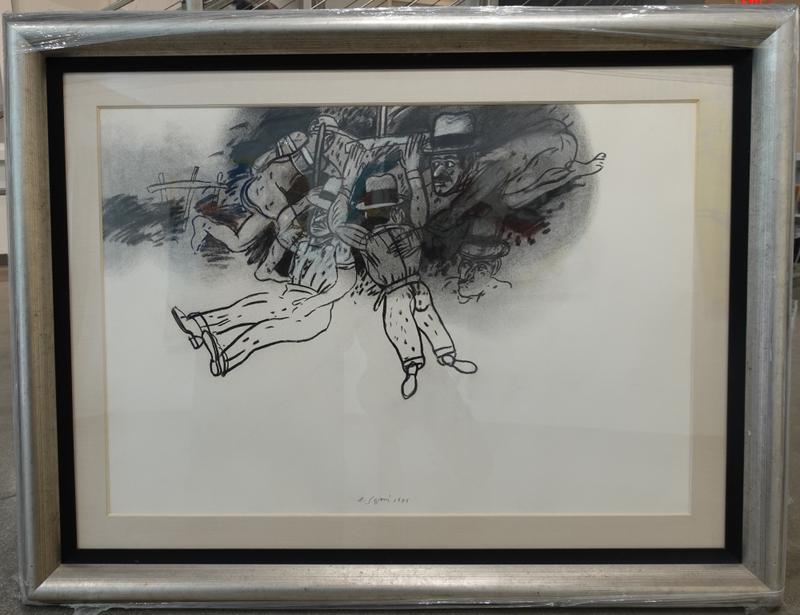
Seguí’s work is immediately recognizable for its restless populations. Small figures cross streets, gather on rooftops, carry briefcases, argue, dance or appear to follow routes whose destination remains uncertain. The bowler-hatted man became a recurring type, drawn partly from childhood memories of Córdoba when formal hats were common in public life. Repeated across a composition, the figure is both an individual and a unit within a larger social pattern.
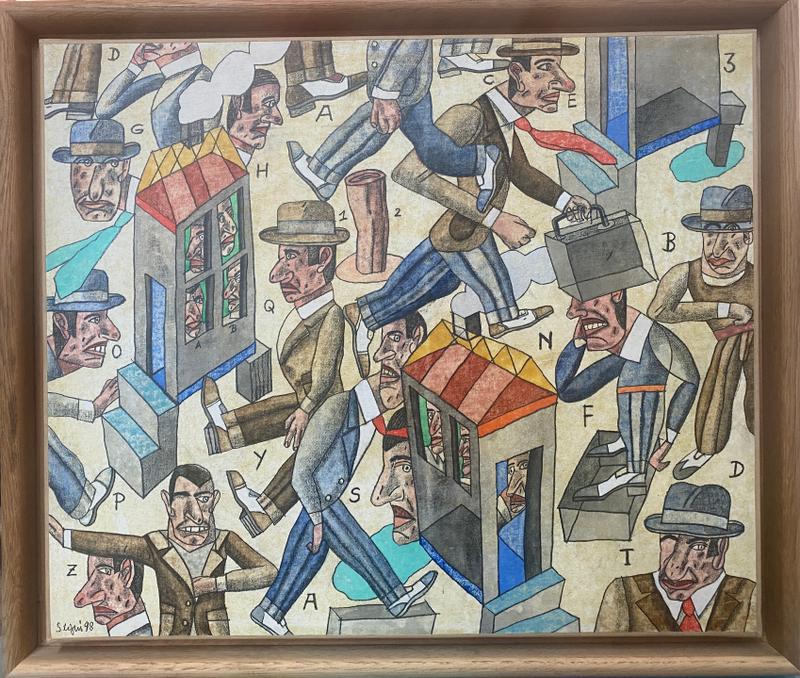
The city in Seguí’s art is rarely stable. Perspective compresses, streets overlap and crowds turn the surface into a visual maze. Humor makes these scenes accessible, but it also sharpens their social observation. The characters seem busy yet isolated, purposeful yet trapped in routines, allowing the work to address conformity, status, migration and the absurdity of modern systems without losing its warmth.
His visual language absorbed influences from Fernand Léger, Diego Rivera, comics, popular graphics and the broader currents of New Figuration. Seguí resisted strict movement labels, working across painting, drawing, lithography, etching, book illustration and sculpture. Tango and the mythology of Carlos Gardel also entered his work as cultural memories in which movement, performance and Argentine identity intersect.
Seguí’s art was exhibited internationally and entered major public collections, including The Museum of Modern Art in New York. Across six decades, he maintained a balance between formal invention and narrative clarity. His crowded worlds remain compelling because they do not describe one specific city; they stage the broader comedy of people trying to locate themselves within the structures they have created.